Sony ECM-W5 review: a pricey wireless mic with a unique trick
Sony ECM-W5: two-minute review
Sony’s ECM-W5 is a prosumer wireless microphone system cut from the same cloth as the DJI Mic 3, Insta360 Mic Pro and Rode Wireless Pro. Like all those, it's available in a package featuring two clip-on transmitters, a receiver that plugs into your camera or phone, and a charging case to keep everything topped up. At £350 for the full kit, however, it costs more than any of them — so it needs to bring something extra to the table.
It does just that. The headline feature is in-camera 32-bit float recording, something no other wireless mic I’m aware of can do. Rivals will happily record 32-bit float files to their transmitters' internal storage, but that leaves you syncing separate audio in the edit. With the ECM-W5 mounted on a Multi Interface Shoe camera such as the Sony A7 V, that extra headroom is baked straight into your video files. Most people won’t need it day to day, but if you’re shooting somewhere unpredictable, where a sudden bang or boom could clip your audio, it’s a useful safety net.
There’s plenty more for pros to like. Each transmitter has a 3.5mm lav mic input with a screw-lock connector (a feature DJI dropped after the Mic 2), along with a generous 62.5GB of usable internal storage. There’s timecode support and an optional 96kHz/24-bit Hi-Res Audio mode, too. The claimed 500m range is the longest I’ve come across, and in my testing the signal held up flawlessly through two floors of my house — a situation where other mics have faltered.
Sound quality is clean and clear, though in fairness that’s true of every decent wireless mic these days. The noise reduction is on the gentler side and less effective than what DJI and Insta360 offer, but it doesn’t introduce any odd artifacts.
The trade-offs are size and price. The transmitters are noticeably chunkier than the DJI Mic 3’s, the receiver’s touchscreen faces backwards when it’s mounted on a camera, and Sony doesn’t even include a 3.5mm audio cable in the box. Even so, for Sony shooters in particular, the ECM-W5 is one of the most capable wireless mic systems you can buy.
Sony ECM-W5: price and release date
- $399.99 / £350 / AU$619 for two transmitters, a receiver and a charging case
- Transmitters $189.99 / £110 / AU$179 and receiver $189.99 / £180 / AU$289 individually
- Available from November 2026
The Sony ECM-W5 will be on sale from November 2026, priced at $399.99 / £350 / AU$619 for the full kit, which includes two transmitters, a receiver and a charging case. Individual transmitters are available for $189.99 / £110 / AU$179, and the receiver on its own costs $189.99 / £180 / AU$289, which is handy if you want to expand your setup or replace a lost unit.
That makes it more expensive than its closest rivals. The DJI Mic 3 launched at £259 for an equivalent two-transmitter kit, for example, so you’re paying a premium of around £90 for the Sony. Given the ECM-W5’s unique features, I think that’s justifiable for the right buyer — but it’s a premium nonetheless.
Sony ECM-W5: specs
Dimensions | TX: 31 x 47 x 22.3mm / RX: 53.5 x 17.8 x 37.5mm |
Weight | TX: 27.1g / RX: 35g |
Range | Up to 500m |
Connectivity | RX: Multi Interface shoe / USB-C / 3.5mm jack |
Bluetooth | Yes |
Battery | Up to 7 hours (transmitter), up to 7 hours (receiver), up to 11 hours with fully charged case |
Noise cancelling | Yes |
Sony ECM-W5: Design
- Chunky transmitters with fixed clips and 3.5mm lav mic inputs
- Receiver’s touchscreen faces backwards when camera-mounted
- No audio cable included, and no room in the charging case for windshields
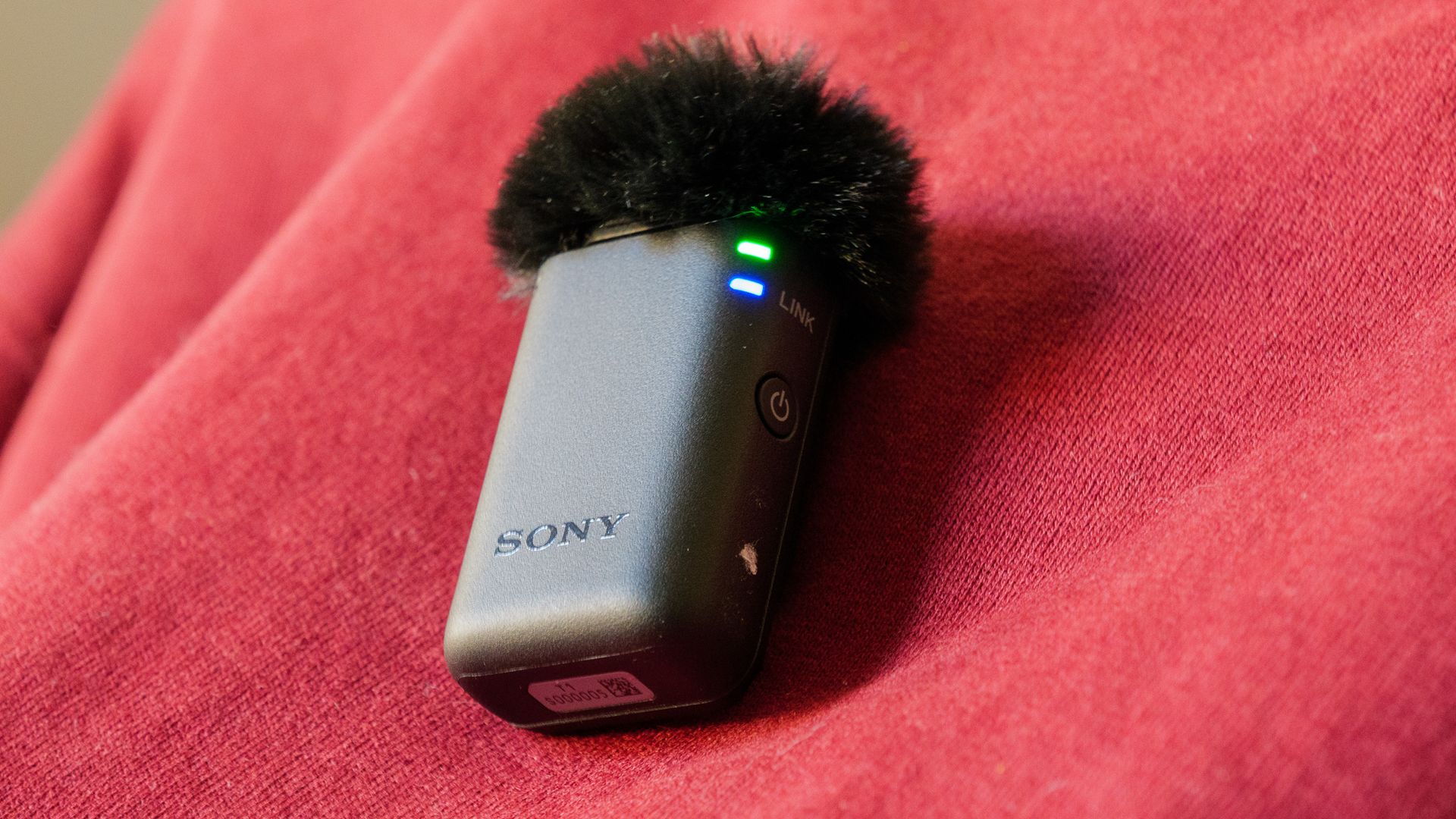
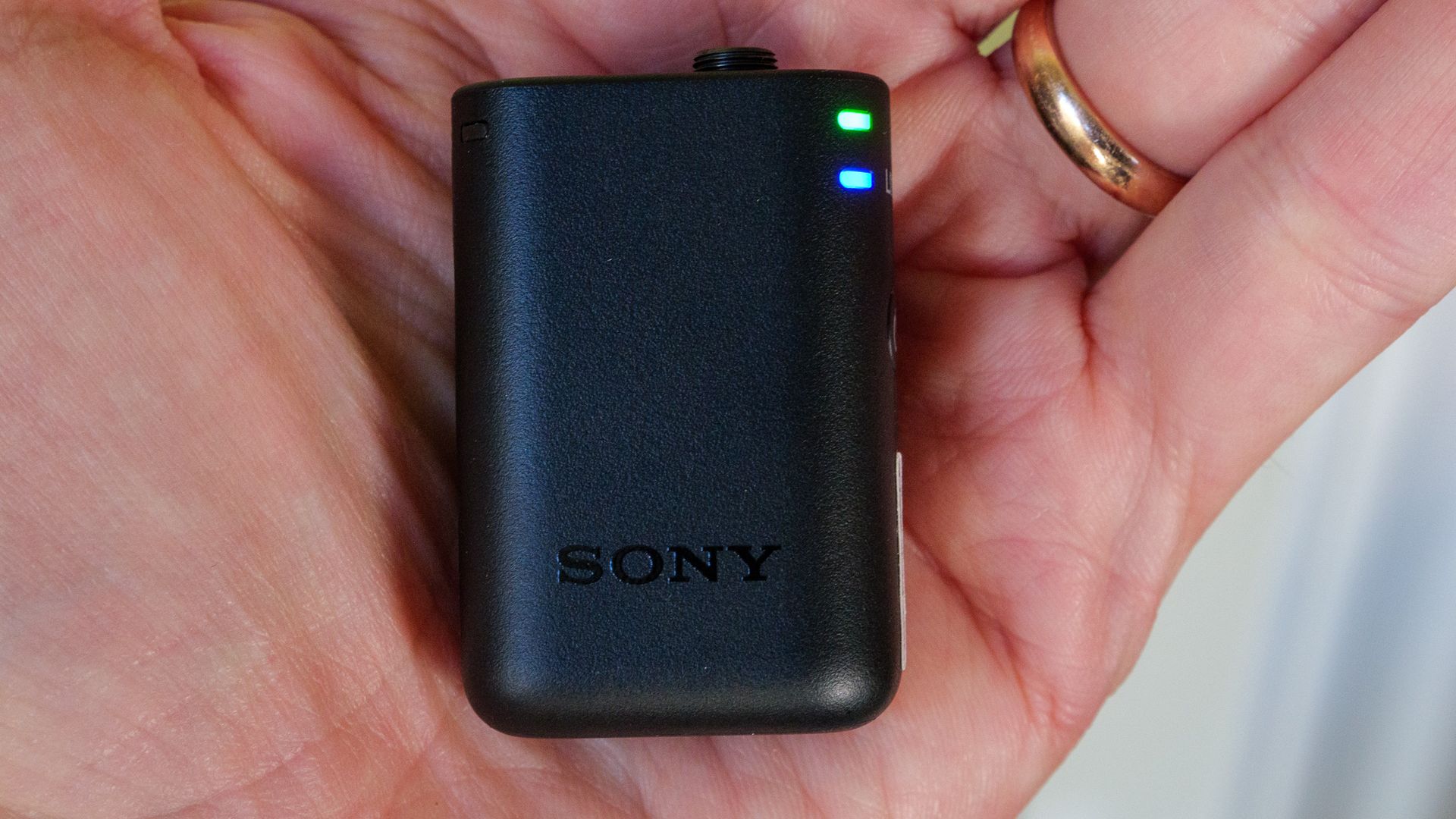
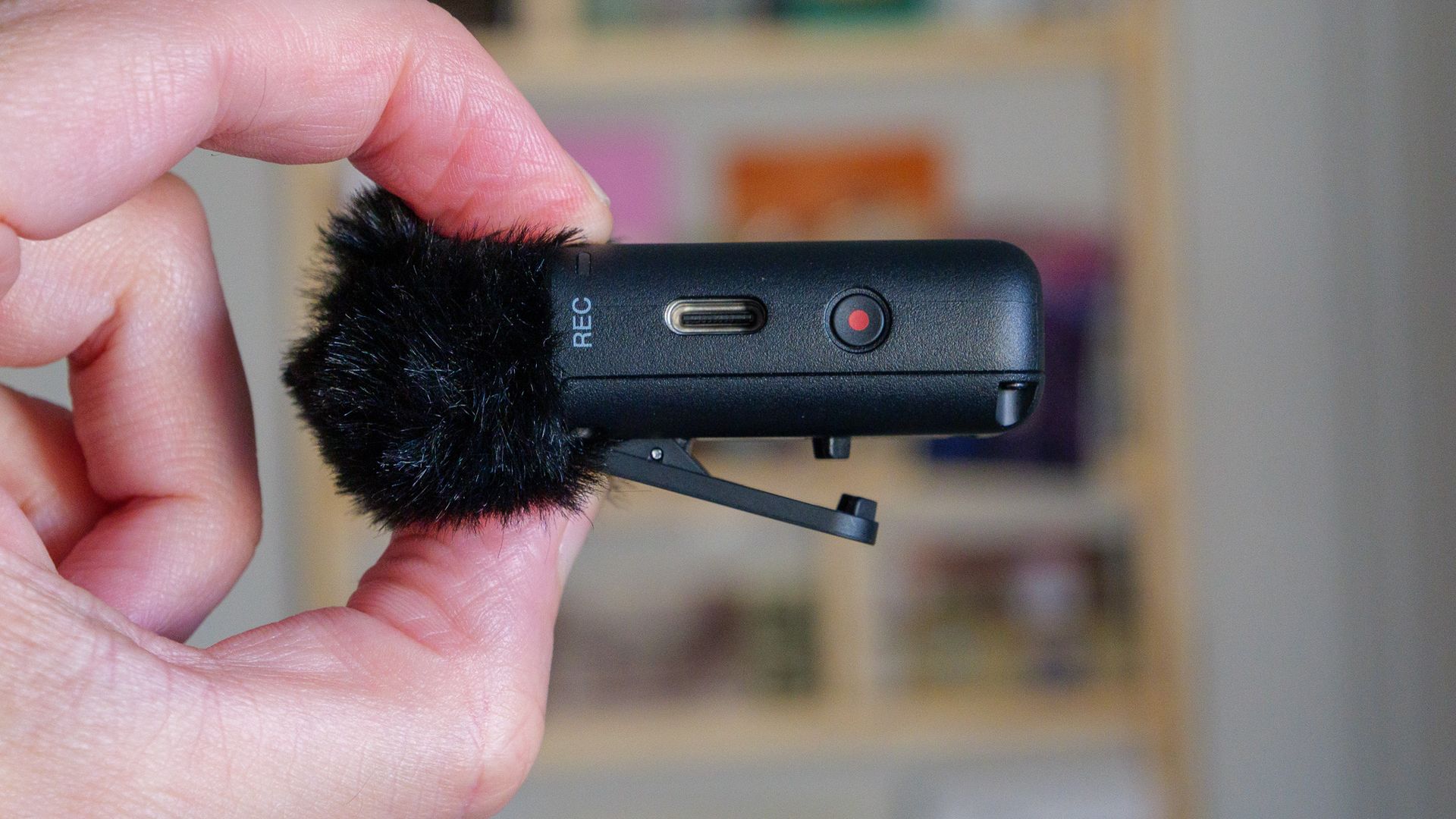
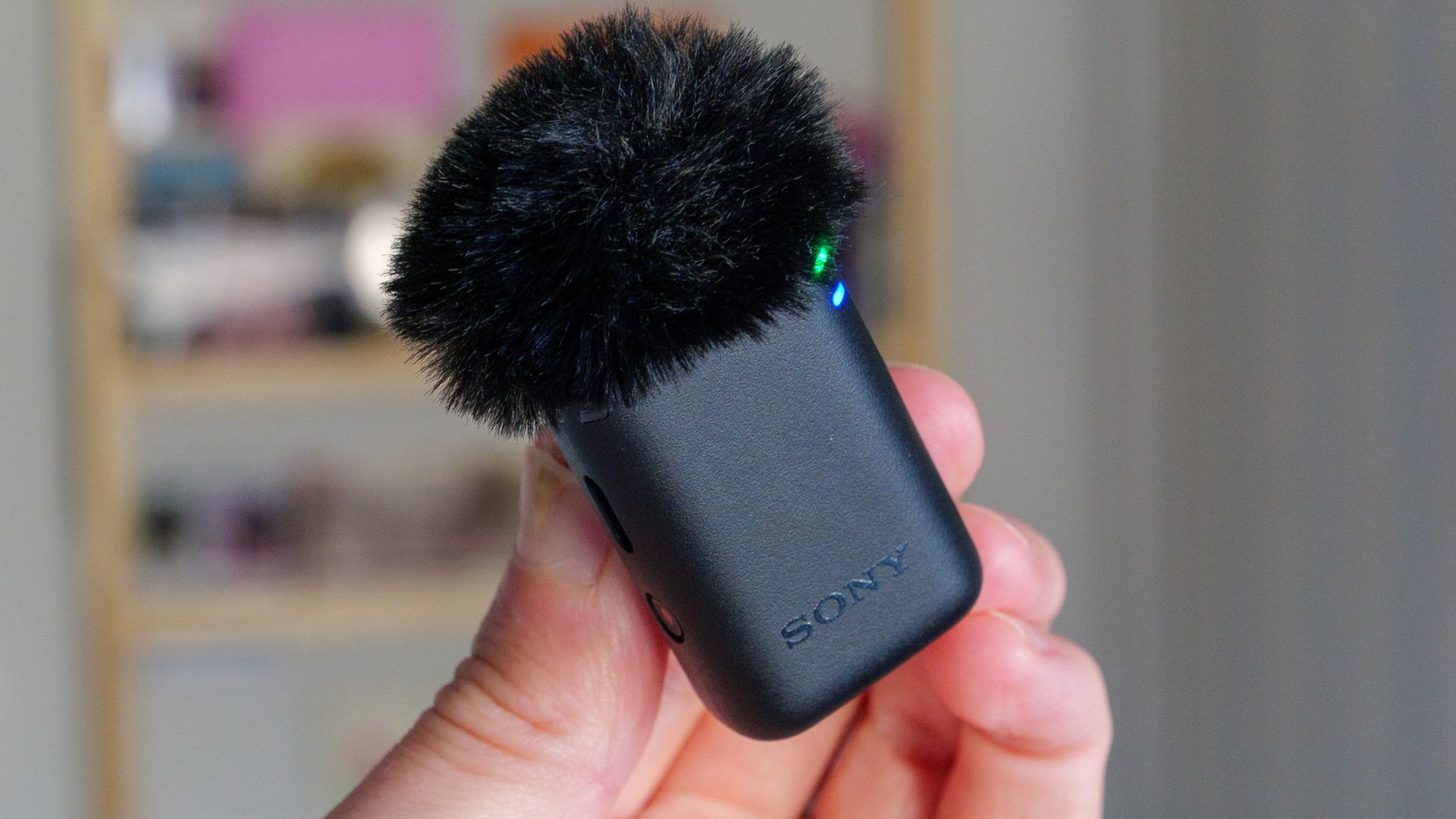
In terms of size, the ECM-W5’s transmitters are closer to the original DJI Mic and Mic 2 than to the much smaller (and current, at the time of writing) DJI Mic 3. Each of the ECM-W5's transmitters has a fixed clip for attaching to clothing (it can’t be removed or rotated), and Sony includes small button magnets for thinner shirts. Despite the extra bulk, the transmitters are light enough that I barely noticed them once they were clipped on. Sony also says the system is dust- and moisture-resistant, but stops short of guaranteeing full IP-level protection.
Controls are simple: a power button, a record button (double-press it to toggle noise reduction on or off) and a USB-C port for charging and file transfer. More interesting is the 3.5mm input with a screw-lock connection for plugging in an (unsupplied) lavalier mic, which pros will appreciate. The furry windshields cleverly slot into this jack too, so they sit more securely than on some rivals. Each transmitter also packs around 62.5GB of usable internal storage (64GB before formatting). That's almost double the 32GB you get in the DJI Mic 3 and Insta360 Mic Pro transmitters.
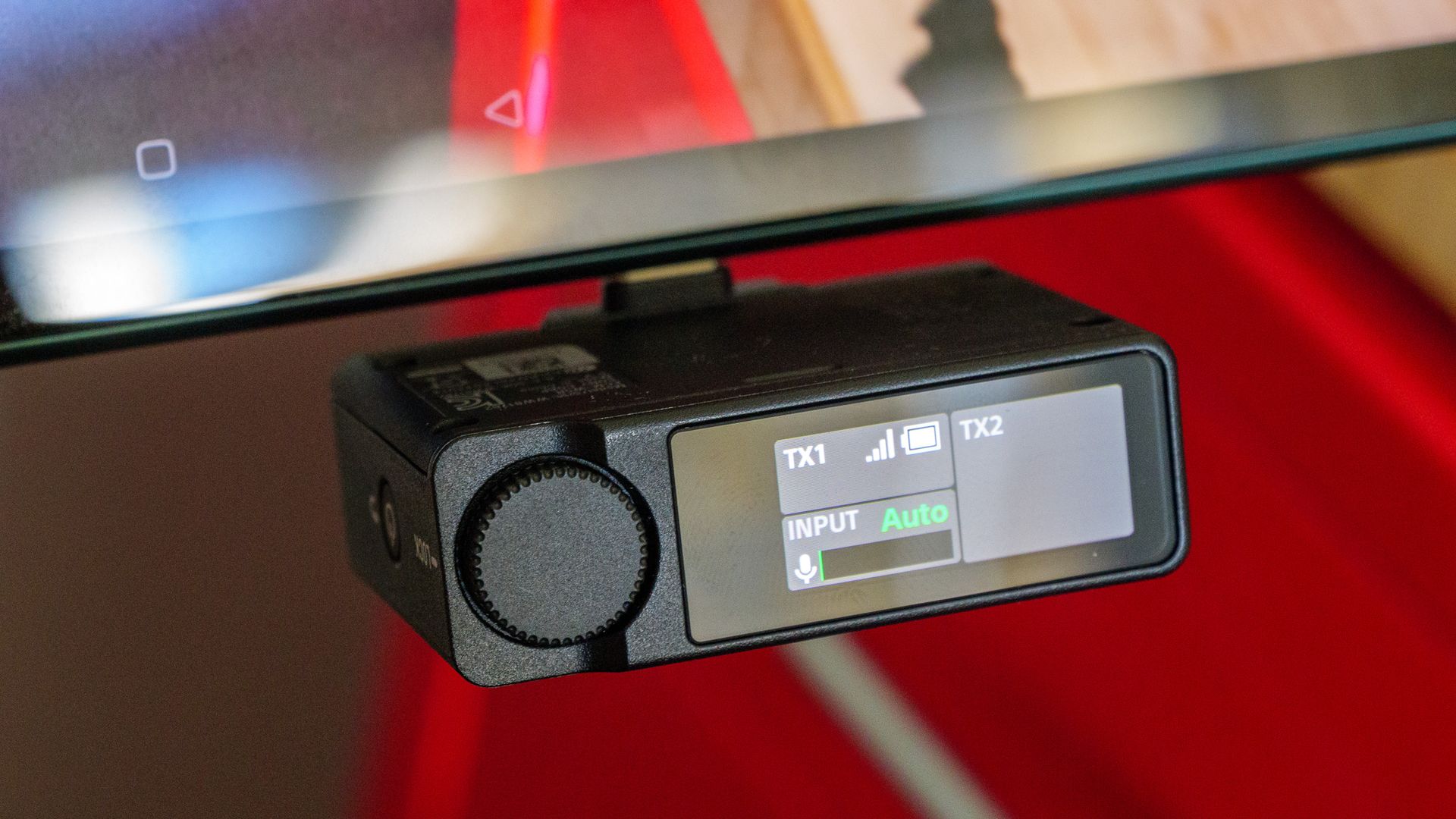
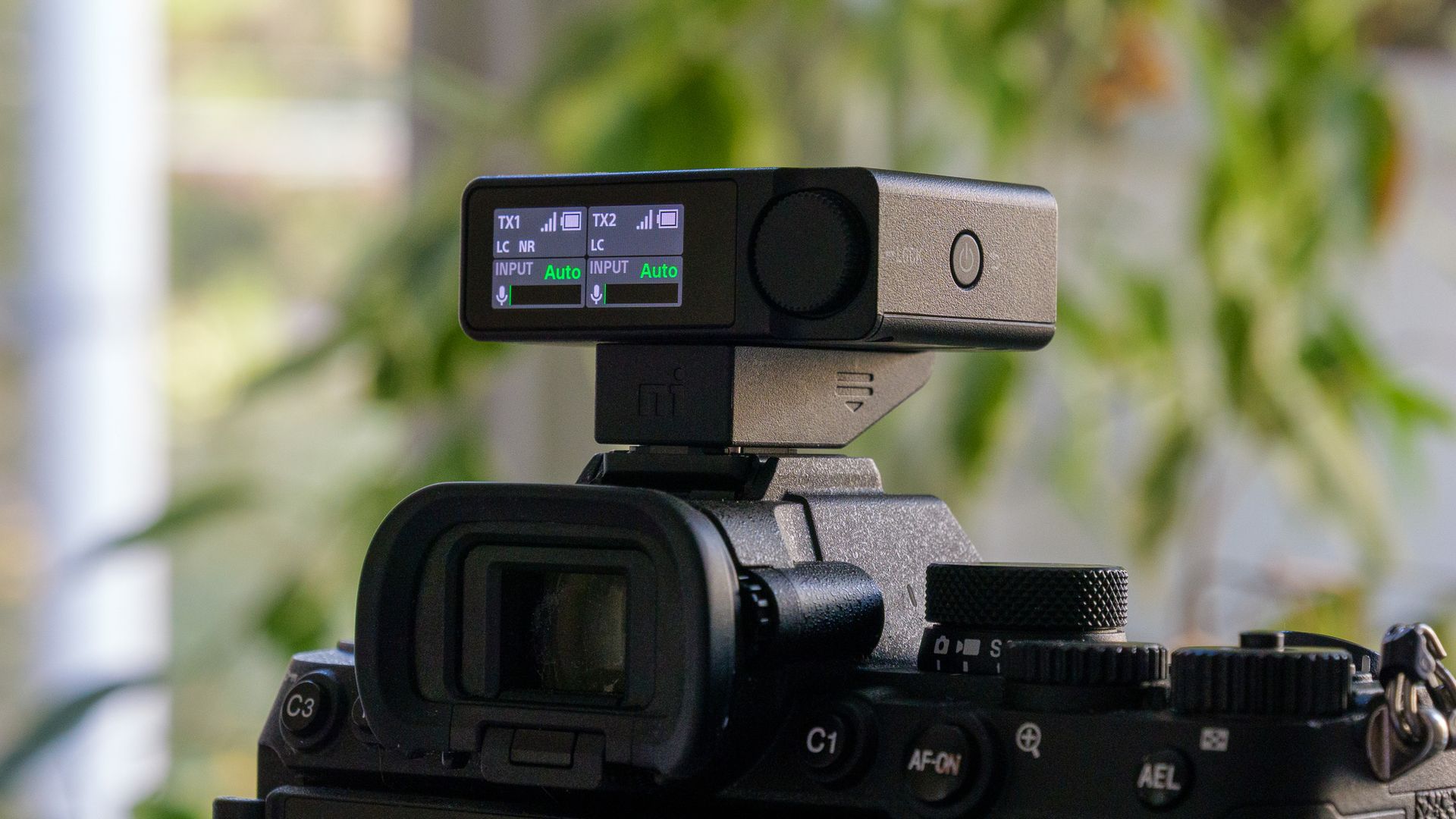
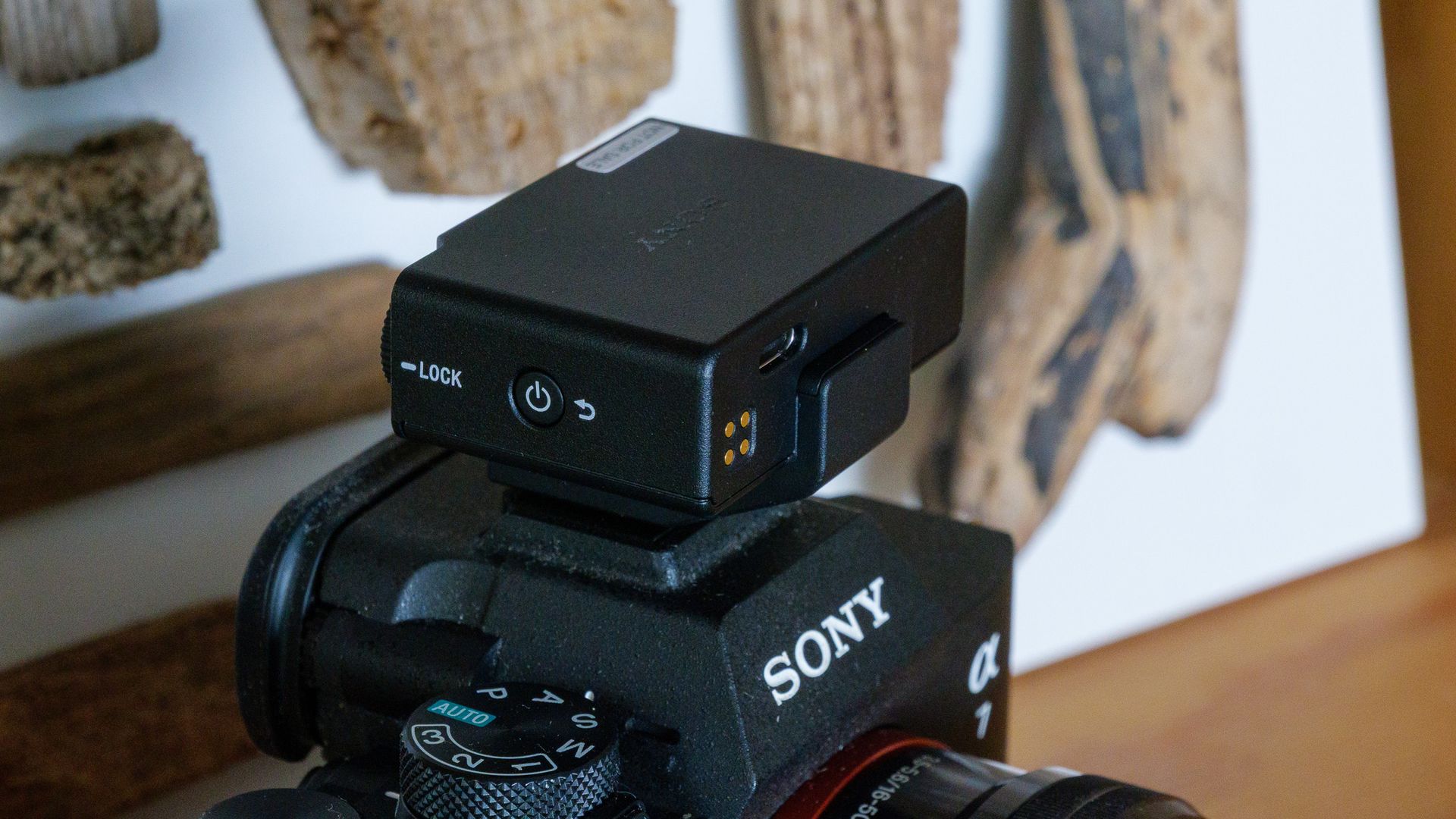
The receiver can be fitted with either a USB-C connector or a Multi Interface Shoe adapter, and the latter also slots into standard hot and cold shoes (albeit without the MI Shoe’s digital connection). There are 3.5mm audio in and mic out ports, plus a small touchscreen for adjusting settings. My one real frustration is that this screen faces backwards when the receiver is mounted on a camera, so when I was filming myself I couldn’t see it to make changes. It’s a common problem with wireless mic receivers, and I’d love to see a manufacturer make the display rotatable.
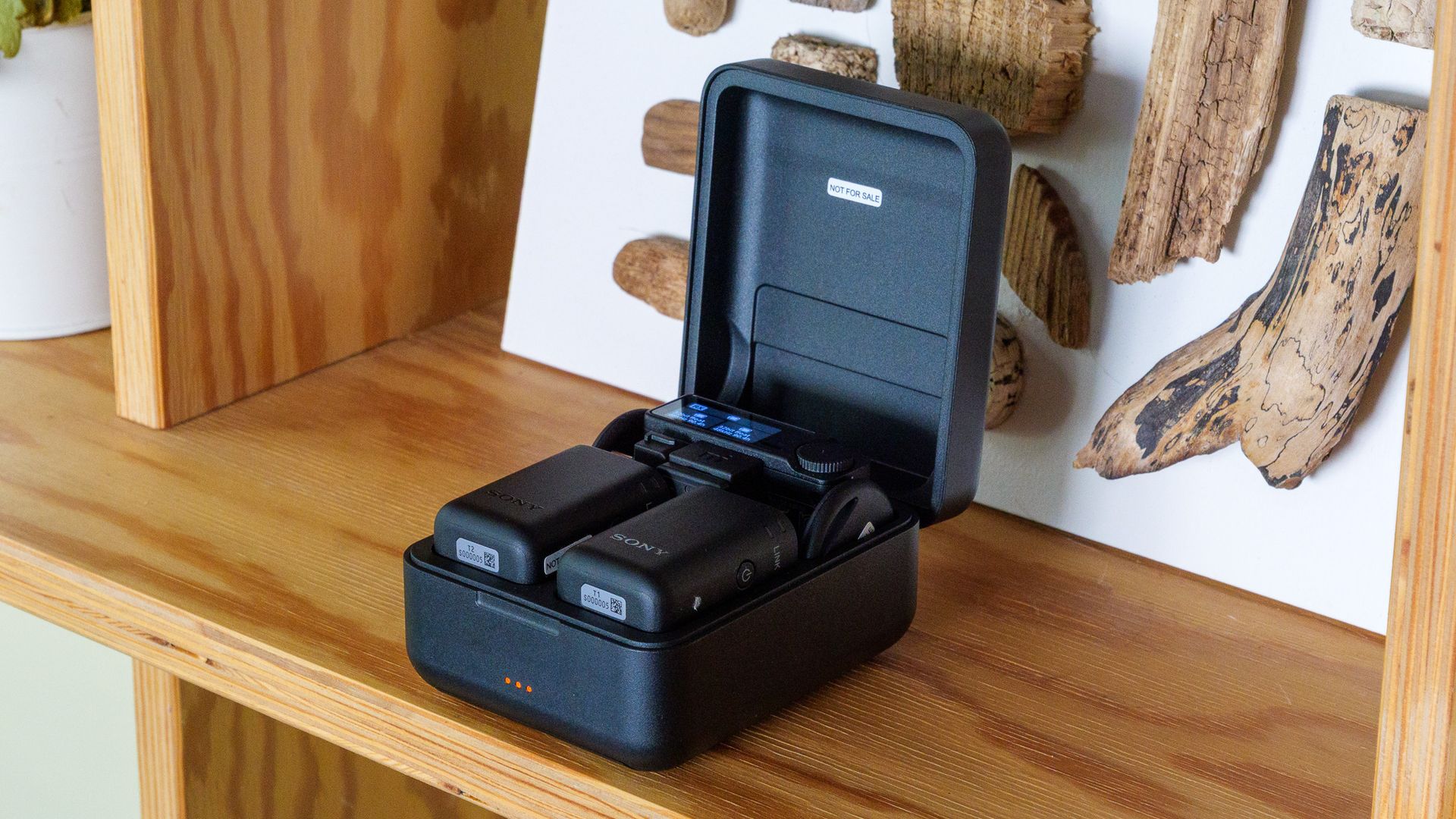
The charging case holds both transmitters, the receiver, the adapters and the magnets, but there’s no room for the windshields. Sony doesn’t include a 3.5mm audio cable in the box either, so if your camera lacks an MI Shoe you’ll need to buy one separately. A soft drawstring bag is supplied, though, and it’s big enough for the case, the windshields and a couple of cables.
Sony ECM-W5: Performance
- World-first in-camera 32-bit float recording
- Rock-solid signal and a claimed 500m transmission range
- Noise reduction is less aggressive than Insta360 and DJI rivals
The ECM-W5’s standout feature is its ability to record 32-bit float audio directly in-camera, as well as onto each transmitter’s internal storage. Rivals such as the DJI Mic 3 and Insta360 Mic Pro can only record 32-bit float files on the transmitter itself, which you then have to sync up in the edit. I don’t think many people need 32-bit float day to day, but if you’re recording in uncontrolled environments where sudden loud noises might occur, having that headroom baked into your footage is a real advantage.
There’s both automatic and manual gain control, with the latter offering a nicely granular range of -12 to +12. I mostly left it on auto and found it worked well. Sound quality is good, but then so is that of pretty much every decent wireless mic. The difference compared with the built-in mic on your phone, computer or camera is night and day, particularly outside on a windy day. Sony also offers a 96kHz/24-bit Hi-Res Audio option, which beats the maximum quality of most rivals I’ve tested, though that’s reflected in the higher price.
Sony claims a range of up to 500m between transmitter and receiver, which is much further than its rivals. I can’t think of many situations where you’d need that much, and I didn’t test it to the limit, but it’s reassuring to have in reserve. Sony also says the connection is around three times more stable than that of its predecessor, the ECM-W3.
More tellingly, when I left the camera and receiver downstairs and walked up two flights of stairs to my bedroom with a transmitter, the signal stayed crisp and clear throughout — something other mics have struggled with in my home.
The single-level noise reduction isn’t especially aggressive, and I think DJI and Insta360 offer markedly better cancellation. That said, it noticeably reduced the hum of a fan at home without adding any odd artifacts, so you can probably just leave it switched on all the time.
Sony quotes up to seven hours of battery life for the transmitters and receiver, rising to 11 hours for the transmitters if you top them up from the charging case. And when the receiver is mounted on a compatible camera’s MI Shoe, it draws power from the camera and switches on and off with it, so there’s one less battery to keep an eye on. Add up to two extra transmitters (sold separately) and you can also record up to four audio channels in-camera, which should appeal to anyone shooting multi-person interviews.
Sony also offers wireless monitoring via compatible Sony wireless headphones that support Bluetooth LE Audio, so you can keep an ear on your audio without a headphone cable, and compatible models such as the WH-1000XM6 can even be used as mics for binaural recording. I didn’t have a compatible pair of headphones to hand (and the binaural feature wasn’t available before launch), so I wasn’t able to test either feature.
The ECM-W5 also supports timecode, another feature that'll appeal to professionals.
Should I buy the Sony ECM-W5?
Buy it if…
You shoot with a Sony camera
The ECM-W5 receiver fits straight onto the Multi Interface shoe used by Sony's recent cameras, and the resulting in-camera 32-bit float recording is something no rival offers.
You want pro-grade features
A lavalier mic input, timecode support and 62.5GB of storage per transmitter make it a serious tool.
You record in unpredictable places
Baked-in 32-bit float and a 500m range give you a big safety margin when you can’t control the conditions.
Don’t buy it if…
You want the smallest, lightest wearable mic
The DJI Mic 3’s transmitters are far smaller and less conspicuous when worn.
You’re on a strict budget
Rivals premium microphones from DJI and Insta360 cost less and still sound excellent.
You need strong noise reduction
The ECM-W5’s noise reduction is gentle, and DJI and Insta360 do a markedly better job of removing background babble.
Sony ECM-W5: also consider
Insta360 Mic Pro
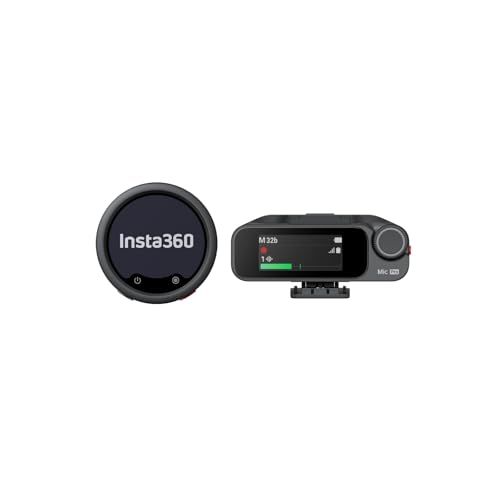
Insta360’s Mic Pro stands out with a customizable e-ink display on each transmitter, and it pairs strong AI noise canceling with 32-bit float internal recording and 32GB of storage per transmitter. It’s a great pick for Insta360 camera owners, though it lacks the ECM-W5’s lav mic input and in-camera 32-bit float.
Read our Insta360 Mic Pro review
DJI Mic 3
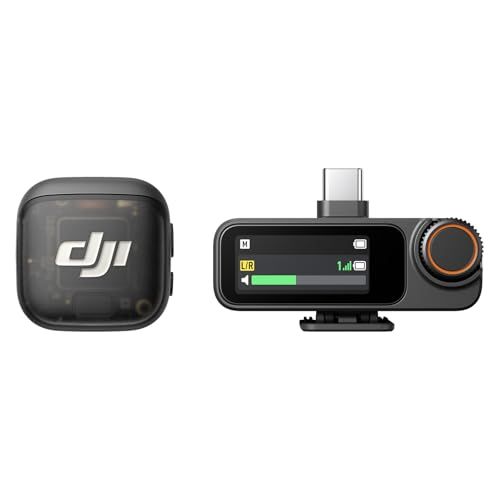
DJI’s latest flagship wireless mic is considerably smaller and lighter than the ECM-W5, with stronger noise canceling and a lower price. It lacks a lav mic input and can’t record 32-bit float in-camera, but DJI’s inexpensive MI Shoe adapter makes it an easy fit on a Sony camera too.
Read our DJI Mic 3 review
How I tested the Sony ECM-W5
- One week of testing indoors and outdoors
- Connected to Sony A7 V camera via Multi Interface shoe and OnePlus tablet via USB-C
Sony loaned me a review sample of the full ECM-W5 package along with a Sony A7 V camera for the purposes of this test, which allowed me to fully test the Multi Interface Shoe connection. I also tested the USB-C connectivity, by attaching the receiver to a OnePlus Pad tablet and recording video.
I used the mic system for about a week, recording in both 24-bit and 32-bit float modes and testing the noise reduction capabilities both indoors and outdoors in a variety of situations. I also tested its range and signal stability by leaving the receiver downstairs and walking up two floors of my house with a transmitter.
- First reviewed: October 2026
- Read more about how we test


Comments
Post a Comment