Saros may lack some of Returnal’s sting, but its madness-inducing journey is every bit as engrossing
This past week or so, I haven’t been able to stop thinking about Saros. Housemarque’s intense roguelite third-person shooter is a tremendous refinement of its previous work, Returnal (a game I feel is one of this console generation’s best). Yet its harrowing, cosmic horror-influenced narrative elevates it to something especially memorable.
Platform reviewed: PS5
Available on: PS5
Release date: April 30, 2026
If you’re familiar with Returnal, it probably doesn’t come as a surprise that Housemarque has once again deployed the Torment Nexus for Saros’s doomed spacefarers, and the concept of its protagonist being forced into a seemingly eternal cyclical hell is very much present here. That said, Saros is decidedly more manageable than its predecessor, featuring gameplay and progression systems that allow for a more forgiving experience overall.
Don’t get me wrong, though; Saros is still a tough PS5 game. Strip away all its new systems, and I’d say it’s about on par with Returnal in terms of difficulty. Enemies hit hard, and bosses demand keen focus when it comes to learning and dodging their bullet patterns. You’re going to die a lot in Saros, but given I reached the true ending in a tidy 20 hours, it’s a good bit friendlier to the average player.
A skill tree packed with permanent upgrades — alongside a very clever modifier system unlocked early on — ensures that protagonist Arjun grows steelier with each run. Furthermore, checkpoints placed at the start of each biome mean that, unlike Returnal, you don’t have to play through the whole thing in one flawless run. That alone condenses runs from Returnal’s 2-3 hours to a far more manageable 30 or so minutes, depending on what you’re looking to achieve on each run.
And like its predecessor, Saros is polished to a mirror sheen. Arjun’s movements are fast and snappily responsive. Color-coded bullet patterns instantly communicate the approach you need for each enemy. Weapons are varied and often creative in design and their sub-weapon functionality. And those haptics and adaptive triggers? Simply the best I’ve ever experienced and reminded me that, for all its faults, the DualSense is still capable of wowing me after all these years.
All in all, Saros is very much another slam dunk from a studio that has mastered the art of blending arcade-like trappings with AAA production values. It’s not quite perfect; I wish there were more post-game activities (and no daily challenge system yet, a la Returnal), and there are very (and I do mean very) occasional performance dips on base PS5 hardware. But there’s nothing that puts a serious dent in what I’m sure will be a game of the year frontrunner for many who seek Saros’s yellow shores.
Hail to the King
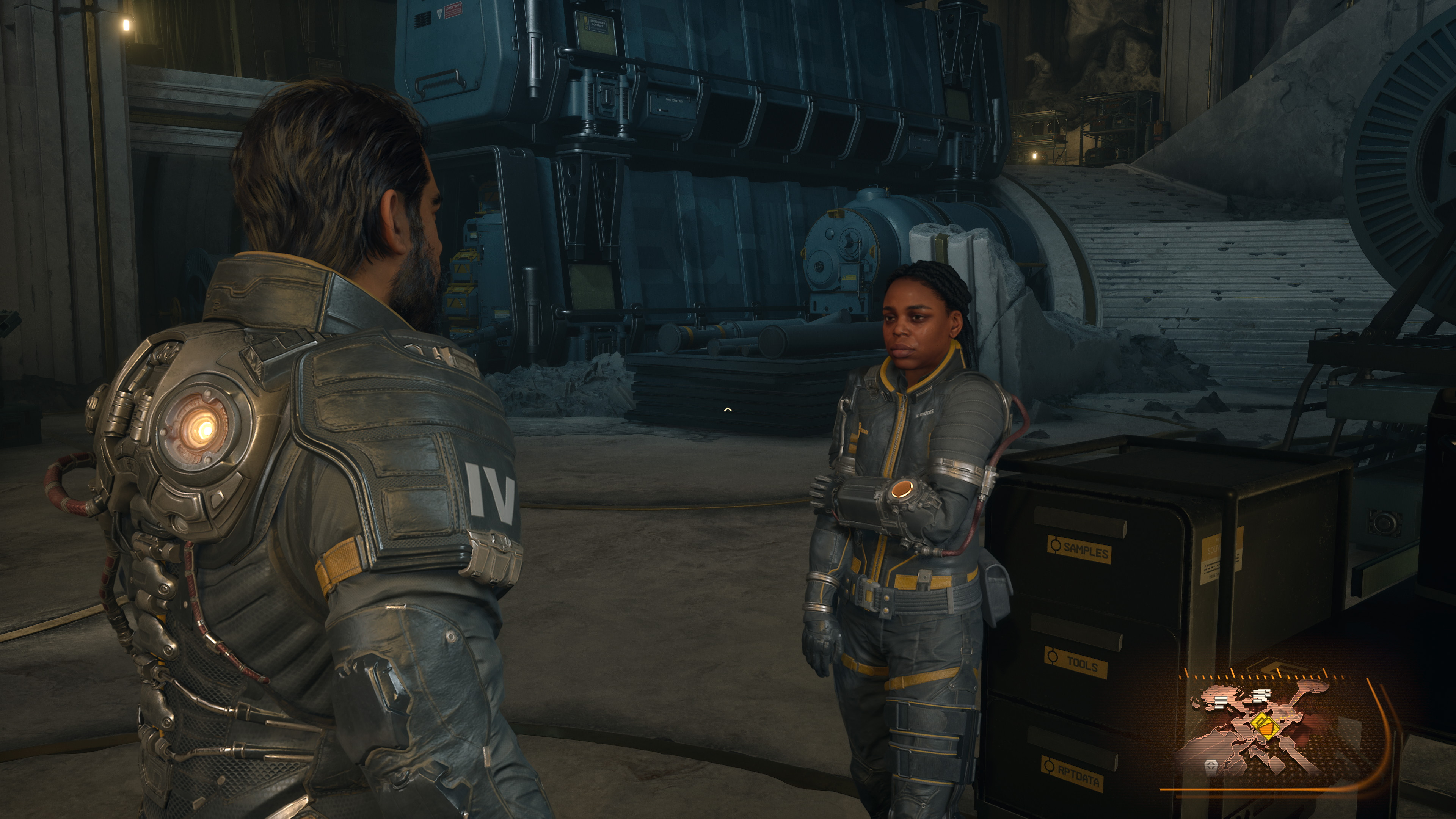
Saros puts you in the role of Arjun Devraj, portrayed by actor Rahul Kohli. Arjun is a member of Echelon IV, a team sent by megacorporation Soltari to the planet Carcosa. Their purpose is twofold: to continue the extraction of a valuable resource called Lucenite, as well as to uncover what happened to the previous three Echelon teams that have made no contact with Soltari since planetfall months ago.
It’s not long before the truths of Carcosa are laid bare. In a phenomenon unique to the planet, it undergoes regular eclipse phases that rapidly advance time. Oh, and people who look directly at the eclipse are driven mad. This is all spelled out pretty early on through collectable audio and text logs left behind by prior Echelon expedition teams. From there, the madness only increases at a rate of knots.
If you’re familiar with Returnal, then you’ll know that there was more to its protagonist, Selene, than met the eye. It’s a similar case with Arjun in Saros. I won’t spoil the finer details here, but there’s still an element of his trauma seemingly manifesting itself in the form of Carcosa’s horrors.
That said, I find Carcosa to be a tremendously compelling setting. Housemarque certainly isn’t shy about its horror inspirations here. Namely, the stunning H.R. Giger-esque architecture left behind by the planet’s former inhabitants, and The King in Yellow, a collection of short stories that revolve around a stage play of the same name, which causes all of its readers to go inexplicably mad. It’s rather on the nose with the latter, actually, but it all serves to create an aggressive brand of horror here that pairs beautifully with Saros’s fast-paced third-person shooting.
I'm Blue
Saros, at its heart, is a third-person shooter with roguelite elements. There’s no trudging movement speed or ducking behind cover here, though. Arjun’s default run speed would be enough to set off a highway speed camera, and he can dodge, jump, and air dash on a dime to quickly reposition or blink through incoming projectiles.
It’s a game with myriad arcade sensibilities. Enemies’ primary method of attack is intricate bullet patterns reminiscent of danmaku shoot-em-ups like DoDonpachi Resurrection or Ikaruga. Okay, Saros never gets as intimidatingly screen-filling as that, but I think it does take some inspiration, especially from that latter title.
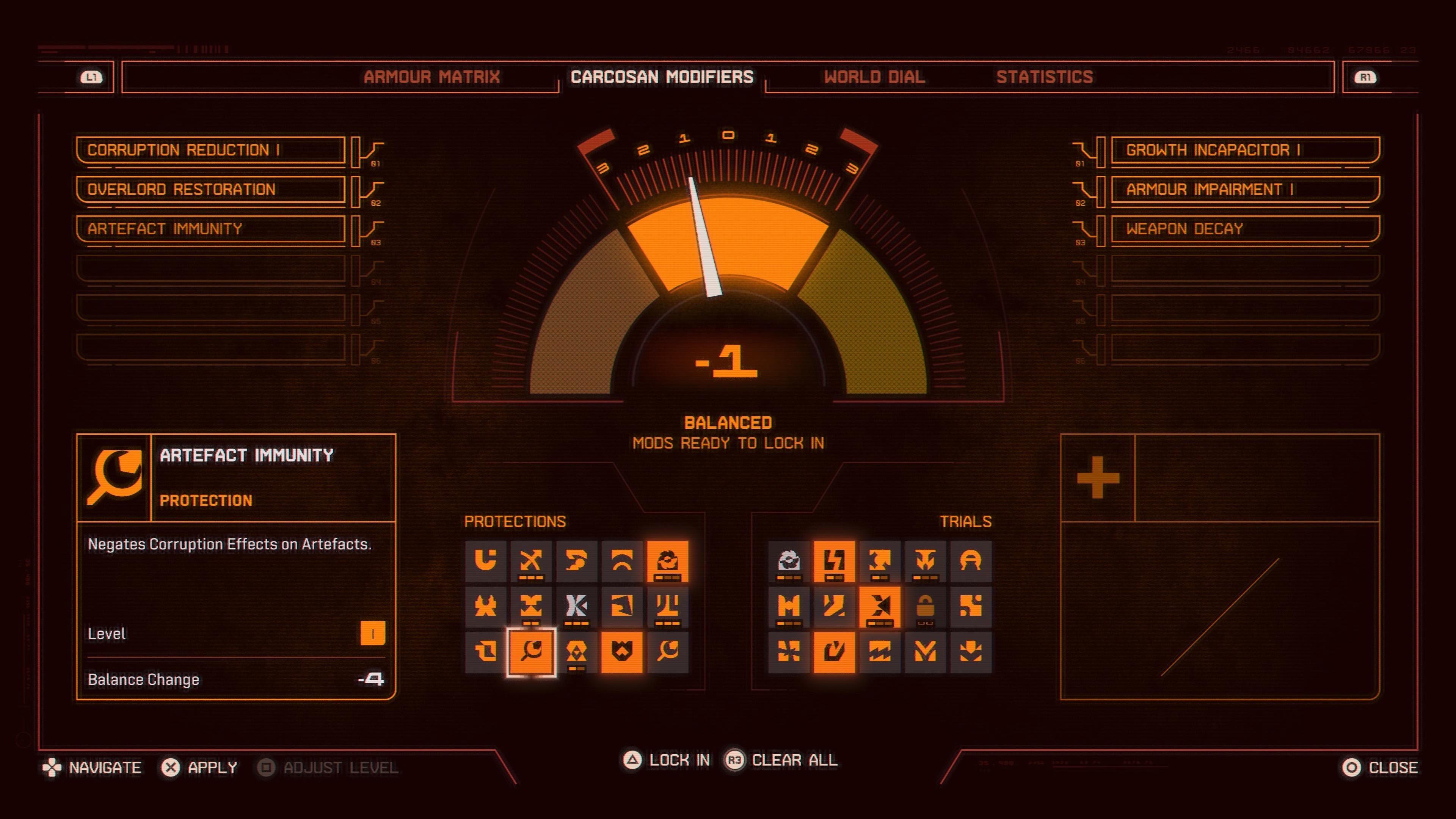
I love Saros for many of the same reasons I did Returnal, but the new Carcosan Modifier system is brilliant to play around with. This is where you can add a bit (or a lot) of extra bite to the game's difficulty, or give yourself a bit more favor depending on your preferences.
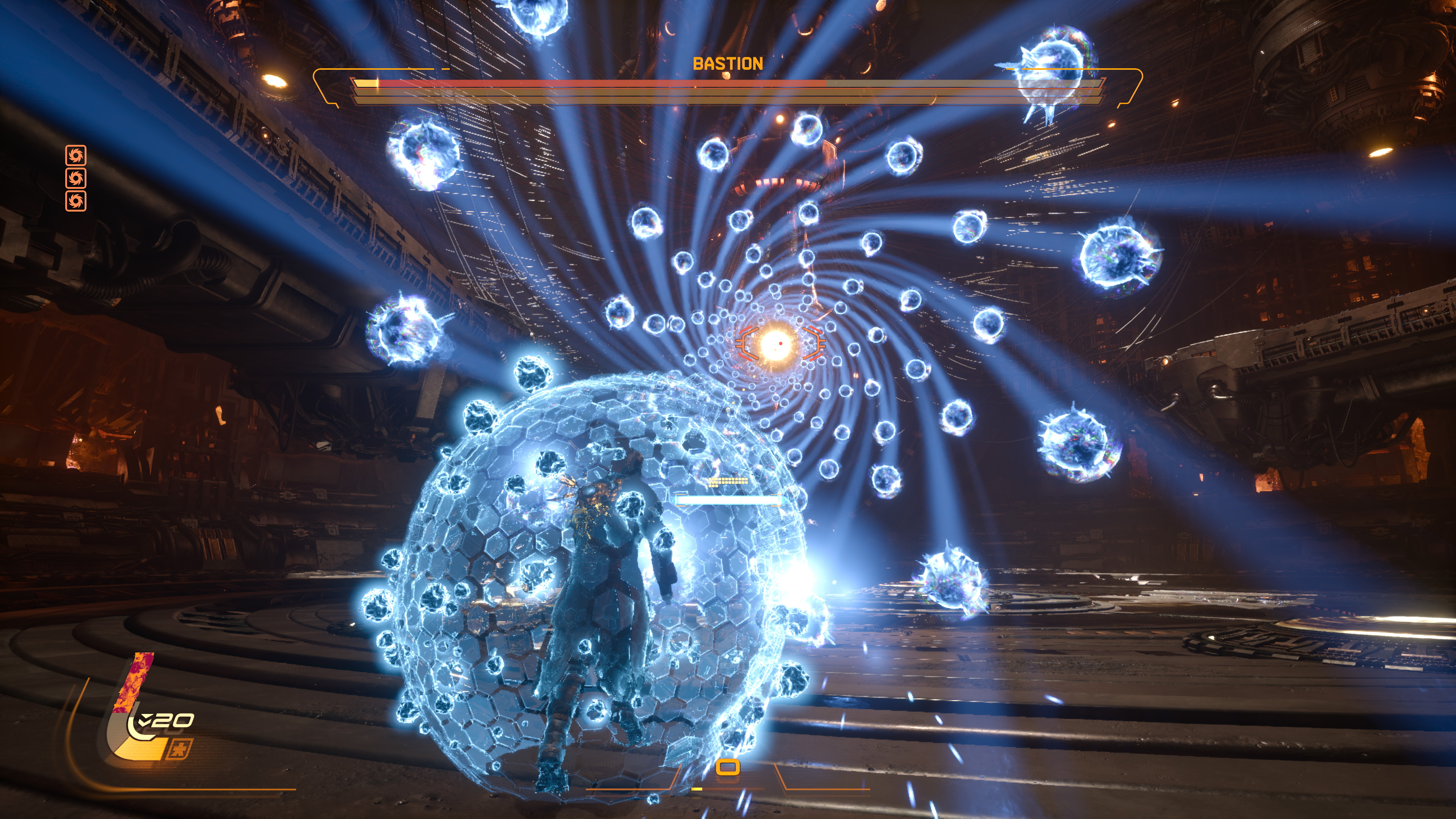
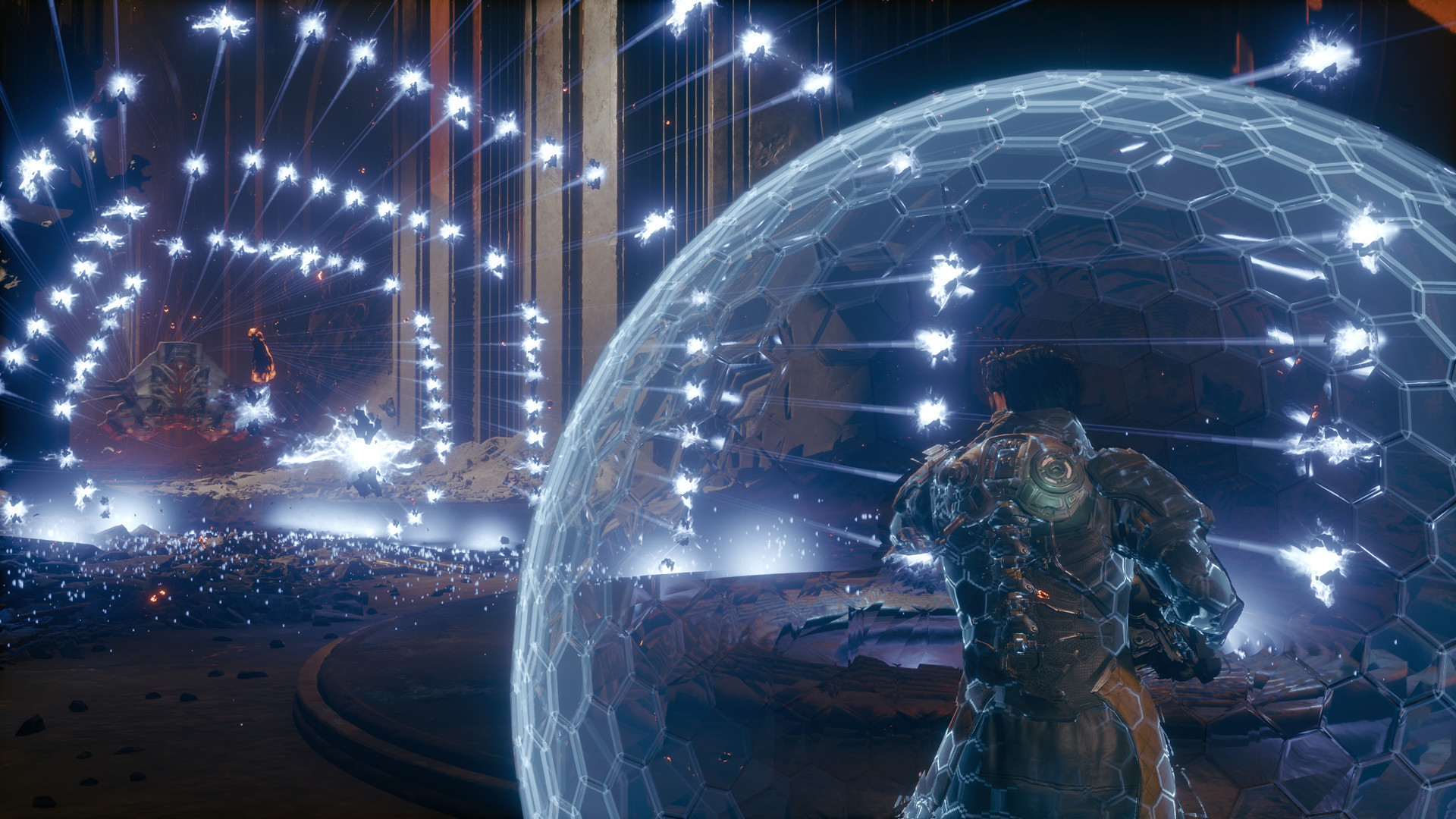
A new addition to Saros is Arjun’s Soltari Shield. Bound to R1 by default, holding the button down produces a protective globe around Arjun that absorbs projectiles, converting them into ammunition for his currently equipped power weapon. As a result, Saros directly encourages you to get stuck into the line of fire. You’ll need to watch out here, though; only blue projectiles can be absorbed without penalty. You can absorb yellow projectiles, but they’ll cause corruption, eating into your maximum health until cleansed with power weapon usage. Red projectiles, meanwhile, cannot be absorbed or even dodged through.
There’s plenty of weapon variety in Saros. From powerful revolvers and close-range shotguns to energy crossbows and auto-targeting smart rifles. You’ll need to use power weapons in tandem with these to deal devastating damage and effectively turn dire situations in your favor. Some are great for immediate single-target damage, while others excel at crowd control, spreading damage-over-time projectiles around the room.
One thing I adore about Saros’s weapons is that they all come fitted with an alternate fire module. By holding down L2 about halfway, your weapon’s behaviour changes. These typically consume more energy, but can do things like turn your shotgun into a grenade launcher, or your energy crossbow beams into a single concentrated blast. My favorite weapon comes a bit later in the game, though; a chakram launcher that embeds blades into enemies, spinning inside them to deal damage when you activate its alt fire. It’s so awesome.
Helping hands
As I said at the top, Saros has a similar difficulty curve to Returnal, but it’s much less mean. Early on, you’ll unlock the ‘Armor Matrix’, a massive skill tree that improves stats and offers various perks (such as a ‘second chance’, allowing you to get back up once when you die) when you pump collectible Lucenite currency into it. A secondary resource, Halcyon, can also be gathered to unlock particularly potent enhancements.
You’ll typically be faced with a boss at the end of a biome. Levels can take around 20-30 minutes per run, depending on how much optional exploration you undertake, and beating a boss will unlock a checkpoint for you to return to upon death. These checkpoints can be teleported to from your home base of the Passage, letting you begin a run from your most recent one, or for returning to older areas for side collectibles like audio logs and Halcyon.
This is probably the main thing that makes Saros a much more manageable beast compared to its predecessor. Returnal (outside of its split halfway through the game) demanded a full run every time. Dying to a late-game boss there often meant 2-3 hours of lost progress. Saros is far more forgiving in this regard, making it a far more accessible game for those who were put off by Returnal’s difficulty and the time investment it demanded.
Fear not if you’re after a meatier challenge in Saros, though. After a few early biomes, you’ll unlock Carcosan Modifiers at your base. This system presents you with a range of modifiers to make your life on Carcosa both easier and more difficult. You can give yourself stronger firepower and better defenses, but you’ll have to balance that out with detrimental modifiers, like the loss of your second chance or more aggressive enemies.
Easy modifiers decrease the number on the scale, while hard ones increase it. There is no upper limit to this, either; you’re free to pack on as many modifiers as you choose, so long as the scale doesn’t dip too far in the easier direction. In short, if you want to bring all the modifiers that make your life easier, you are required to pile up the ones that increase the game’s challenge. It’s a really smart way of increasing difficulty and adds tons of flavor to runs once you have a good grasp on the game.
Bathed in yellow
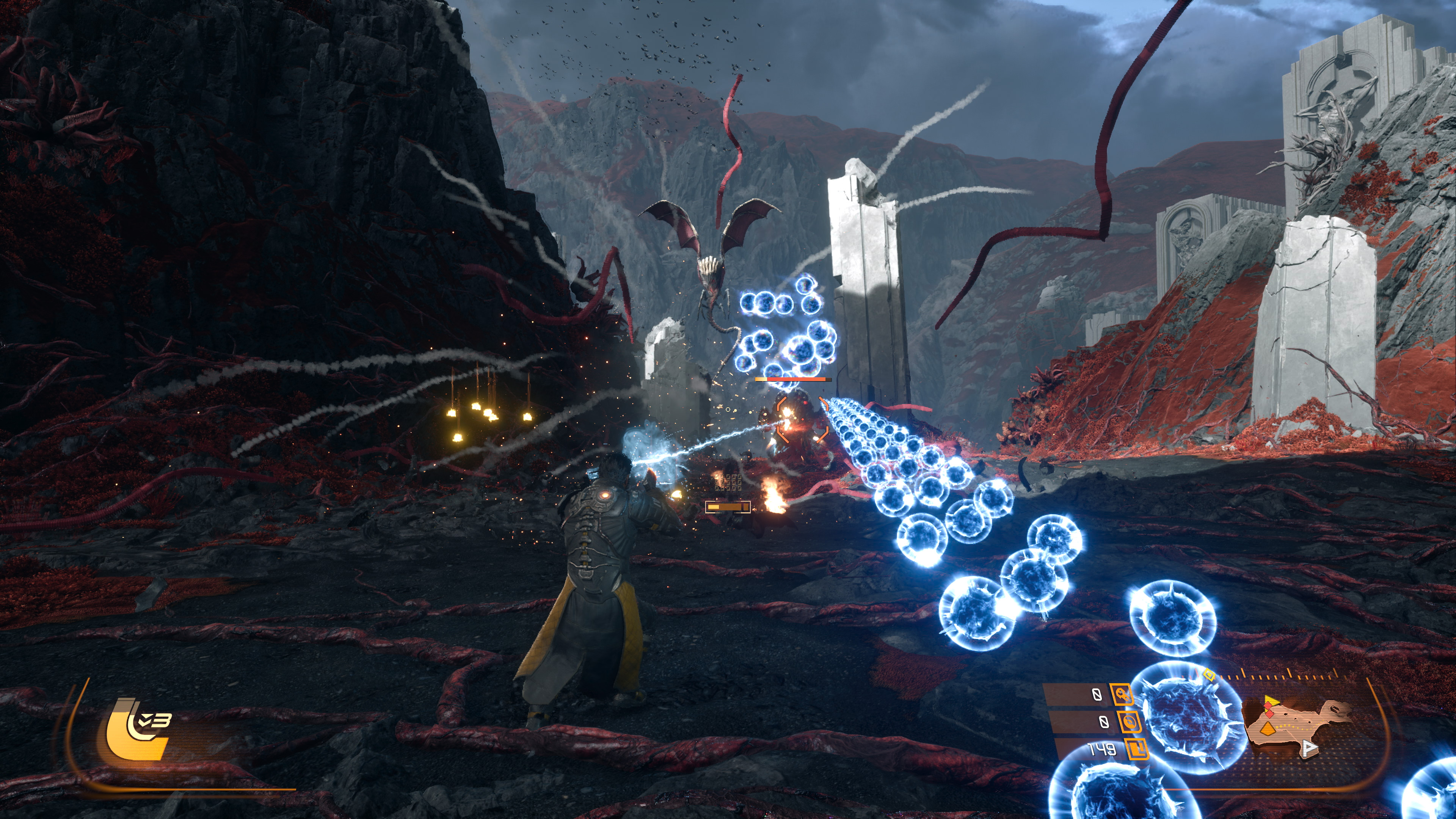
I found Saros to be a deeply enjoyable game, then, and I didn’t find its additional safeguards and progression systems made it any less when compared to Returnal. But one area where I think Saros surpasses its prequel is in presentation.
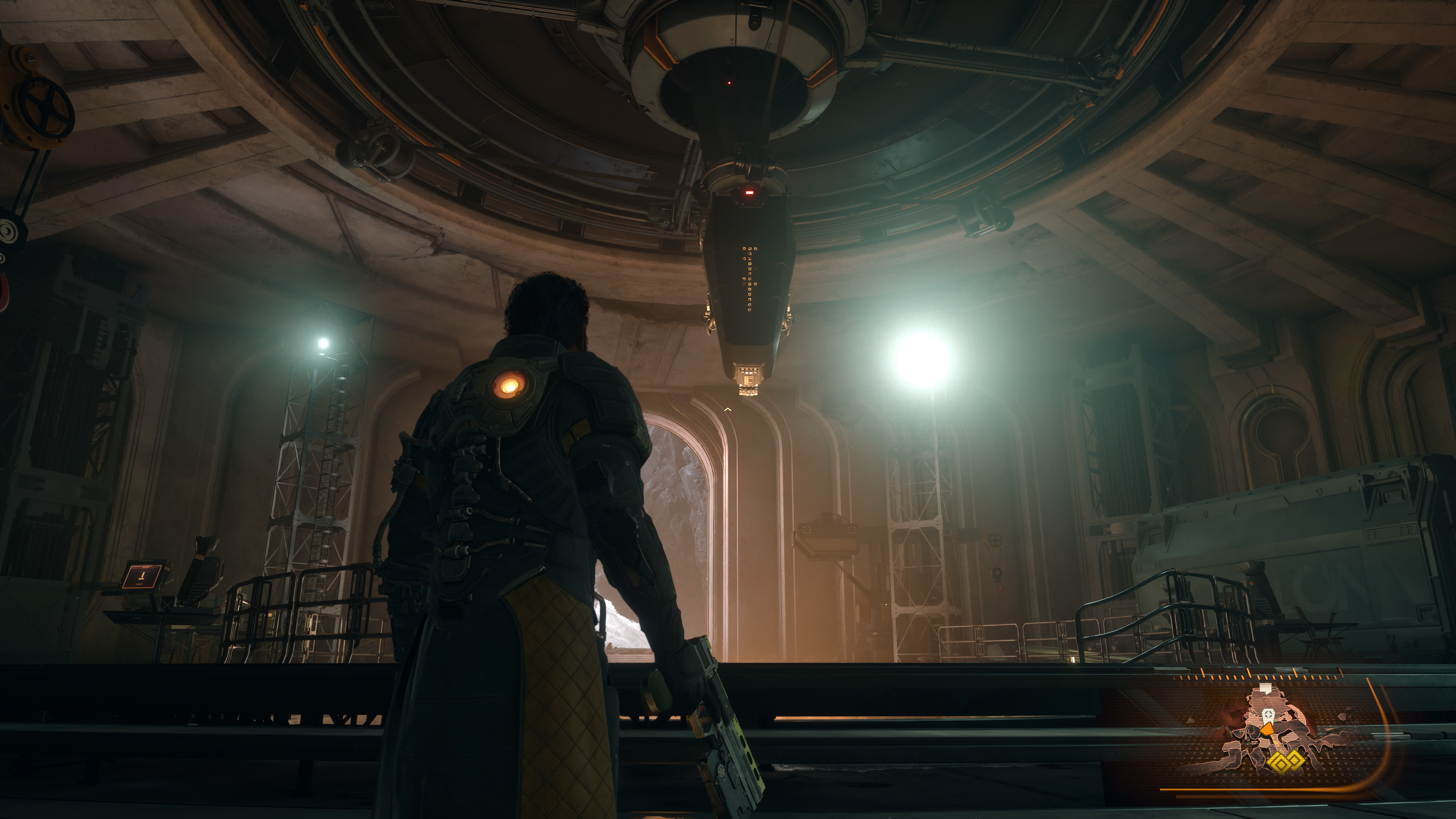
It’s one of the most visually stunning games put out by a PlayStation Studios team to date. Biomes are vast and varied, ranging from chalk-like canyons and underground mines to dilapidated docks and swampy marshlands. Draw distance is also remarkable, and you can often see entire levels span out when you look out over a vista. You can even spot landmarks from areas further in the game off in the distance. It’s awe-inspiring stuff.
I would also strongly, strongly recommend bolstering your experience with a pair of headphones. Sound design in Saros feels tailor-made for the PS5’s Tempest 3D audio. Roaring winds and distant alien screams fill the soundstage, while gunshots and explosions all sound satisfyingly chunky. The soundtrack is also a massive highlight for me, blending chaotic synths with wailing electric guitars.
Once again, Housemarque has really put the DualSense Wireless Controller through its paces. The novelty of its haptic feedback and adaptive triggers has long worn off for me, but Saros really surprised me with its usage of these. Things like the pattering of rain and feedback from power weapons echo through the controller’s vibrations accurately and immersively. And the usage of those adaptive triggers to open up secondary fire options is a brilliant touch, as it was in Returnal, too.
To close out, I really have very few complaints from my time with Saros. The game largely holds an impressive 60fps (frames per second) on base PS5, but there was the very occasional slight chug in busier, enemy-filled rooms. It’s never anything game-breaking, though.
Beyond that, I’d really like to see more postgame activities come to Saros. Returning to older areas for collectibles is fun, but it’s currently lacking anything like leaderboards or Returnal’s daily challenge runs. That game did eventually receive a chunky free expansion with new story elements, so I’d love to see the same thing happen again in Saros. Right now, I’ve just been left wanting more, which is hardly a bad thing.
Should you play Saros?
Play it if...
You’re down for a moreish challenge
Saros might be easier than Returnal overall, but it’s still no slouch. Many enemies and bosses will give you something to think about. Plus, the act of shooting, dodging, and managing resources like power weapons, it all just feels so great once you’ve got it down to a science.
You loved Returnal’s horror trappings
Saros features a different, more chaotic kind of horror, but it’s no less compelling as a narrative vehicle. Its environmental design and scattered audio and text logs create a truly horrifying picture; one that stays harrowing right up to the end.
Don't play it if...
You're not keen on split-second action
Saros can be a fast game, almost unrelentingly so. It might not be for you if dodging several high-speed, intricate bullet patterns all at once while managing energy resources sounds like a lot.
Accessibility features
Like most contemporary PlayStation Studios titles, Saros has plenty of accommodating options for gamers of all stripes. Up front, you can disable the Carcosan Modifier limiter if you desire an easier experience, and there’s no penalty or trophy-gating for doing so. Full button remapping is also supported.
There are plenty of colorblind options, too, to the point where you can even change the default color of different projectile types. Meanwhile, subtitle options are robust. You can change their size, color, and background opacity.
Audio options are especially broad. A dialogue priority slider ensures spoken lines aren’t drowned out by other audio sources, and you can fine-tune bass, treble, and the lower and higher ends of dynamic range. There’s even an average loudness setting if you’re hard of hearing or don’t have access to speakers or a surround sound system.
How I reviewed Saros
I reached Saros’s true ending in 20 hours of play. In addition to the main campaign, I spent plenty of time gathering optional collectibles and collecting currencies to build up the Armor Matrix skill tree.
I played with a DualSense Wireless Controller on a base PS5, often pairing my play time with the RIG R5 Spear Pro HS gaming headset for more immersive audio. My display of choice is the LG CX OLED TV.
I went into this review with extensive playtime in Housemarque’s previous games, most notably Returnal. It was one of my favorite games in the year it came out, so I was excited and plenty prepared to take on the horrors of Saros using Returnal as one of my frames of reference.
First reviewed April-May 2026


Comments
Post a Comment