The Xiaomi 17 Ultra is the best Xiaomi phone yet and one of the best camera phones I've ever tested
The Xiaomi 17 Ultra offers everything the series has come to be known for: top-tier performance, a great display, premium design, rich functionality, fast charging, and an exceptional Leica-backed photography experience.
Despite not deviating from the formula all that much (see last year's similar-looking Xiaomi 15 Ultra), there are some meaningful refinements that help this generation of Ultra, in particular, stand out.
The phone's refined design, with its aluminum alloy frame and composite back, makes it the thinnest Ultra to date, and it's notably lighter than its predecessor, too.
The rear panel plays host to a mammoth 1-inch 50MP main camera sensor, with LOFIC technology for superior dynamic range, while the huge 1/1.4-inch 200MP HPE telephoto sensor grants you optical magnification between an equivalent 75mm and 100mm, by way of a mechanical zoom system.
On the front, you're presented with a stunning 12-bit 6.9-inch 120Hz dynamic LTPO AMOLED display, which is set within thin bezels. It delivers a superb viewing experience, not least because of the 17 Ultra's increased peak brightness ceiling of 3,500nits. The ultrasonic in-display fingerprint sensor is pretty great too.
As with almost any Android flagship worth its salt in 2026, the Xiaomi 17 Ultra is powered by the Snapdragon 8 Elite Gen 5 chip, paired to a baseline 512GB of UFS 4.1 storage and 16GB of LPDDR5X RAM. Combine that with the company's latest IceLoop cooling system, and this newest Ultra proves extremely capable in terms of sustained performance, especially compared to its predecessor.
Battery life from the 6,000mAh silicon-carbon cell has improved on last year's Ultra, too, even if it still lags behind key rivals in terms of everyday longevity. At least the 90W wired fast charging now supports standard PPS adapters, and can refill the phone's battery in under 45 minutes.
The HyperOS 3 user experience on the Xiaomi 17 Ultra is generally clean and, despite a learning curve for those coming from most other manufacturers' flavors of Android, feature-rich.
It takes a lot of inspiration from iOS 26, but in return, additions like HyperIsland add genuine utility, while Xiaomi HyperConnect gives you impressive interconnectivity with devices running iOS, macOS, Windows, and beyond. An improved five years of OS upgrades and six years of security updates — compared to the 15 Ultra at launch — is a welcome upgrade too.
Xiaomi doesn't shove AI features down your throat in the same way some rival phone makers do, but the 17 Ultra's AI-backed image editing tools are capable enough for light tasks, and let you pull off some nice imaging tricks, like outpainting. Now Xiaomi just needs to work on consistency and reliability with the performance of such features.
As you might expect, the Leica-backed camera experience on the 17 Ultra is outstanding. Shots approach the fidelity of dedicated mirrorless cameras in some situations, and that new LOFIC tech means better dynamic range and sharper imagery, even in low light. Despite losing a rear lens, the new mechanical zoom grants more capture at more focal lengths optically, while Leica presets help dress images with expressive tonal treatments.
There are some handy video tools, alongside the ability to shoot at up to 4K 120fps in Dolby Vision or LOG, but the Xiaomi seems far more focused on improving the still photography experience this generation, rather than pushing the new Ultra as a professional video tool, as it tried to with last year's offering.
Starting at £1,299 / AU$1,799, the Xiaomi 17 Ultra matches or undercuts the best iPhones and best Samsung phones on price; however, it's still one of the most expensive phones on the market. What's more, the limited edition Leica Leitzphone by Xiaomi gives you a few exclusive photographic extras, but pushes for an even higher asking price in return.
This is undoubtedly one of the best camera phones of the moment, and an excellent refinement on Xiaomi's established Ultra format. You just need to be ready to pay a premium for the privilege of using such impressive mobile hardware.
Xiaomi 17 Ultra review: price and availability
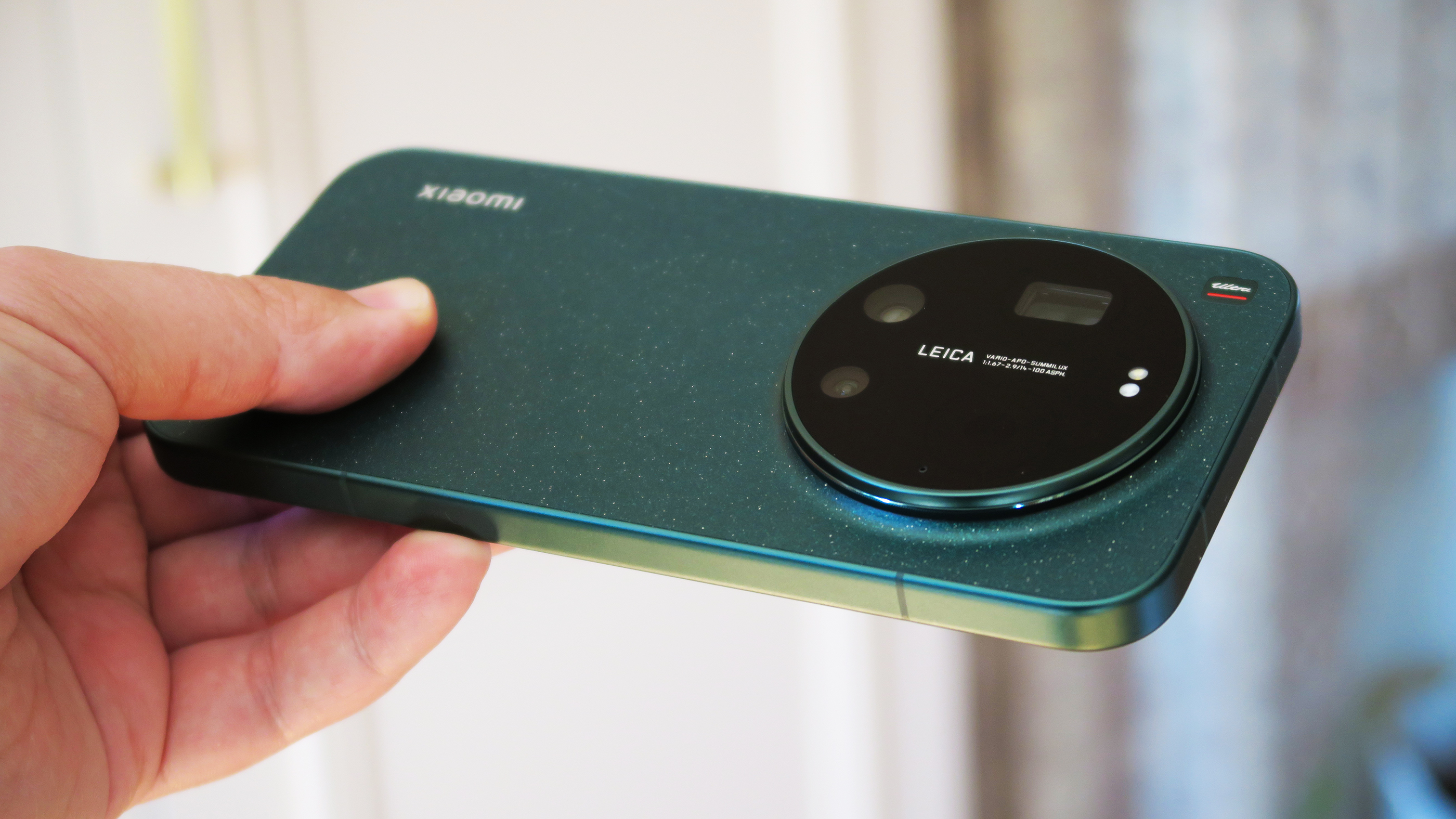
- Released on February 28, 2026 in the UK and Australia
- Priced from £1,299 AU$1,799
- No official US availability
As with its predecessor, the Xiaomi 17 Ultra first launched exclusively in China in late 2025, going on sale in the region a few days later. It wasn't until late February this year that the global version of the phone made its debut; although, as ever with Xiaomi phones, 'global' sadly doesn't include the US.
While any phone with 'Ultra' in its name tends to demand a high asking price when comparing storage and RAM combinations, the 17 Ultra does meet or beat key rivals, such as the Samsung Galaxy S26 Ultra and iPhone 17 Pro Max, if only slightly.
For £1,299 / AU$1,799, you get 16GB of RAM and a baseline 512GB too (both higher capacities than you'll get with Samsung or Apple's base entries), but this will remain an unquestionably pricey option for many.
Depending on your region, Xiaomi also throws in several noteworthy extras and free trials. In the UK, for example, your purchase of a Xiaomi 17 Ultra includes three months of both Google AI Pro and YouTube Premium, four months of Spotify Premium, a free screen replacement within the first six months after purchase, and one out-of-warranty repair — with free labor costs, too, so long as it's claimed within your 24-month warranty period.
|
Model |
UK price |
EU price |
AU price |
|
512GB |
£1,299 |
€1,499 |
AU$1,799 |
|
1TB |
£1,499 |
€1,699 |
AU$1,999 |
|
Leica Leitzphone powered by Xiaomi |
£1,699 |
€1,999 |
AU$2,299 |
A variation on a theme, there's also the 'Leica Leitzphone powered by Xiaomi,' which is essentially a 17 Ultra with heavier emphasis on the brand's Leica camera partnership.
This model's defining characteristic is a physical rotating ring around the camera, which lets you control features like zoom, ISO, shutter speed, and more. The phone has an overall design distinct from the standard model reviewed here, with a black and silver finish, plus some additional grip along its metal frame. There are also dedicated 'essential looks' within the camera app, modelled after the iconic Leica M3 and M9 cameras, plus a few other bonuses.
Billed as a 'limited edition' (it sold out almost immediately in the UK, but is still available in other regions at the time of writing), this release commands an even higher premium, costing £200 / AU$300 more than the top-whack vanilla 1TB Xiaomi 17 Ultra.
- Value score: 4 / 5
Xiaomi 17 Ultra review: specs
|
Dimensions: |
162.9mm x 77.6mm x 8.29mm |
|
Weight: |
218.4g (Black / White), 219g (Starlit Green) |
|
Display: |
6.9-inch Xiaomi HyperRGB OLED |
|
Resolution: |
3120 x 1440 pixels |
|
Refresh rate: |
1 to 120Hz (LTPO) |
|
Chipset: |
Qualcomm Snapdragon 8 Elite Gen 5 |
|
RAM: |
16GB (LPDDR5X) |
|
Storage: |
512GB, 1TB (UFS 4.1) |
|
OS (at launch): |
HyperOS 3 atop Android 16 |
|
Main camera: |
50MP 1-inch 23mm ƒ/1.67 Light Fusion 1050L image sensor w/ OIS |
|
Ultra-wide camera: |
50MP 14mm ƒ/2.2 Samsung JN5 image sensor w/ 115º FoV |
|
Telephoto camera: |
200MP 75mm to 100mm ƒ/2.39 to 2.96, Samsung HPE sensor w/ OIS |
|
Selfie camera: |
50MP 21mm ƒ/2.2 sensor w/ 90° FoV |
|
Battery: |
6,000mAh Xiaomi Surge Battery (Si-C) |
|
Charging: |
90W wired, 50W wireless, 22.5W reverse wired |
|
Colors: |
Black, White, Starlit Green |
Xiaomi 17 Ultra review: design
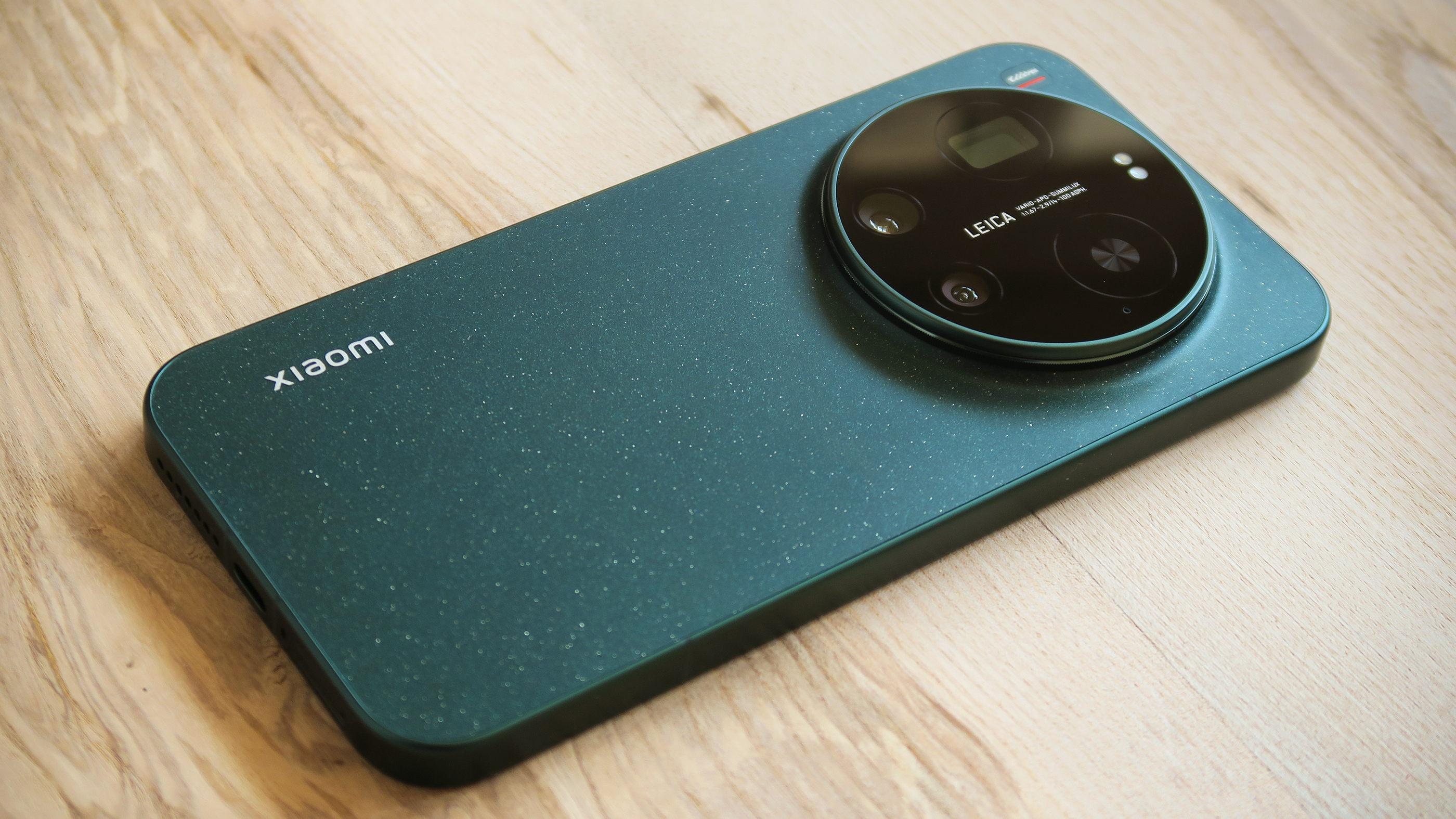
- Thinnest Ultra in the series yet
- Weighs up to 219g
- Black, White, and Starlit Green colorways
Last year's Xiaomi 15 Ultra went against the grain, with its rounded forms and curved cover glass. In contrast, the 17 Ultra is far more on-trend, embracing a flat-edged frame, front and back.
There's still subtle rounding along the edges of its aluminum alloy surround, to ensure the phone still feels comfortable enough to hold, in spite of its large size, but it is more of a slab than its predecessor, which won't suit everyone's aesthetic and ergonomic tastes.
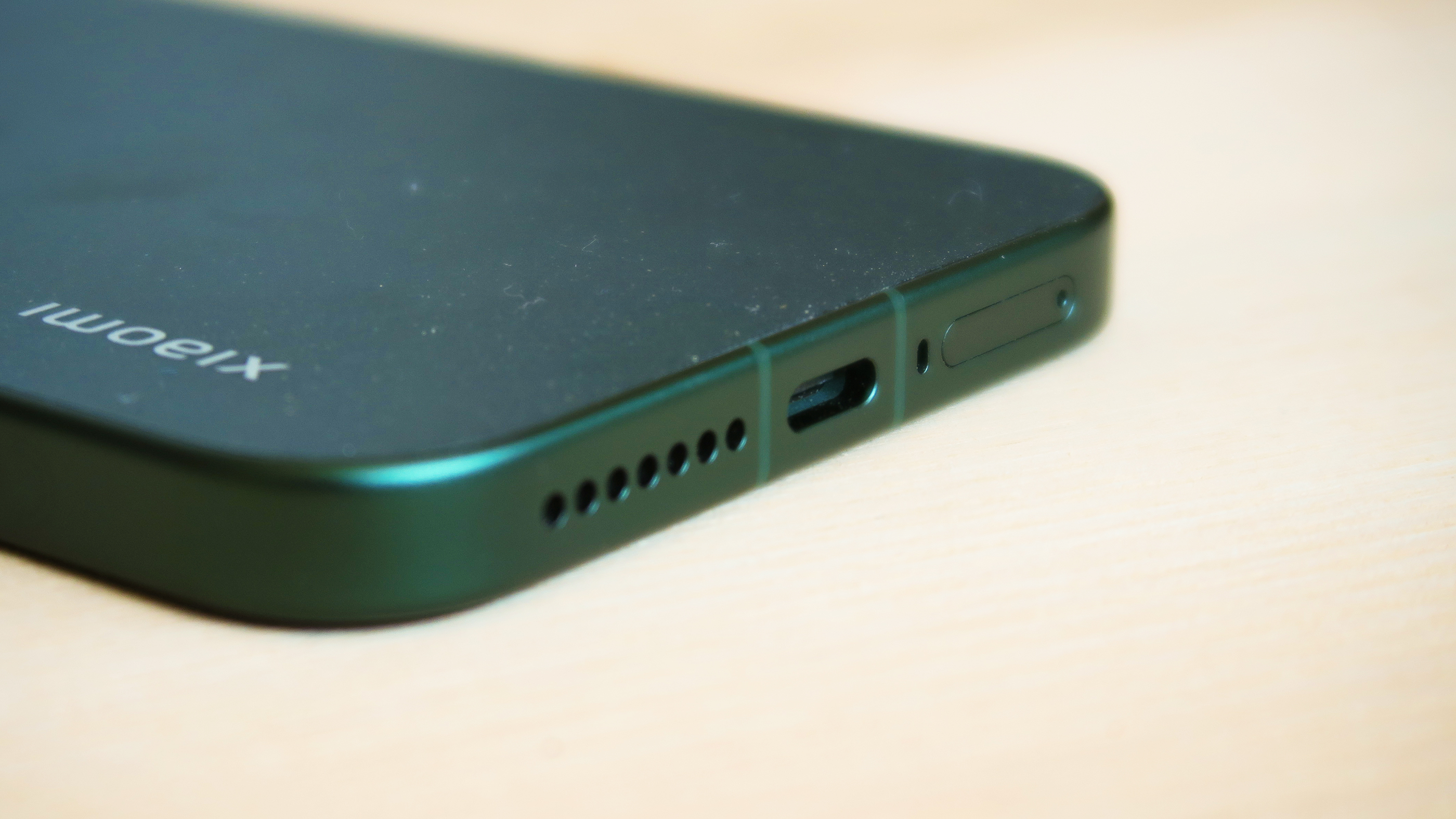
Flattening out does come with some practical benefits, though. Namely, more internal space, which allows for a larger battery and an improved cooling system, and that's despite the 17 Ultra clocking in as the thinnest in the series to date.
As mentioned in my initial Xiaomi 17 Ultra hands-on, at 8.29mm, the 17 Ultra is roughly 12% thinner than its predecessor, not to mention lighter too (by about ten grams), which makes all the difference in terms of pocket-friendliness and wrist fatigue.
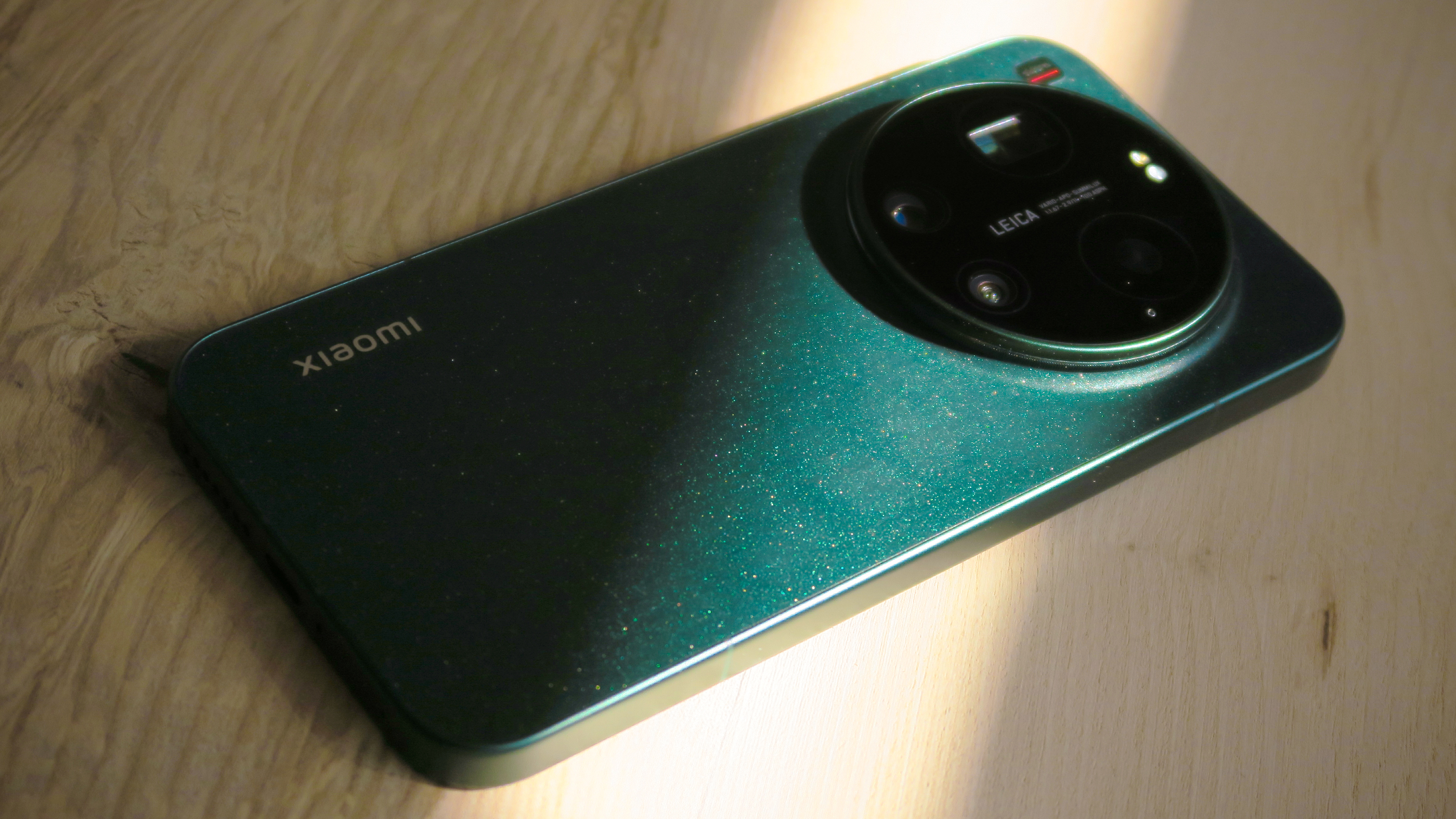
The back is hewn from composite fiberglass, which might not seem like a fitting material choice for an ultra-premium flagship phone, but it's better suited to the everyday rigors of use and is a huge contributor to keeping the 17 Ultra's weight down, so I'm all for it.
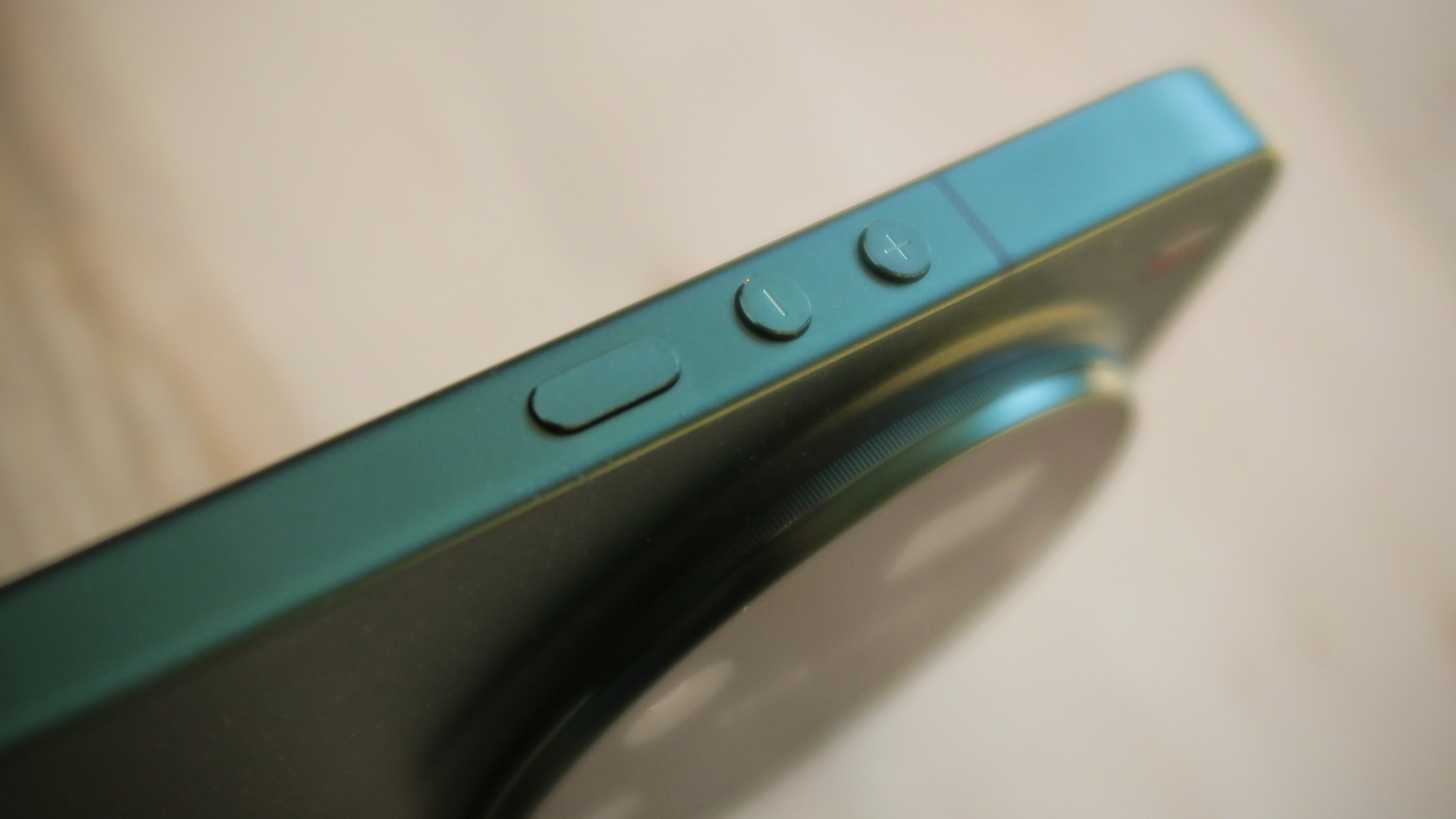
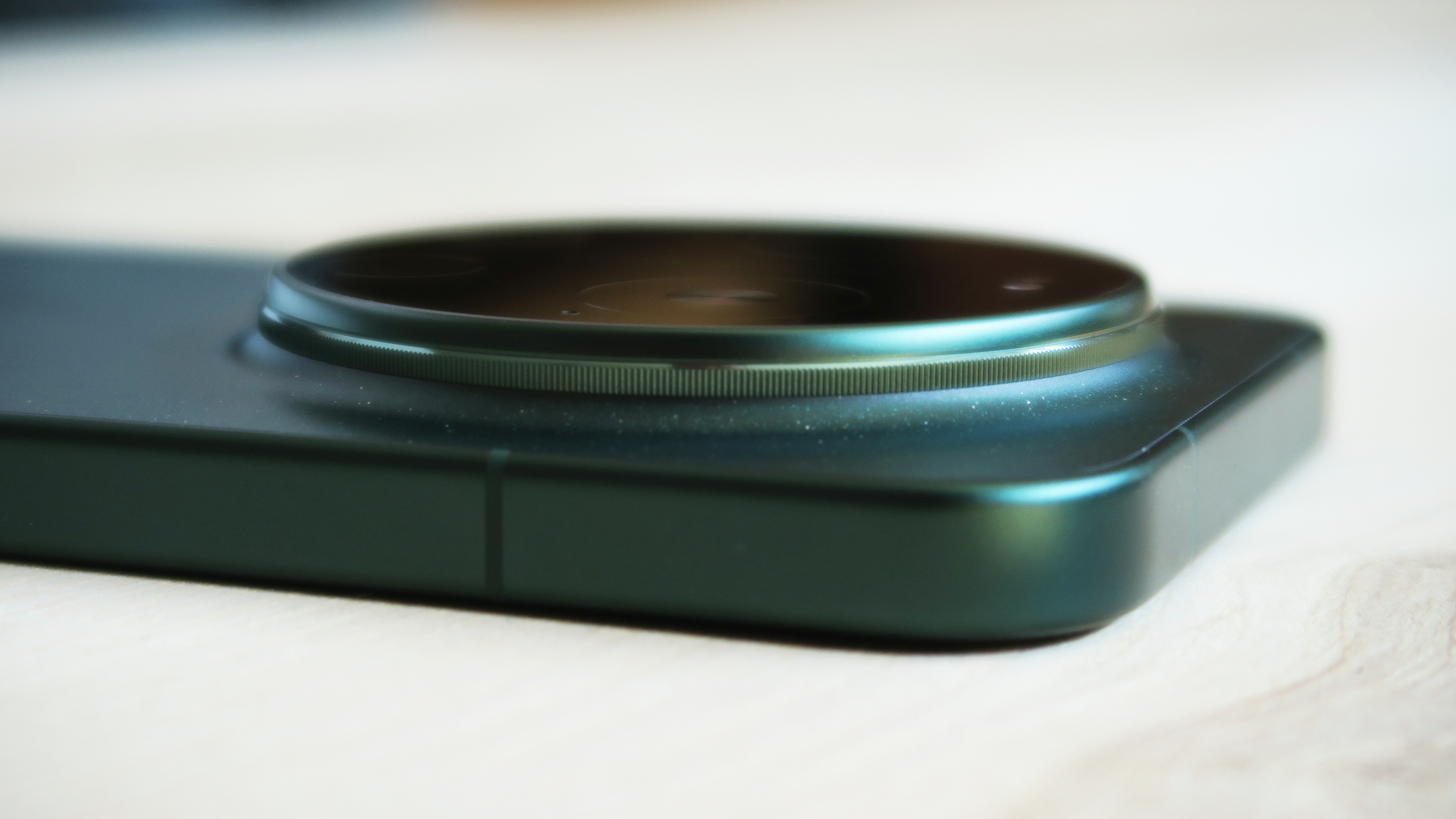
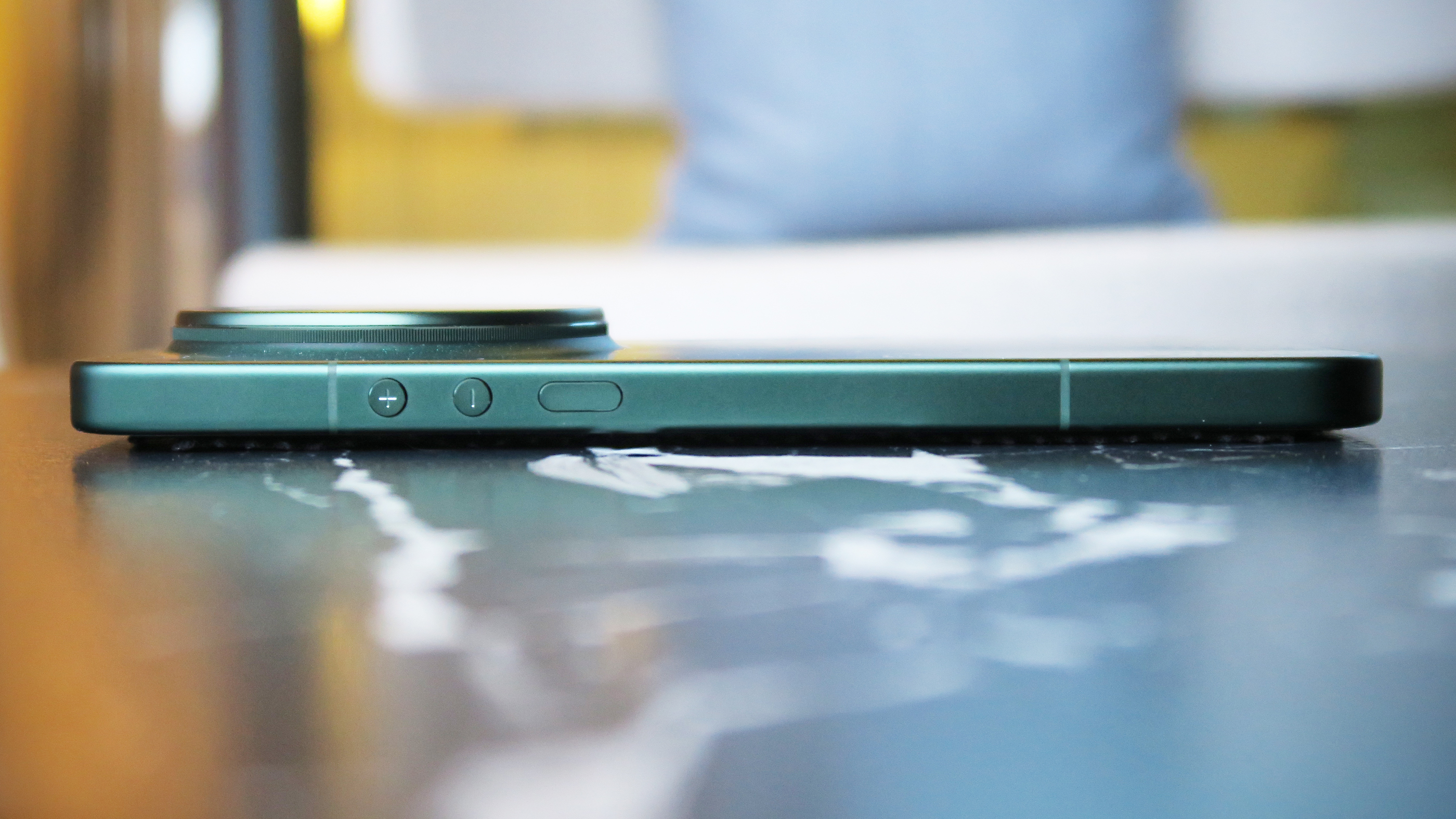
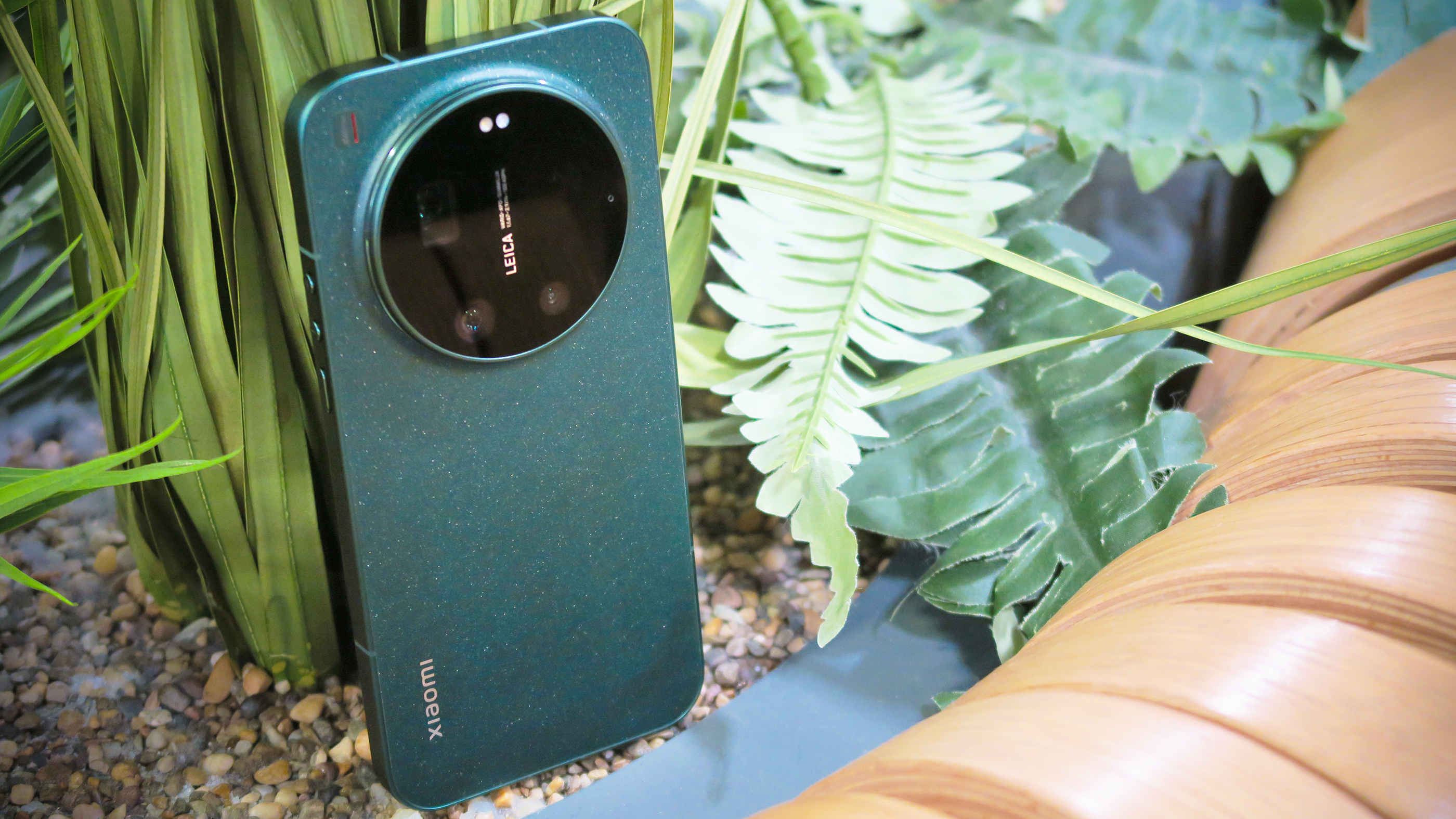
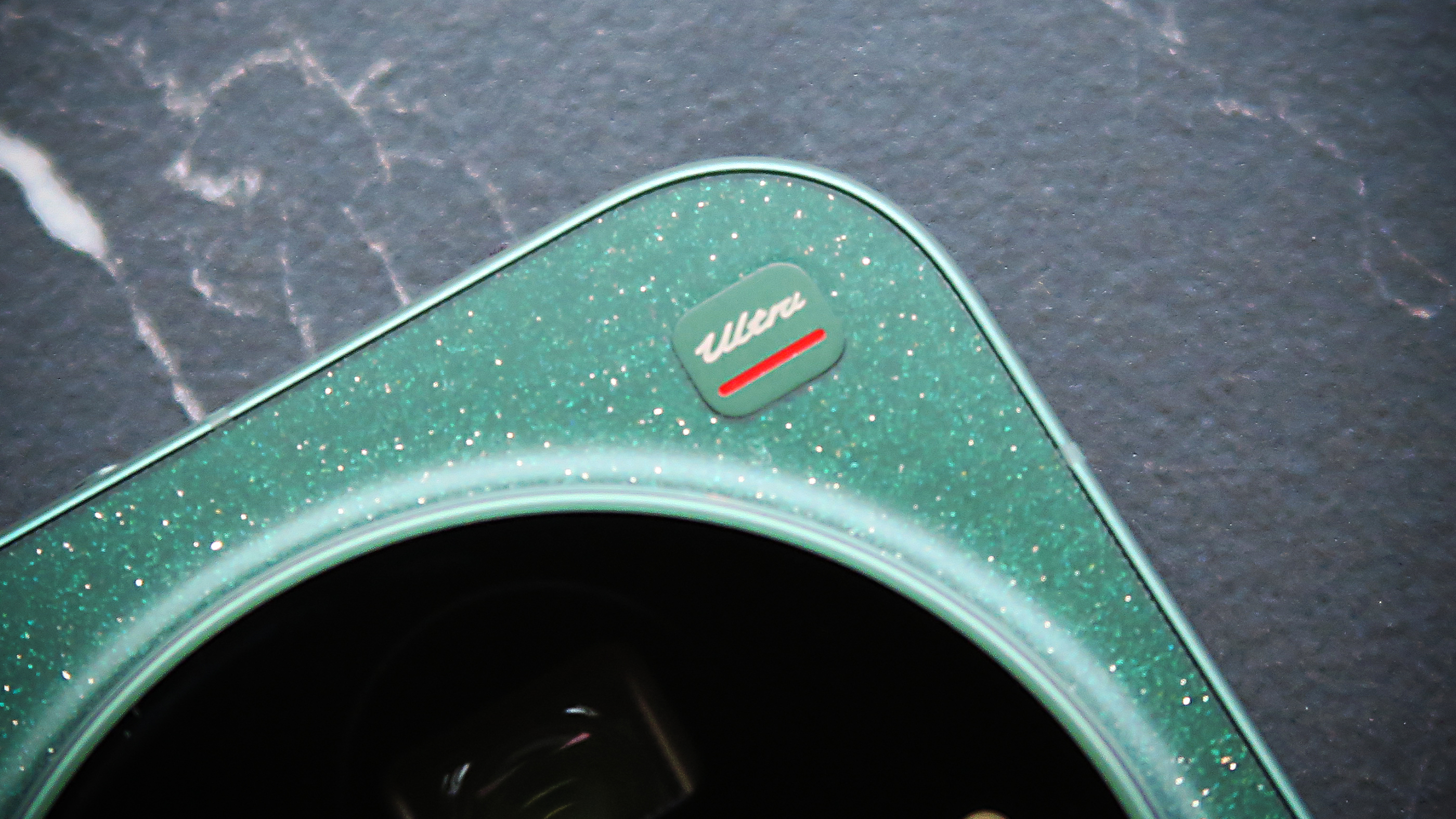
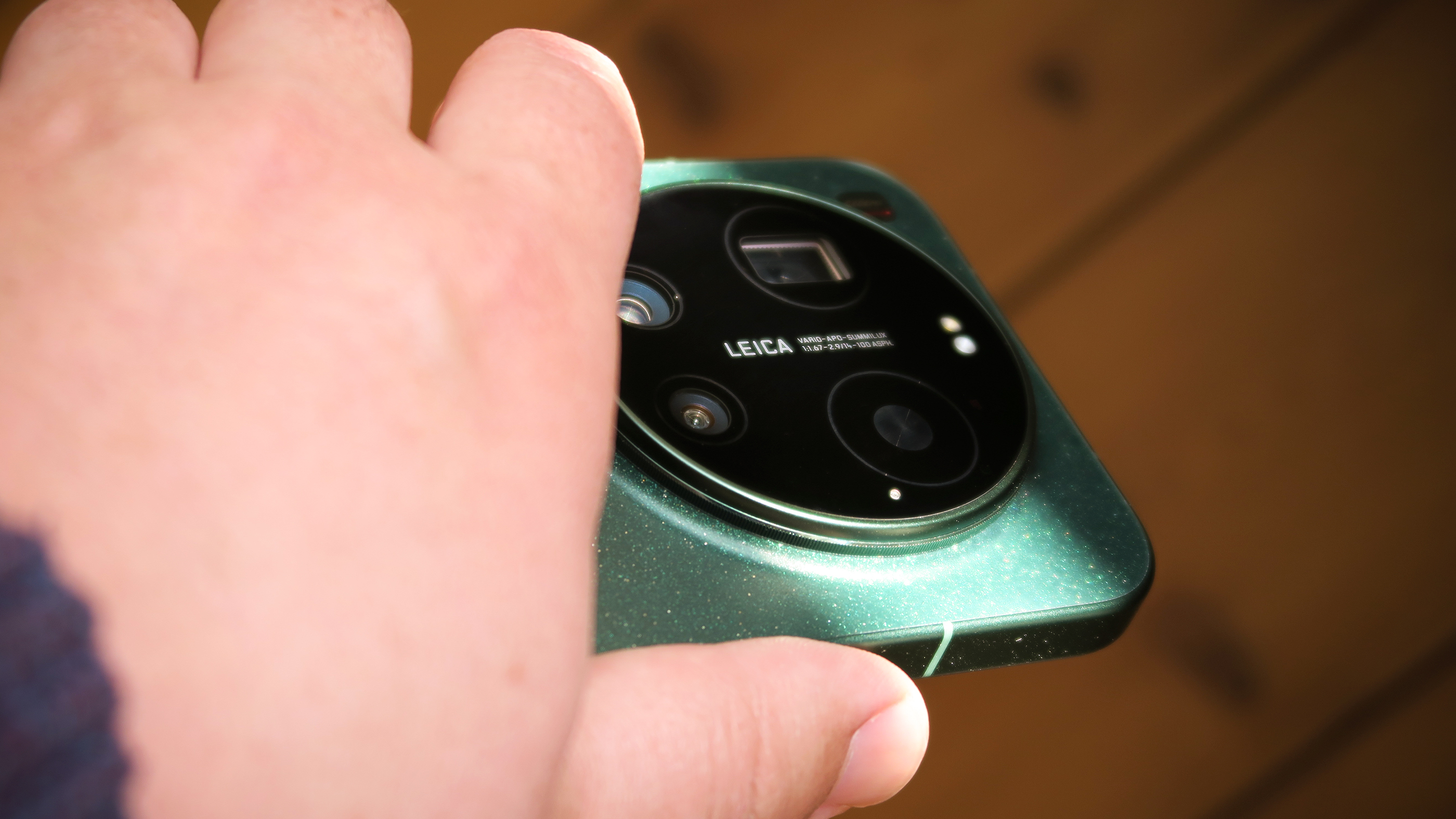
The sensors across the phone's huge circular camera plateau once again boast a more symmetrical look (after last year's less harmonious lens placement), the new circular metal volume buttons look and feel great, and the Starlit Green finish (pictured) has a unique charm among the current color palette in use by other flagship phones.
While the Xiaomi 17 Ultra comes in four colors in China, internationally, you only have three: Green, Black, and White (there's no Purple internationally).
The phone's IP certifications also vary by region. While its initial Chinese launch cited IP66, IP68, and IP69 ratings against dust and water ingress, once the international release took place, only IP68-grade protection was mentioned in official messaging.
I suspect the global model of the 17 Ultra is just as durable and water-resistant as its Chinese counterpart, even if Xiaomi hasn't paid to have it tested as thoroughly. Nonetheless, this remains a strange regional distinction that I've not seen mentioned elsewhere; rivals from the likes of Honor, Oppo, and OnePlus have pushed for additional IP69K certification, too, which is worth noting.
Alongside that tough aluminum alloy frame, the display is covered by Xiaomi's own Shield Glass 3.0, which the company claims is 30% more drop-resistant than the Xiaomi 15 Ultra's display. Its flatter form also makes applying screen protectors that little bit easier, too, although there is already a thin PET one that comes pre-applied.
The rear camera system, meanwhile, again uses Corning Gorilla Glass 7i as its defence, which, looking at my year-old 15 Ultra's camera, proves to be a suitably resilient option for everyday use.
Xiaomi 17 Ultra review: accessories
Xiaomi does also include a clear case in the box, which is appreciated, but as with its predecessors, you do also have the option of a photography kit, two in fact: a standard and a 'Pro' version.
As well as offering additional protection (with IP54 certification to boot), the Xiaomi 17 Ultra Photography Kit features a dedicated video record button and a two-stage shutter button.
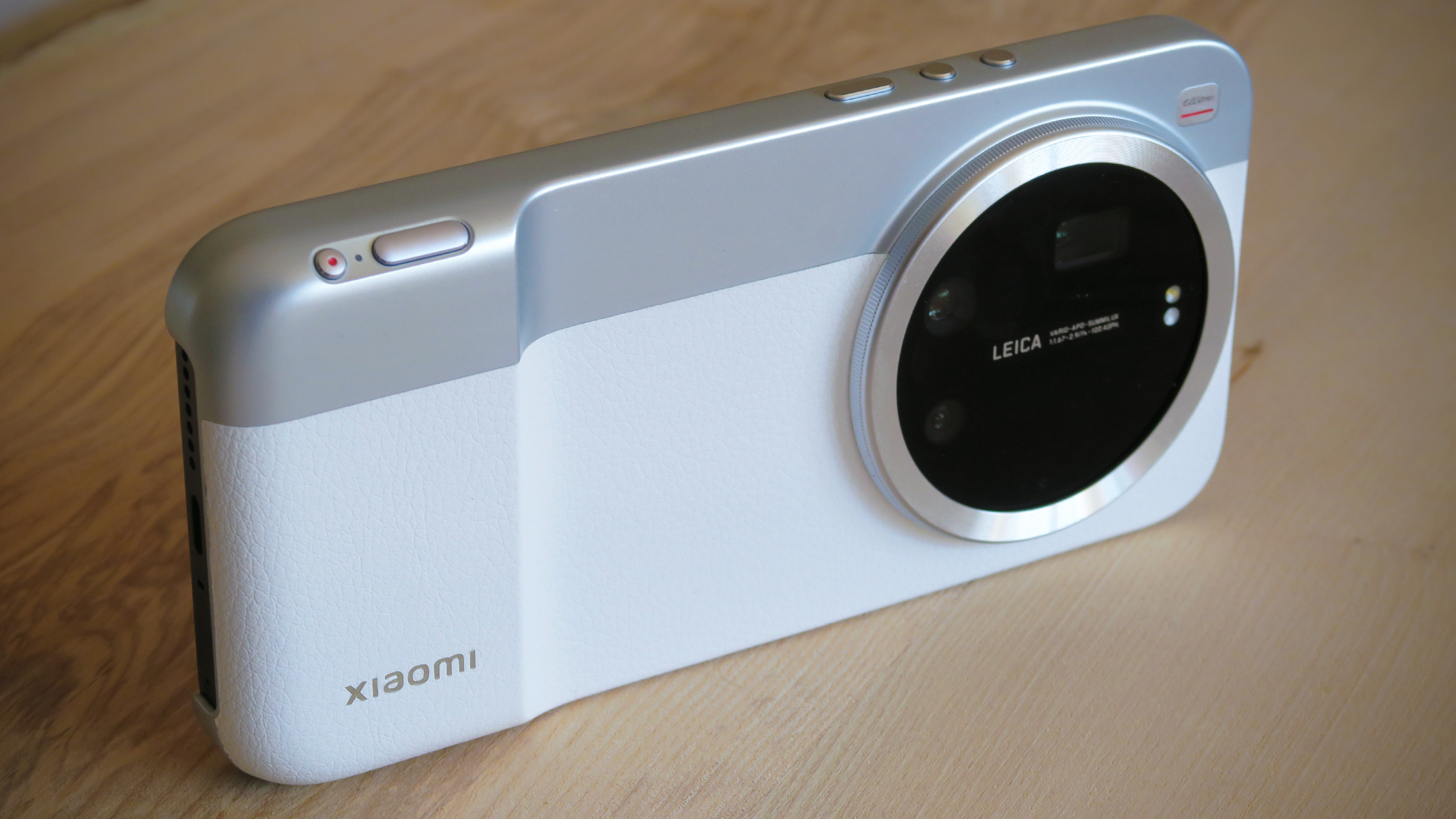
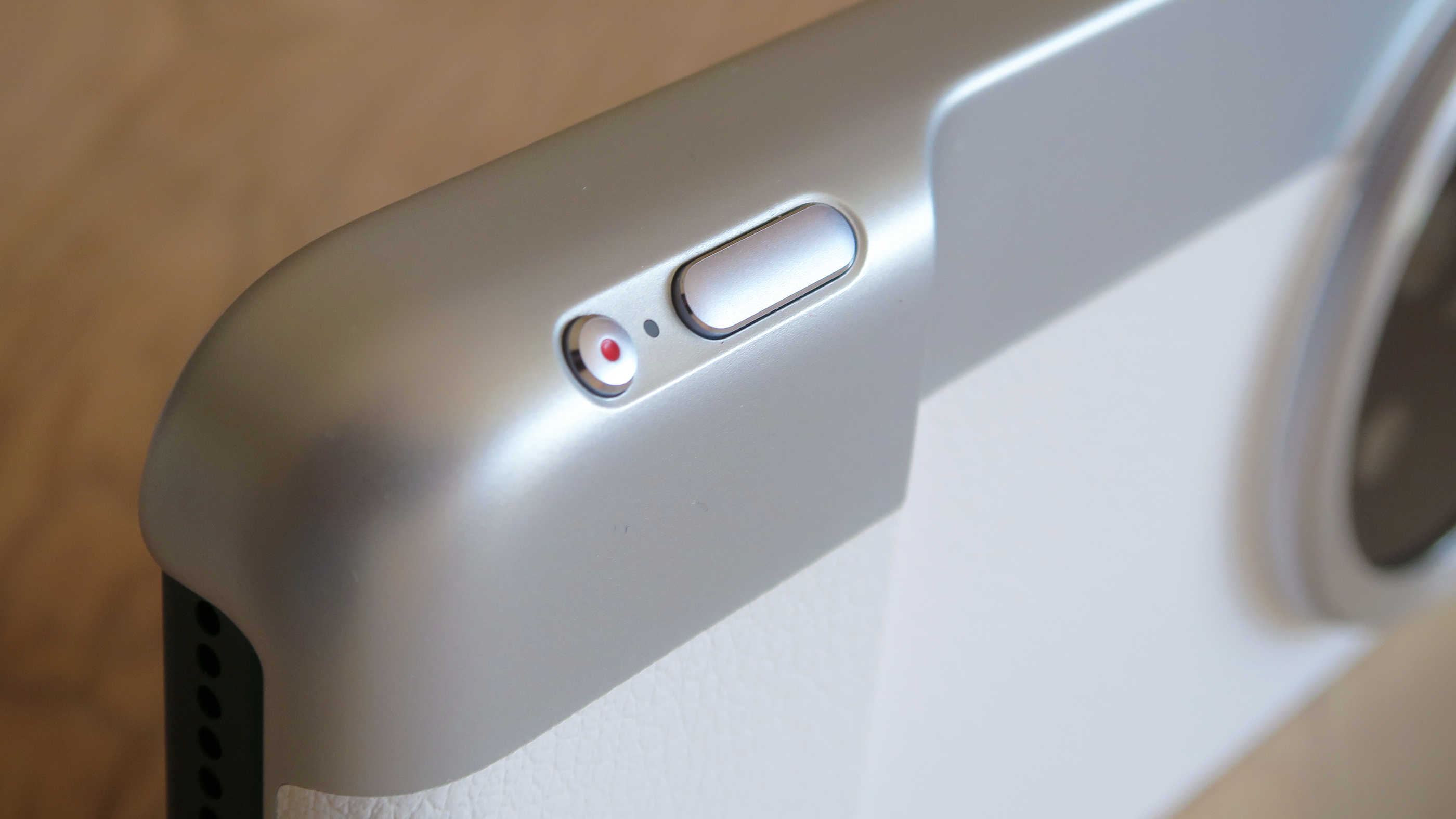
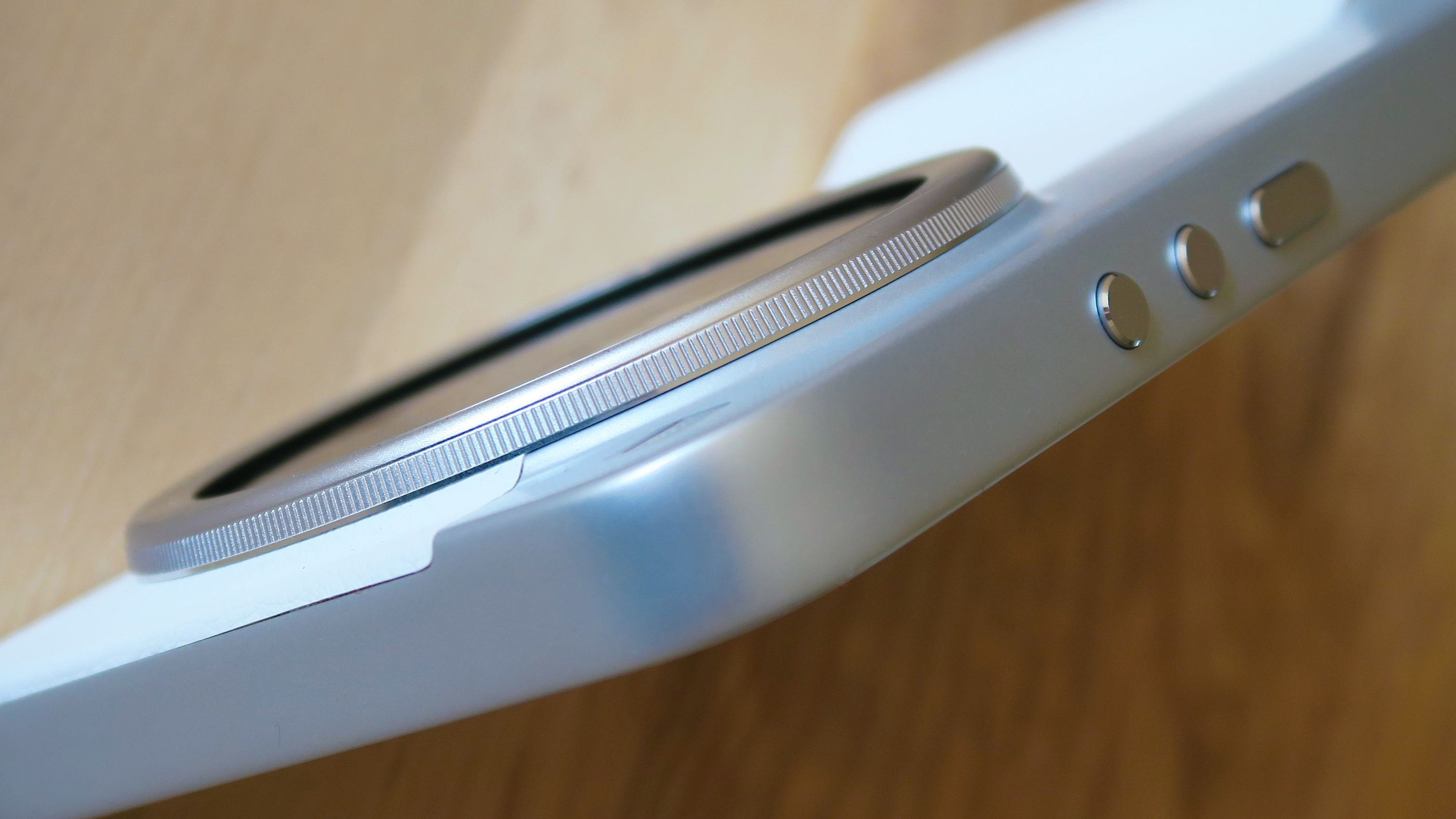
The design gives the phone a more 'camera'-inspired aesthetic (with better grip), in a nice two-tone finish with faux leather (available in black, white, or purple). Bluetooth connectivity makes for easy pairing and setup, but proprietary pogo-pin charging and the need to travel with a dedicated cable make it a little less convenient than it could have otherwise been.
As with previous iterations of the Ultra, rather than a single shell, the Xiaomi 17 Ultra Photography Kit Pro comes in two key parts: a case and a grip. This generation's case includes magnets to allow for connectivity with MagSafe-style accessories, like stands or even lights. It also sports a mounting ring, which lets you attach conventional 67mm ND filters and the like.
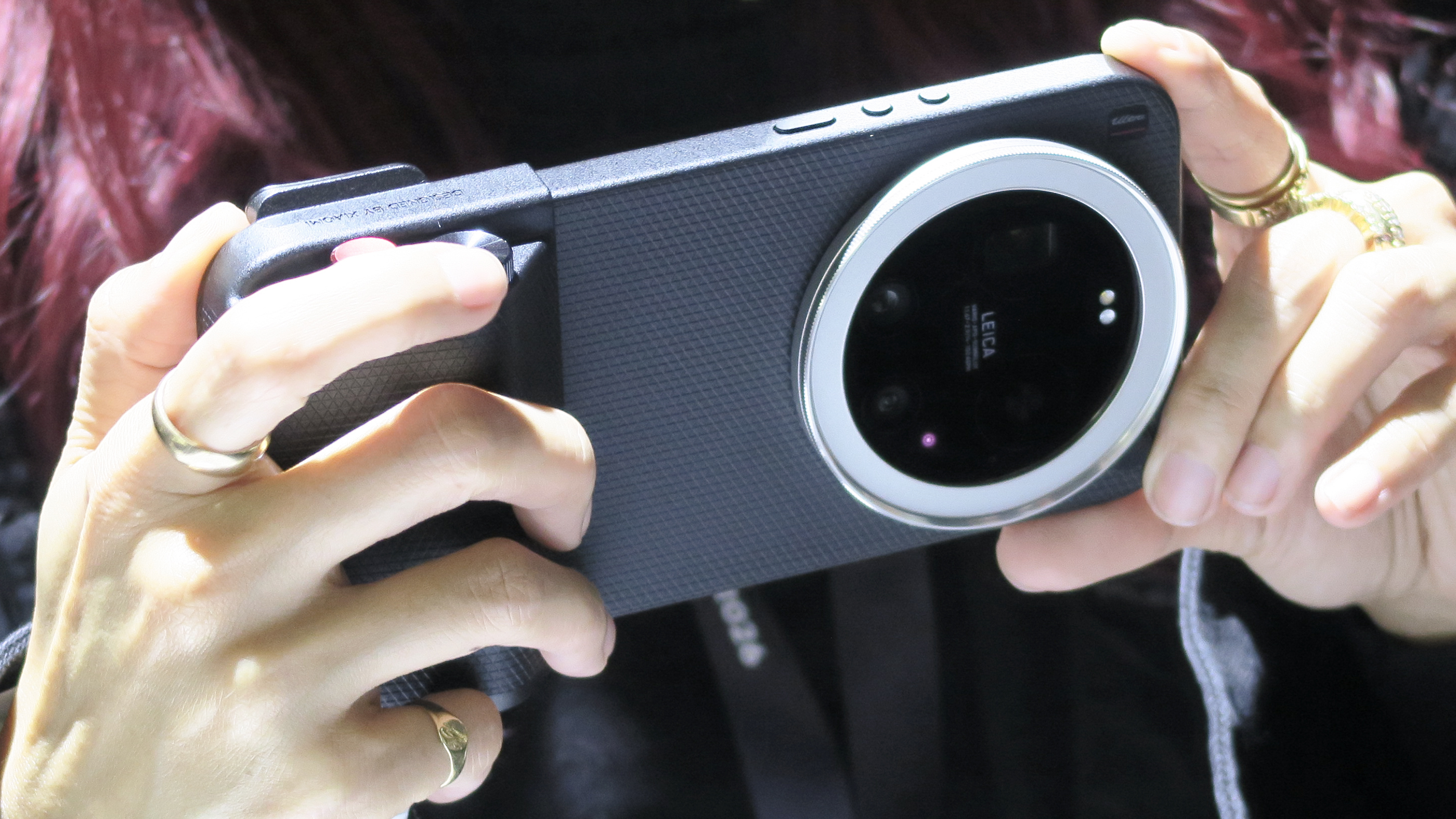
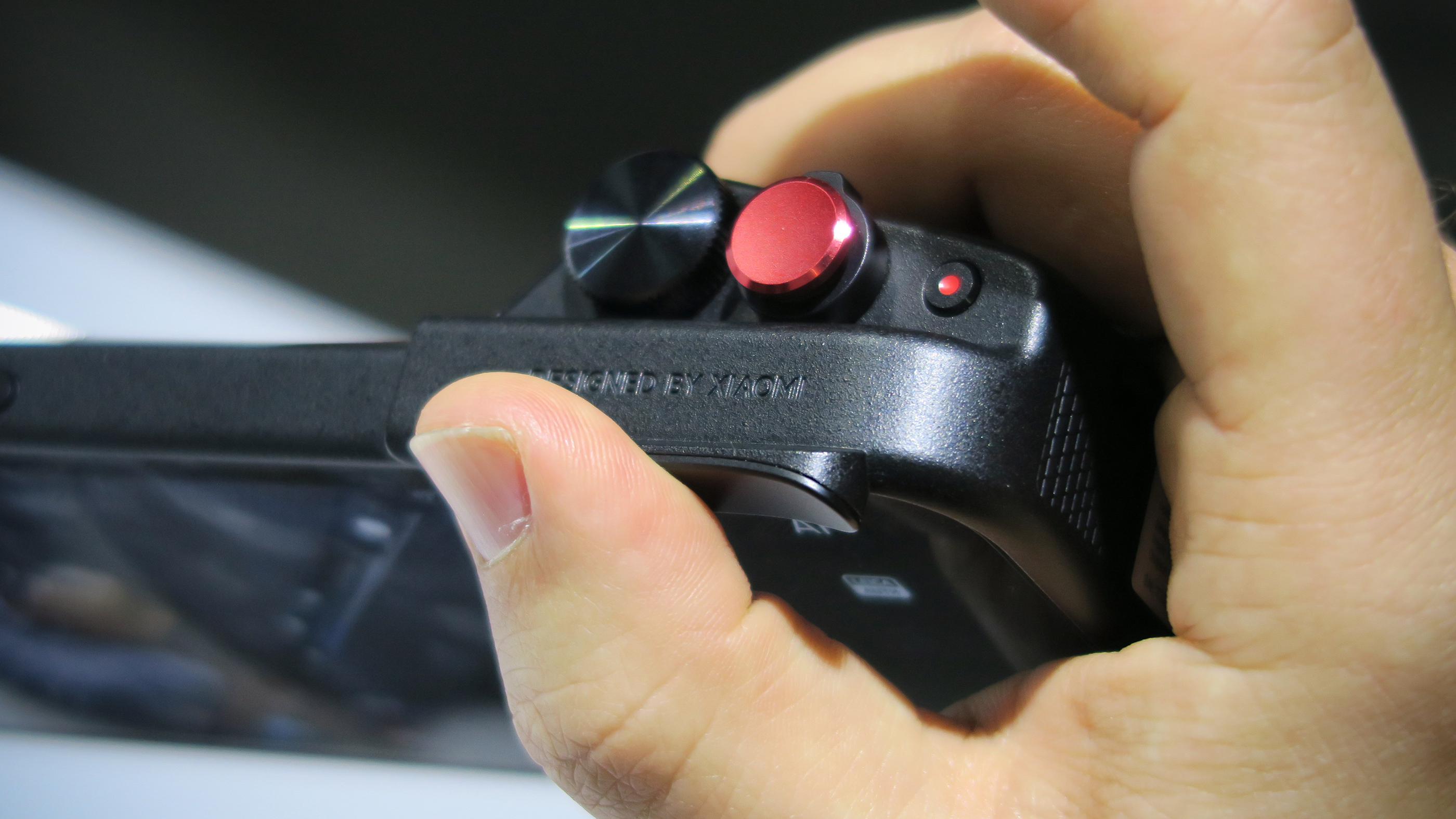
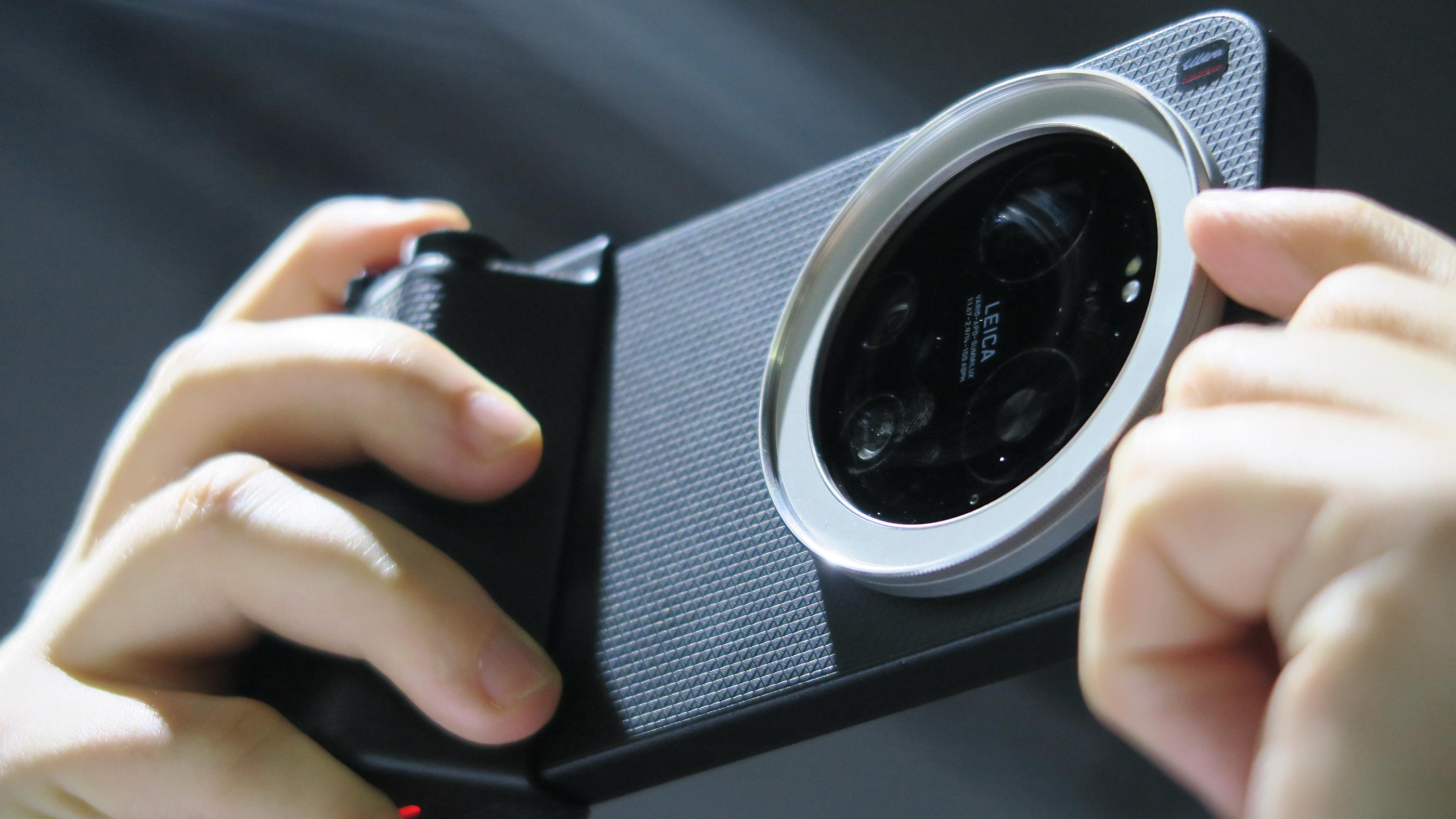
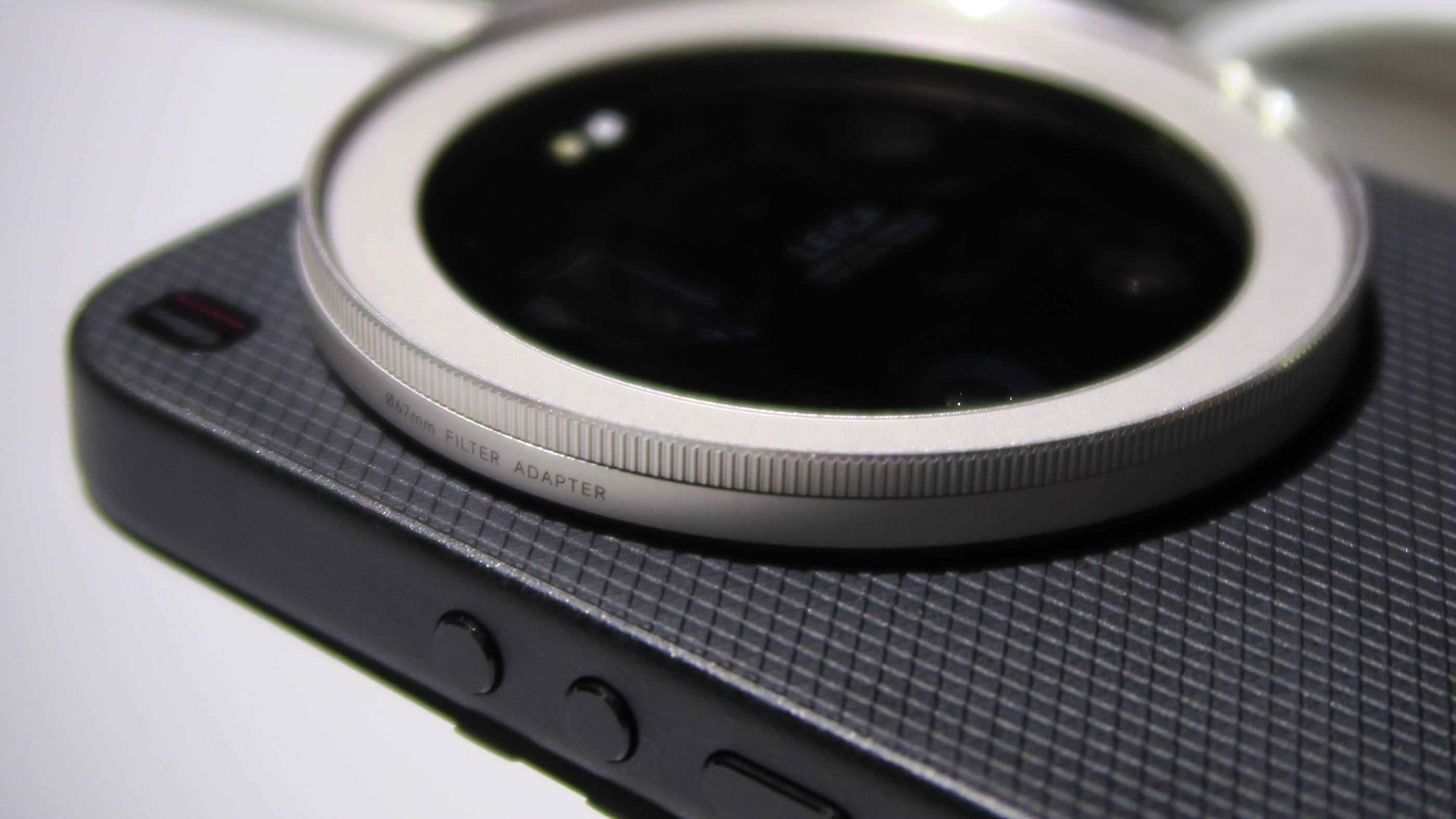
As for the grip, it connects directly to the phone's USB port, latching in place. It also doubles as a power bank, thanks to an integrated 2,000mAh battery (which itself charges via a USB port in the grip).
As well as a two-stage shutter key and record button — like the non-Pro camera kit — here you also gain a zoom rocker, a thumb rest, and a customizable dial (a new addition for this generation), which can be programmed to control ISO and the like.
All in all, Xiaomi seems to have paid particularly close attention to refining this generation of Ultra phone, and that carries through to these accessories too.
Serious mobile photographers might dock Xiaomi a couple of points for omitting a teleconverter — the likes of which you'll get with equivalent photography kits for the Oppo Find X9 Ultra and Vivo X300 Ultra — but that doesn't stop this generation from being an excellent refinement on its predecessors.
- Design score: 5 / 5
Xiaomi 17 Ultra review: display
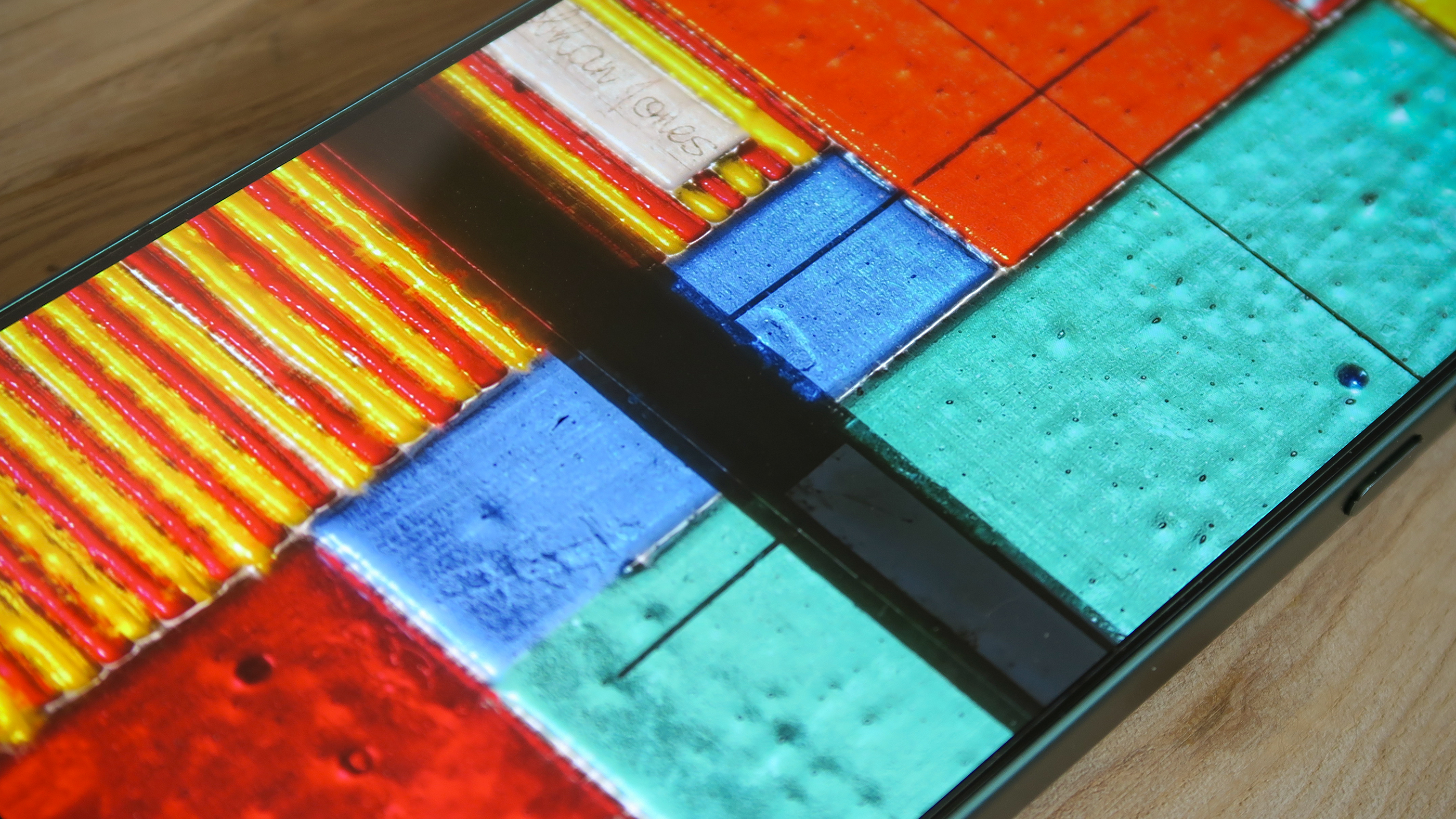
- Huge 6.9-inch 120Hz 1200 x 2608 OLED screen
- Up to 3,500nits across a 25% APL
- Ultrasonic fingerprint sensor
At 6.9 inches, this is the largest display on one of Xiaomi's Ultras to date, and despite a drop in resolution (moving from 522ppi down to 416ppi), compared to the 15 Ultra, in real-world use, it certainly doesn't feel like a downgrade.
That's thanks in part to a new sub-pixel structure, which Xiaomi calls 'HyperRGB,' granting greater clarity that helps mitigate the generational loss in resolution. The TCL CSOT-supplied screen also features the company's M10 emissive material, which promises improved power efficiency, while support for 12-bit color depth (achieved by pairing a 10-bit panel with frame rate control or 'FRC') adds an extra layer of future-proofing to the viewing experience.
You're also getting a brighter peak output of 3,500 nits (up from 3,200 nits) across a 25% APL (Average Picture Level), rather than a single-point figure, while LIPO (low-injection pressure over-molding) — popularized by the iPhone and previously seen on the likes of the Xiaomi 15T Pro — gives the 17 Ultra impressively thin bezels.
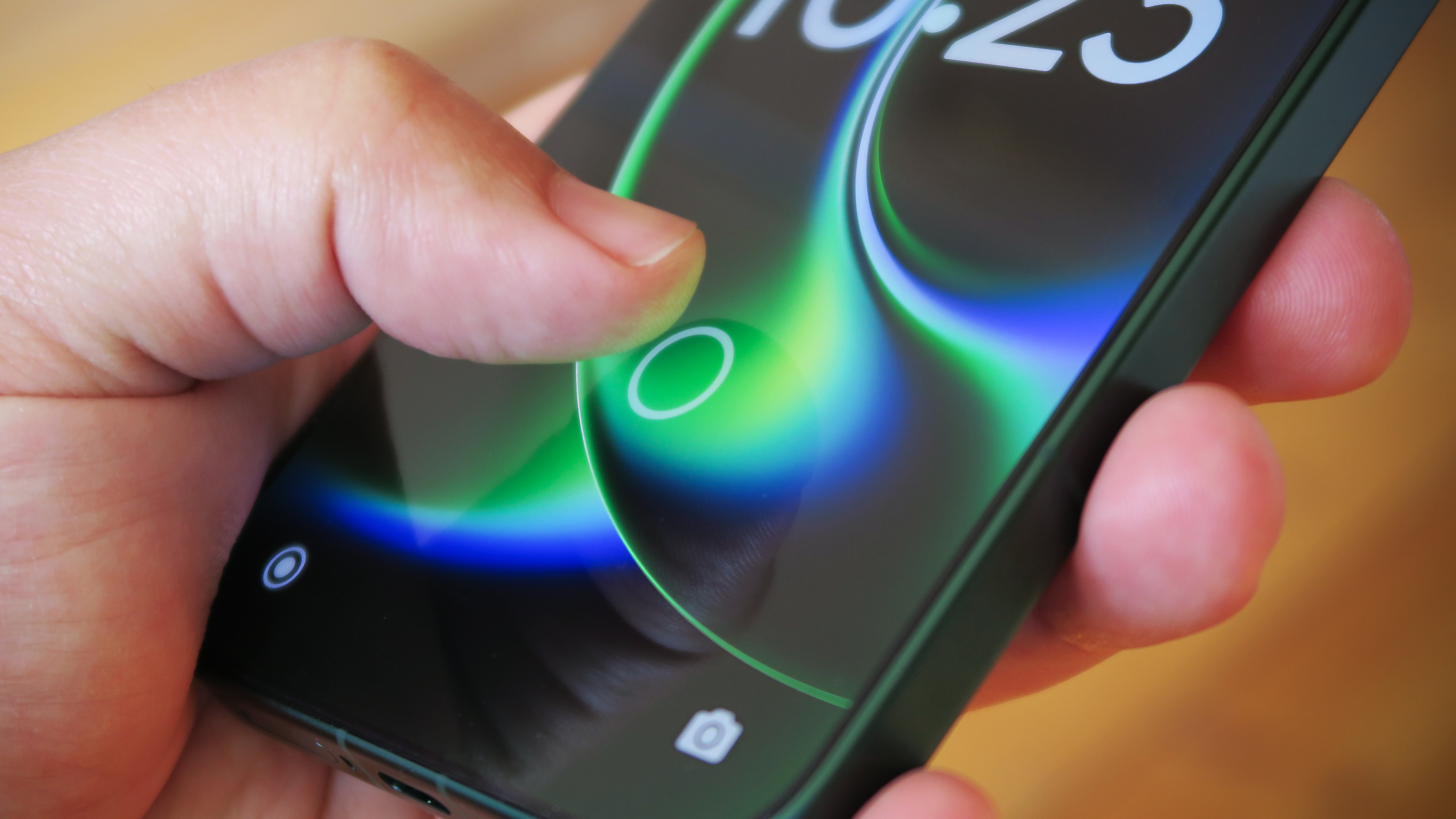
Pair all that with the underlying OLED tech, and you're getting excellent contrast and an immersive, bright, vivid viewing experience.
Being an LTPO panel, the 17 Ultra's 120Hz refresh rate is truly dynamic too, able to scale between 1Hz and 120Hz, with Xiaomi's tuning serving up consistently higher refresh rates than other 120Hz LTPO phones I've tested of late, across both first and third-party apps.
Xiaomi's display settings let you control the color space with impressive granularity, while also letting you toggle between refresh rate modes, eye comfort tools, and more. It's really only Honor that has gone deeper into the display customization experience.
The ultrasonic fingerprint sensor is pleasingly consistent and quick, with the added bonus of being able to unlock the phone when the screen is off, too. All in all, then, the Xiaomi 17 Ultra boasts one of the best mobile displays on the market.
- Display score: 5 / 5
Xiaomi 17 Ultra review: software
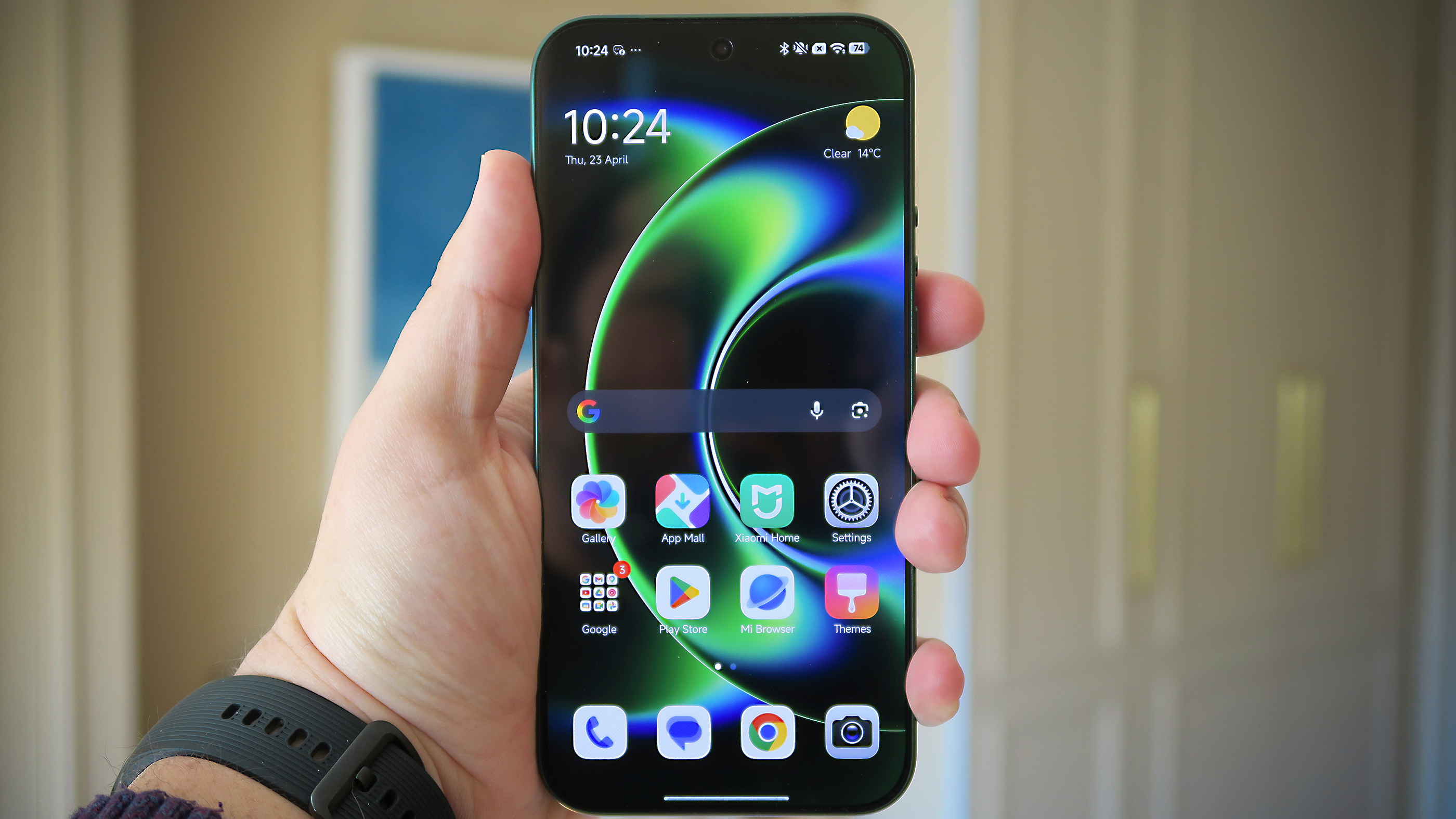
- HyperOS 3 atop Android 16 out the box
- Xiaomi HyperConnect works with Windows, iOS, MacOS and more
- 5 years OS + 6 years security update support
One aspect that's previously hurt the best Xiaomi phones has been longevity; not in terms of battery life, but in terms of software support.
Xiaomi's commitment to OS and security updates has lagged behind the likes of Apple, Google, and Samsung, which — especially when it comes to the brand's pricier phones — undermines their long-term value.
Thankfully, while still not quite on par with those aforementioned competitors, the Xiaomi 17 Ultra is closer than ever in terms of software longevity, gaining an extra year of OS upgrade support over its similarly pricey predecessor, with five years of releases, paired to six years of security patches.
Like the base Xiaomi 17, the Ultra arrives with the company's latest HyperOS 3 release (atop Android 16), which comes with its own eccentricities that will take some getting used to, especially if you're accustomed to a cleaner build of Android, as found on the likes of the best Pixel phones and best Motorola phones.
Those making the jump from iOS, however, might actually be surprised by how familiar HyperOS 3 looks and feels. Xiaomi (much like Honor and Oppo) has clearly taken a lot of inspiration from the last few iterations of Apple's iPhone operating system.
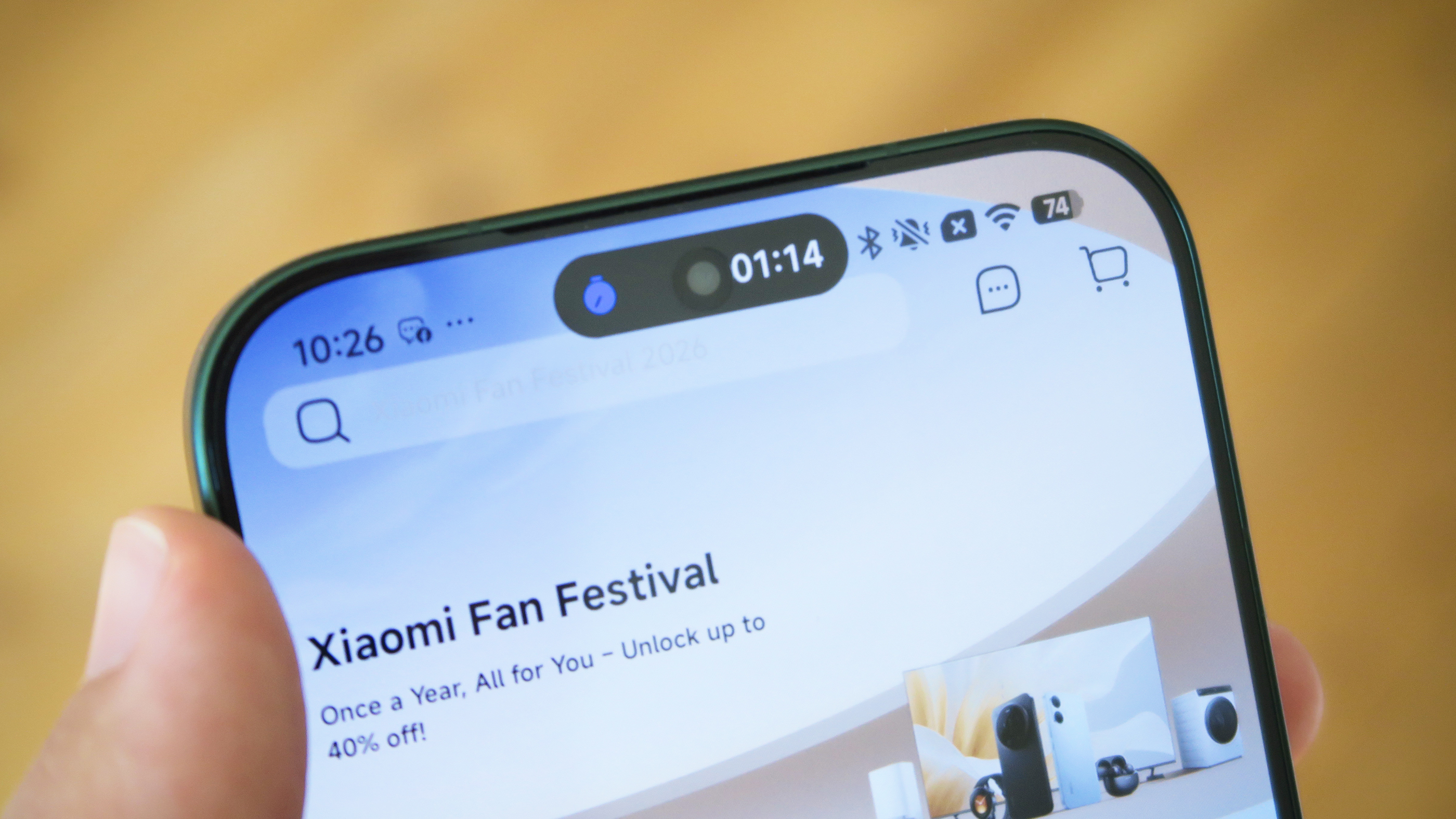
HyperIsland is one prominent new addition that — as with Honor's Magic Capsule and Oppo's Live Alerts — gives the 17 Ultra some Dynamic Island-like functionality. Active tasks like music playback, timers, and audio recording can run simultaneously, as well as be swiped between and interacted with, all without you having to open up any of their respective apps completely. While unoriginal, it's nonetheless a handy new feature.
Xiaomi's also been ahead of the curve with regard to interoperability, with 'HyperConnect' allowing for fast AirDrop-style wireless file transfer between Xiaomi and Windows or iOS/iPadOS/MacOS devices, long before Samsung or Google even considered adding native AirDrop compatibility.
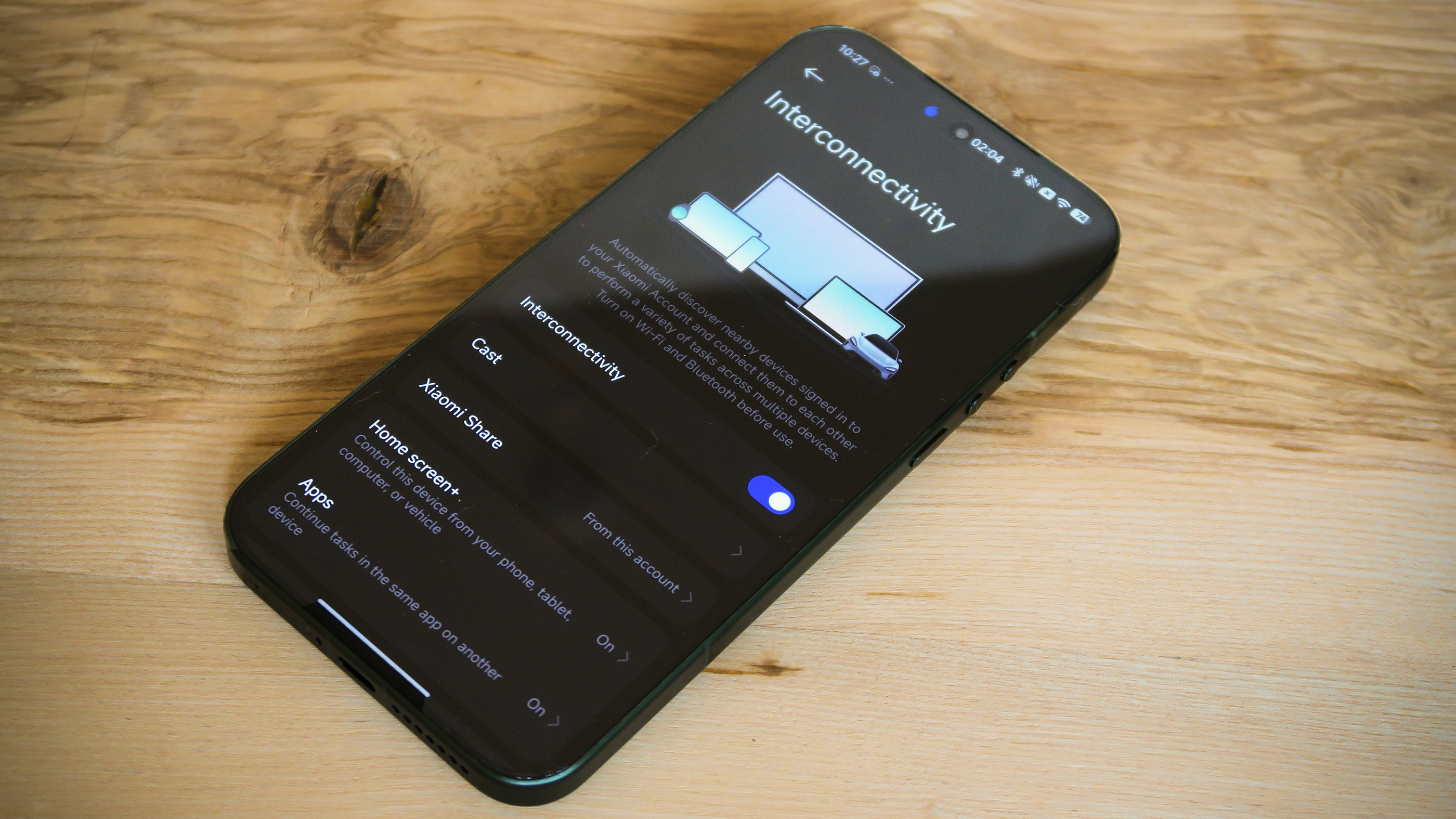
The company's AI features are ever-expanding, and in addition to Google Gemini Live with Camera Share, its native image editing tools — although not best-in-class — are both varied and do a decent job for things like upscaling, outpainting, and object erasure. That's on top of an already powerful set of non-AI image editing tools within HyperOS' native Gallery app.
While Xiaomi is also responsible for some great affordable phones, the HyperOS experience they offer tends to come littered with additional bloatware and even baked-in ads, both of which soil an otherwise rich user experience. Thankfully, when it comes to the company's more premium offerings, those faux pas are pleasingly absent.
- Software score: 4 / 5
Xiaomi 17 Ultra review: cameras
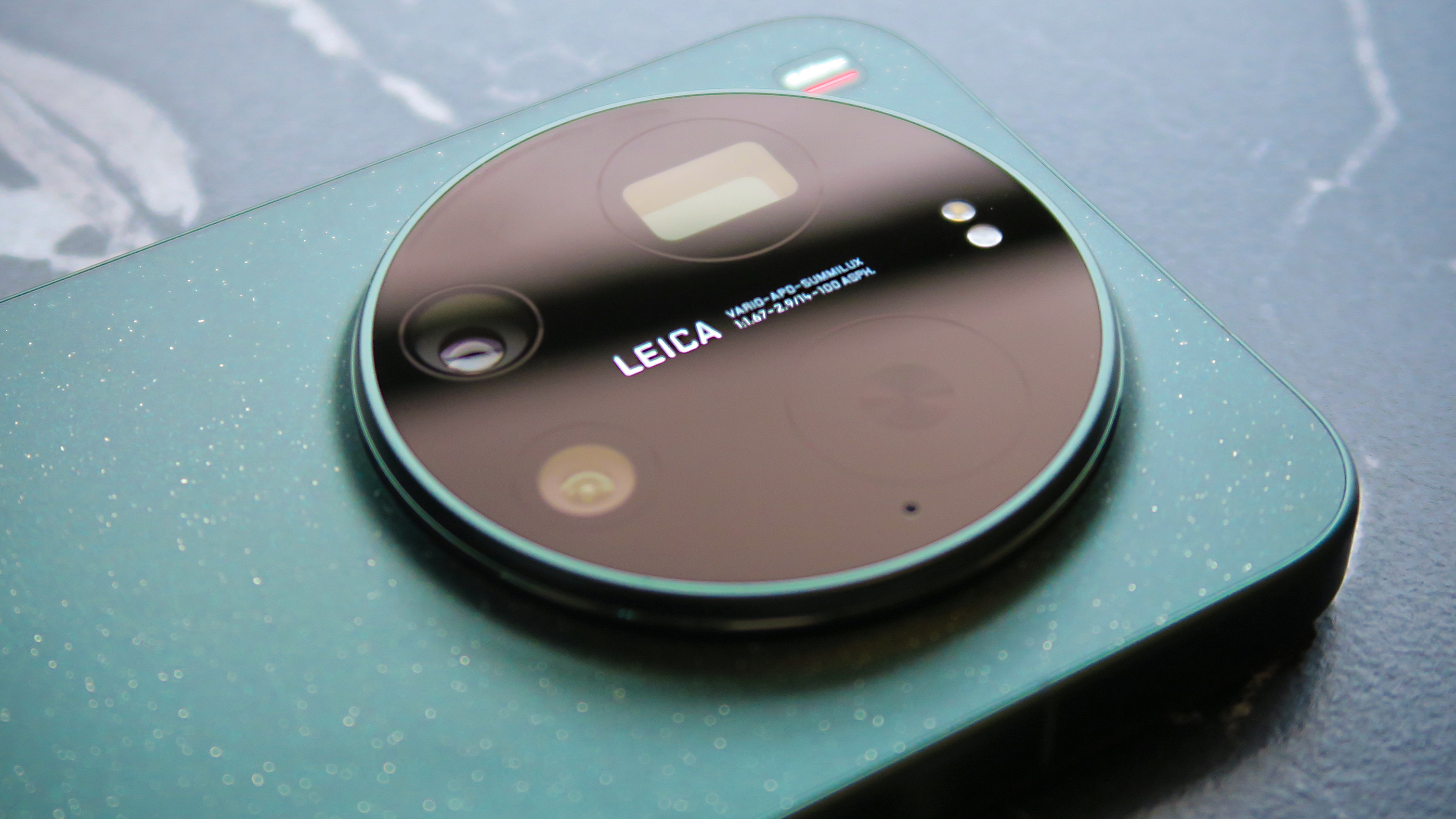
- Standout 50MP 1-inch main sensor w/ LOFIC + 200MP telephoto w/ mechanical zoom
- Leica presets and APV codec support
- Up to 4K/120fps video recording w/ Dolby Vision
Big sensors remain at the heart of the Ultra camera experience this year. As with the 15 Ultra, Xiaomi's latest phone again boasts a 50MP 1-inch main camera, with a 23mm-equivalent focal length, but Sony's sensor tech has been swapped out for OmniVision's this time around.
The Light Fusion 1050L sensor is among the first to support LOFIC (Lateral Overflow Integration Capacitor) tech on mobile, improving the 17 Ultra's dynamic range by an additional 2.5 stops, compared to the 15 Ultra's main lens. The base Xiaomi 17 (which lacks LOFIC) offers a 13.5EV range, to the 17 Ultra's outstanding 16.5EV stops.
Rather than relying solely on combining bracketed shots for HDR processing, LOFIC grants the 17 Ultra's main sensor additional headroom at a hardware level to prevent highlights from blowing out. This not only improves dynamic range, but also reduces the risk of artifacting, especially with longer exposures and low-light shooting.
The ultra-wide hardware appears unchanged, and there's only a single telephoto in place of the 15 Ultra's pair of sensors, but don't despair. Xiaomi has only gone and given the huge new 1/1.4-inch 200MP HPE telephoto sensor mechanical optical zoom, between an equivalent 75mm and 100mm (3.2x to 4.3x), as well as "optical quality" zoom up to 17.2x (equivalent to 400mm).
Sprinkle all that with a hybrid glass-element lens construction, the first example of an APO Leica lens on a smartphone, and an evolution of the same superb image processing as its predecessors, and the Xiaomi 17 Ultra easily finds its place among the best camera phones of the moment.
Xiaomi 17 Ultra camera samples
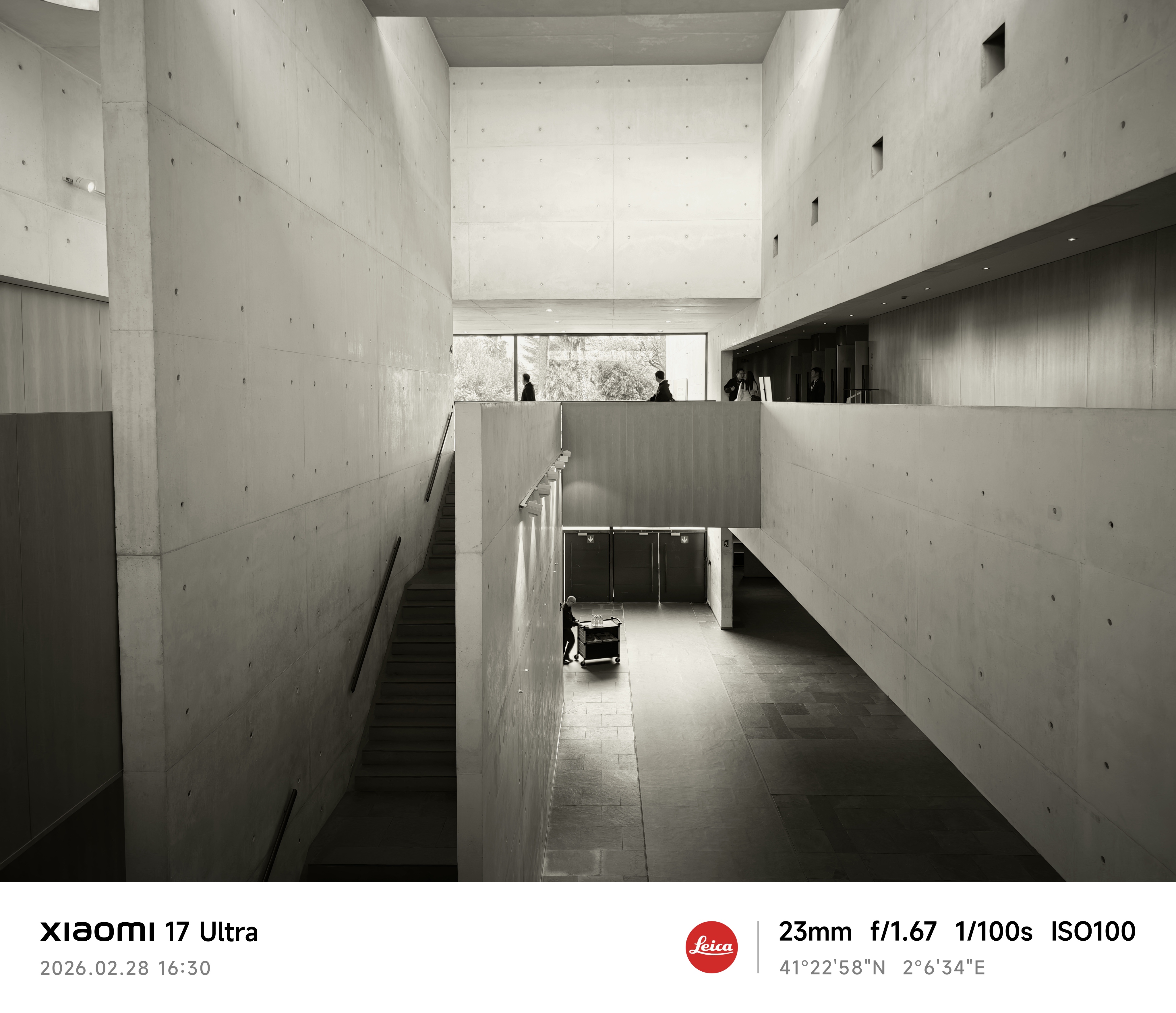
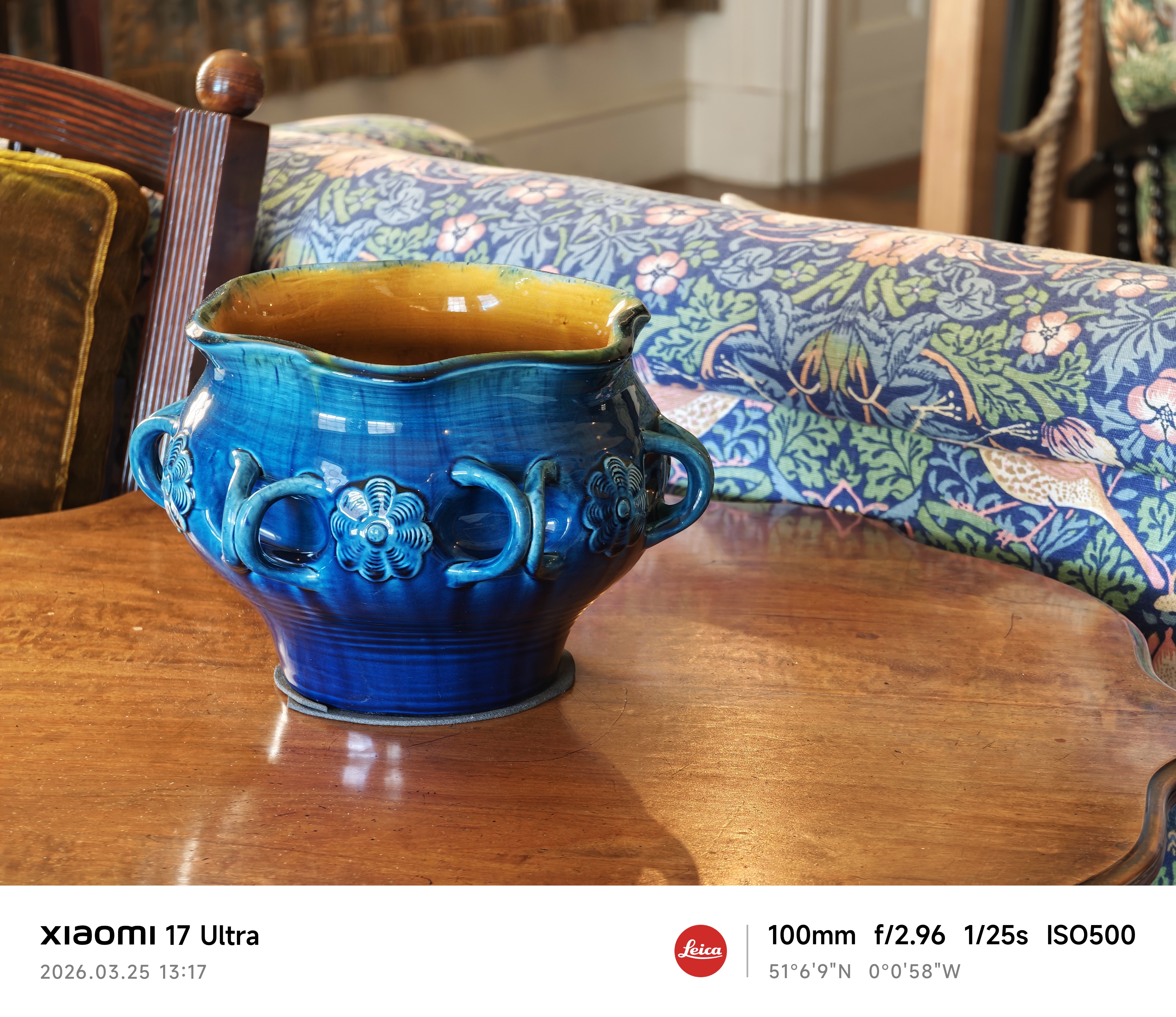
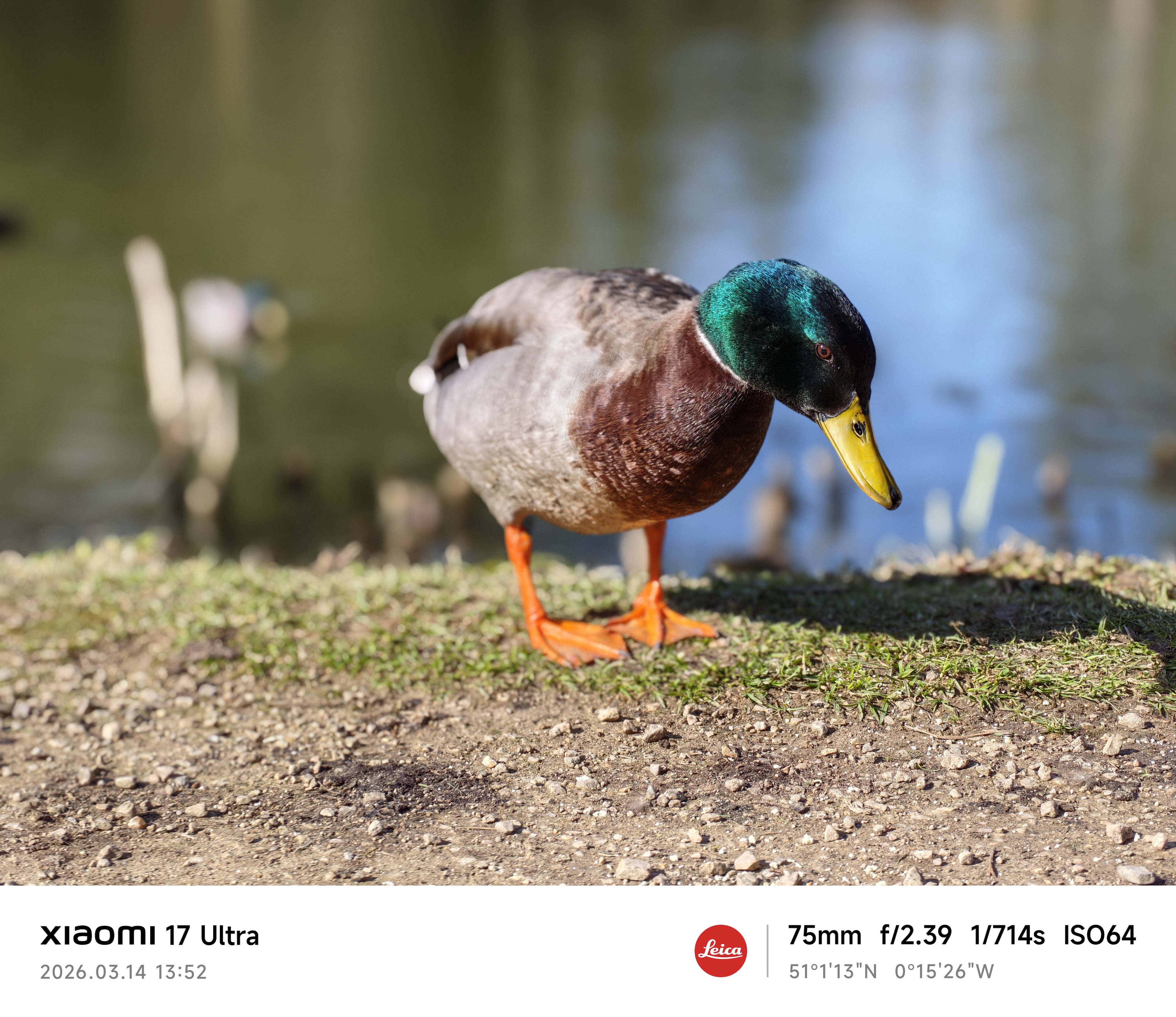
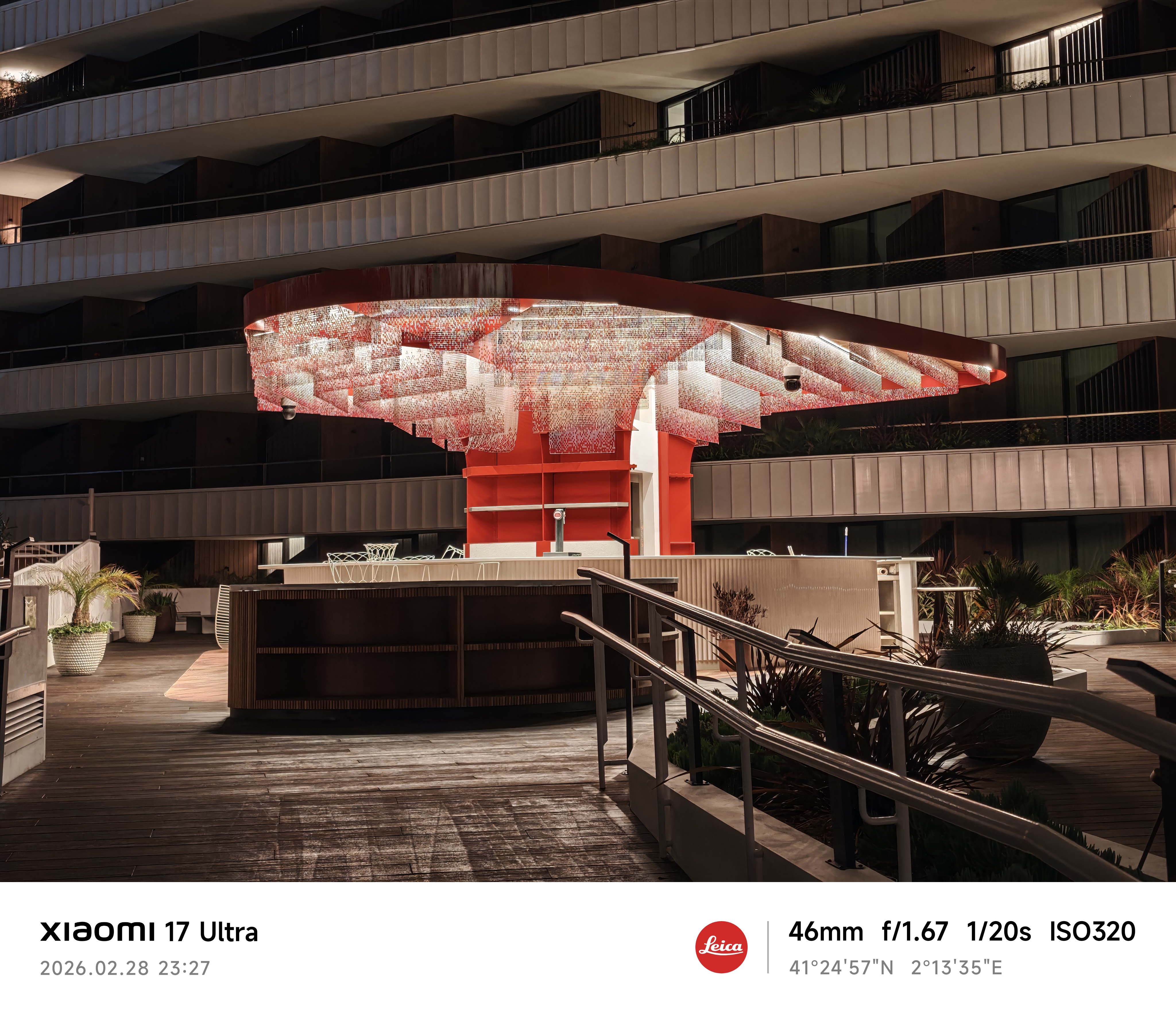
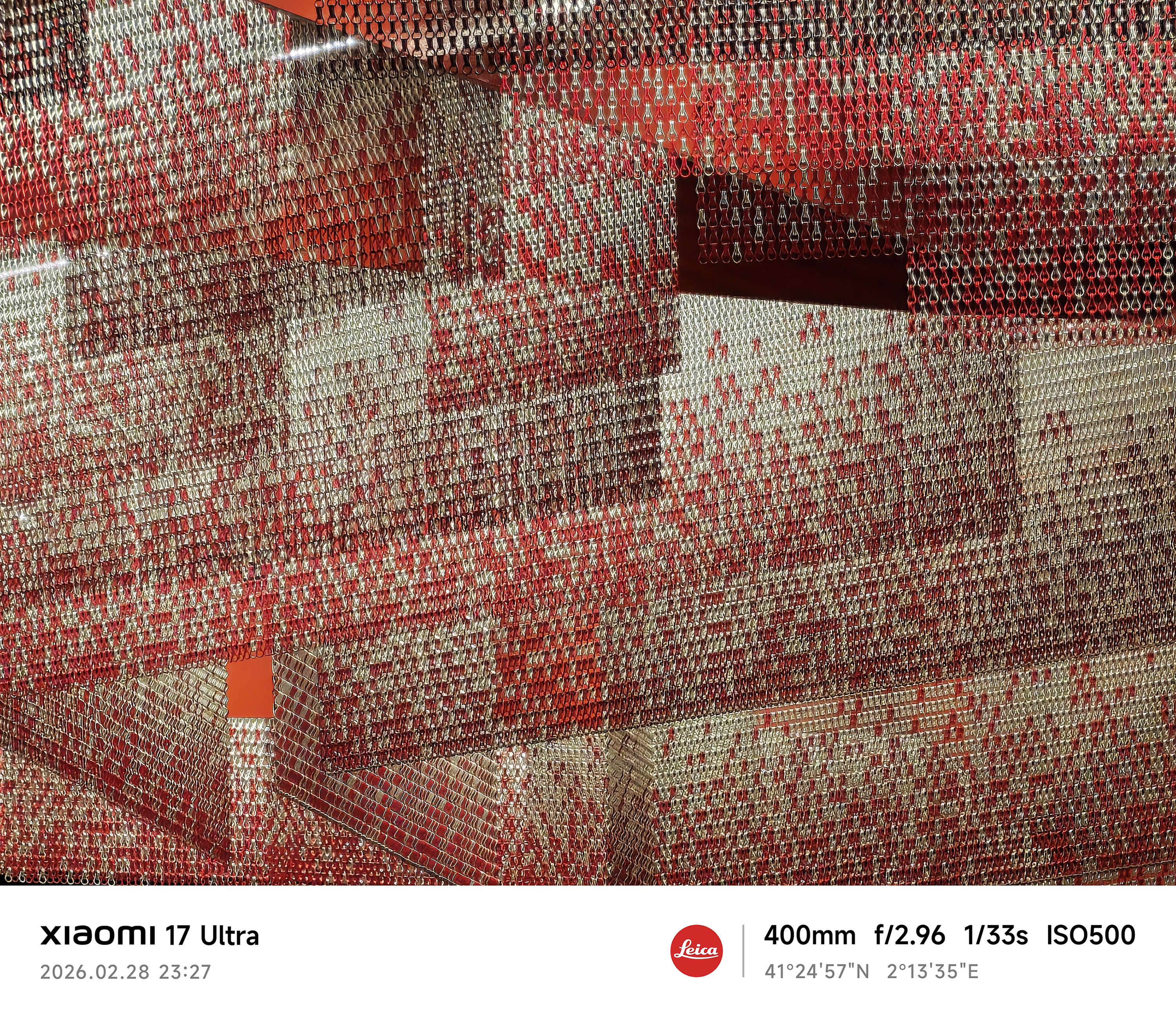
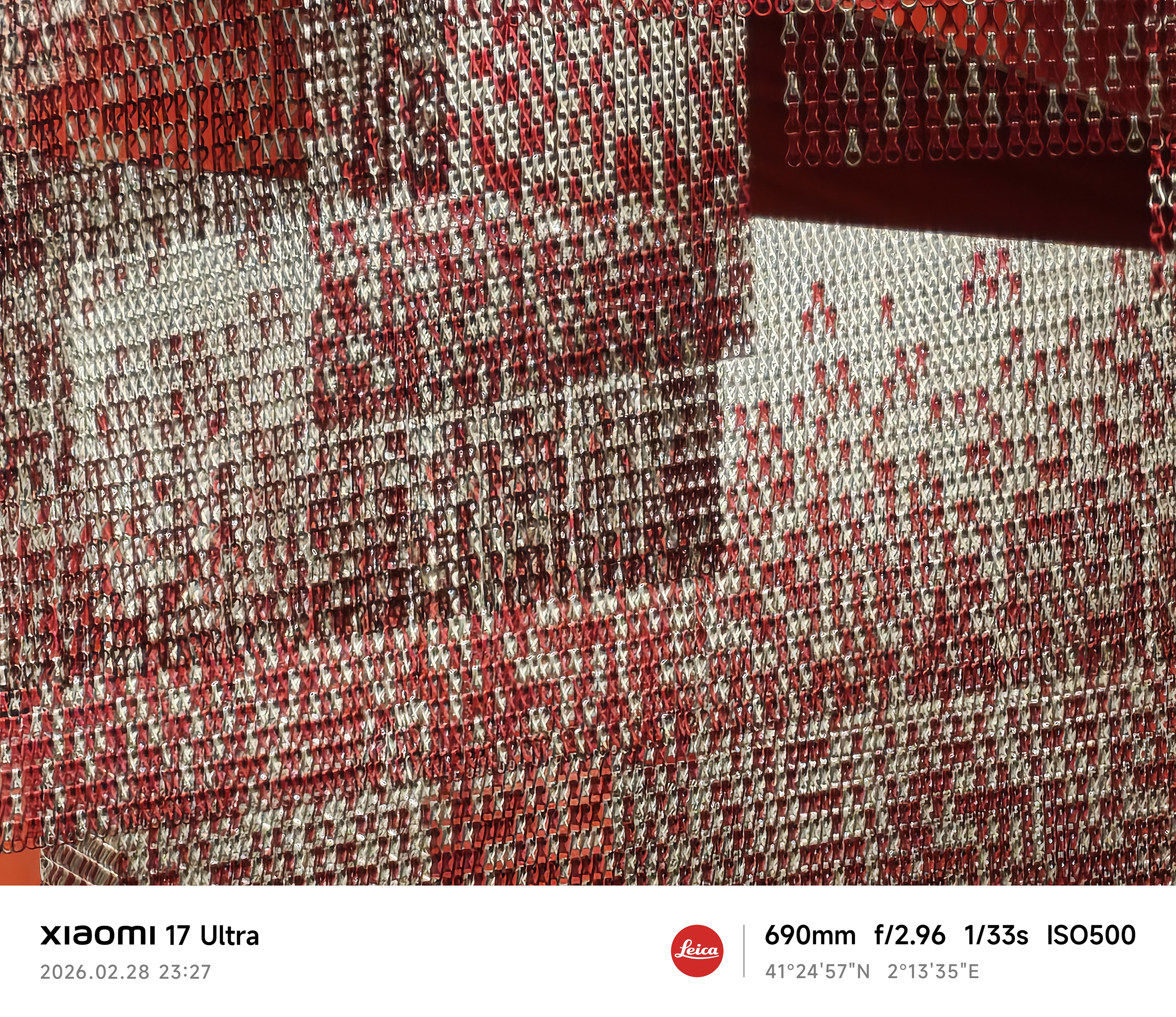
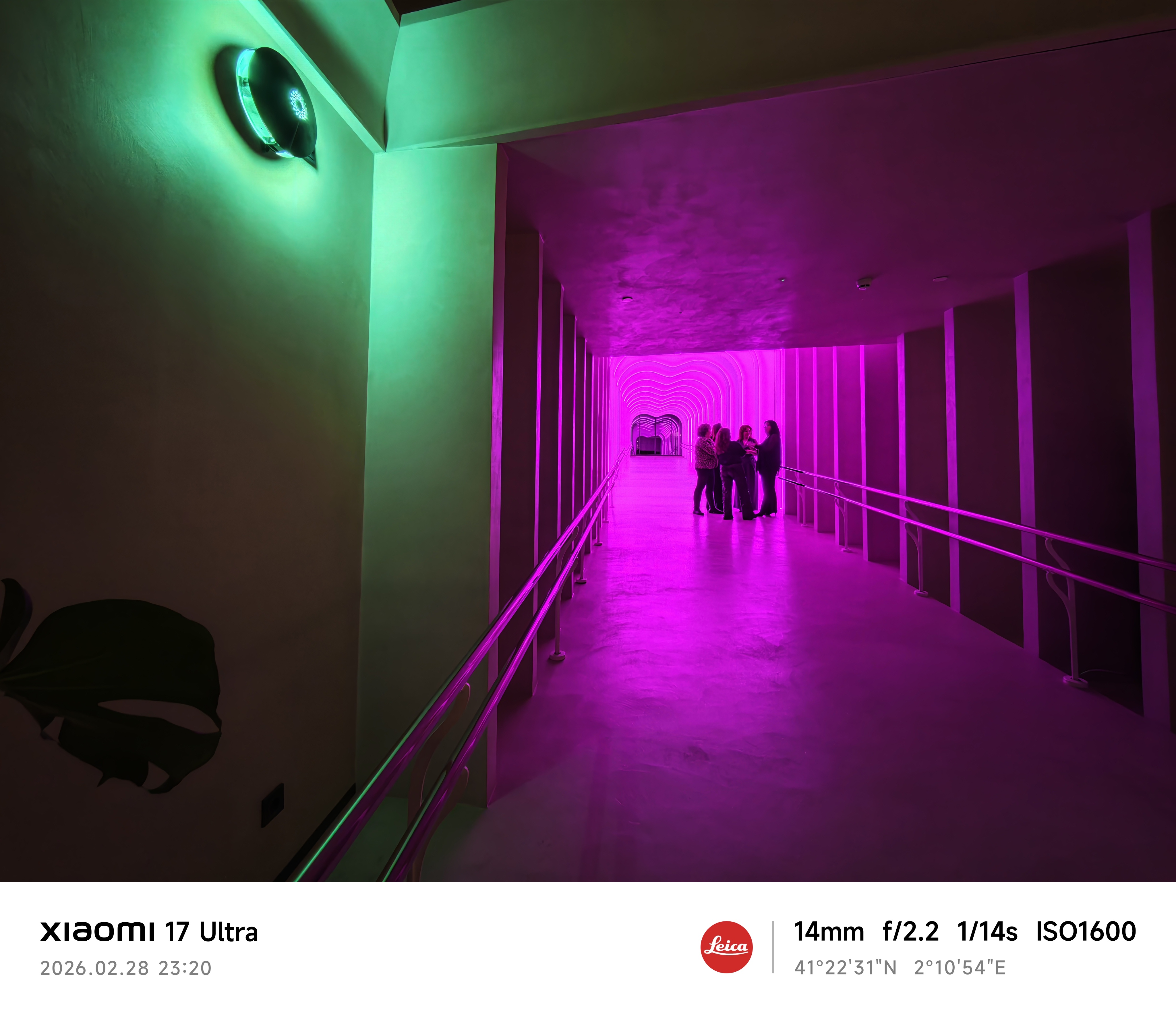
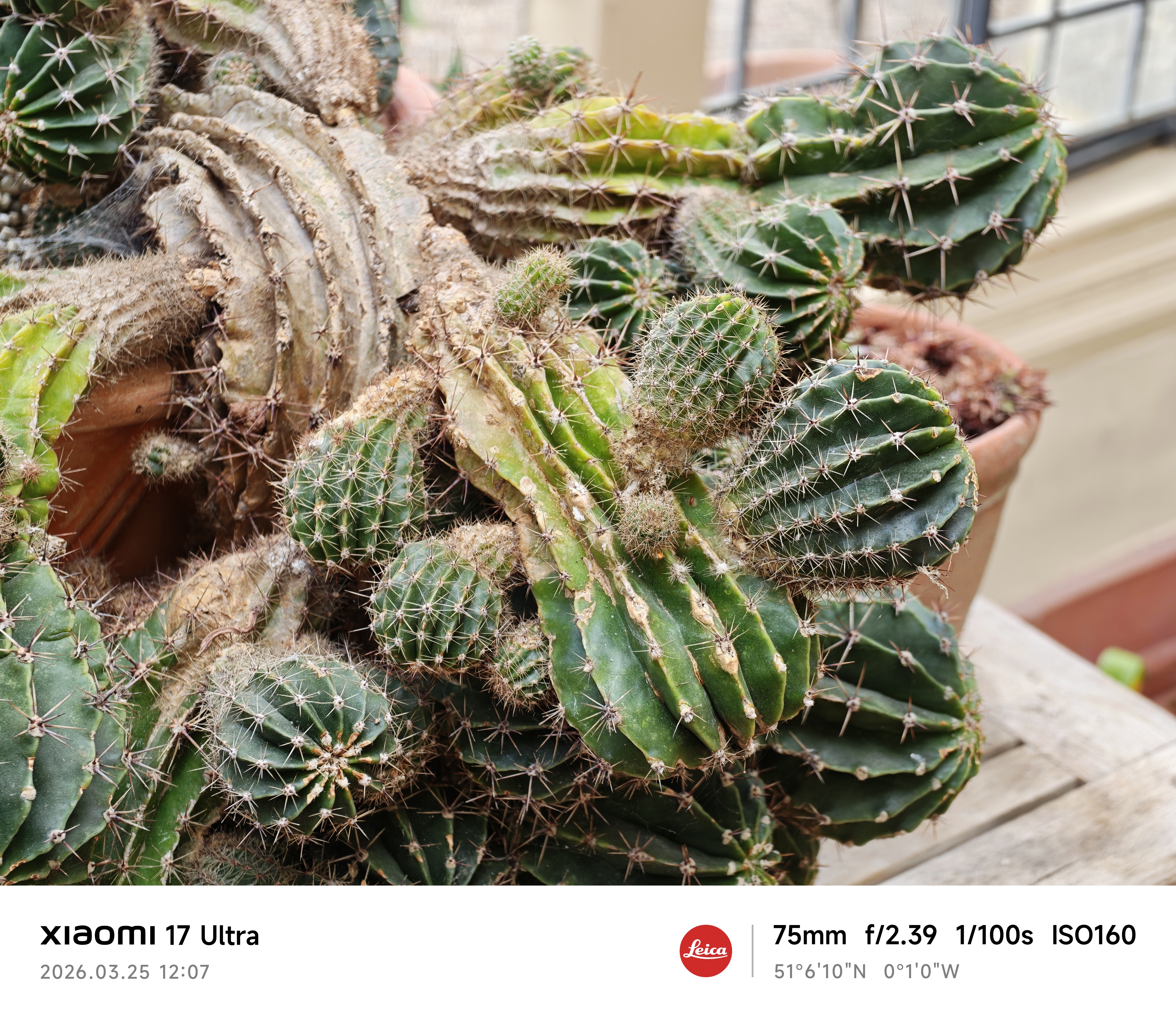
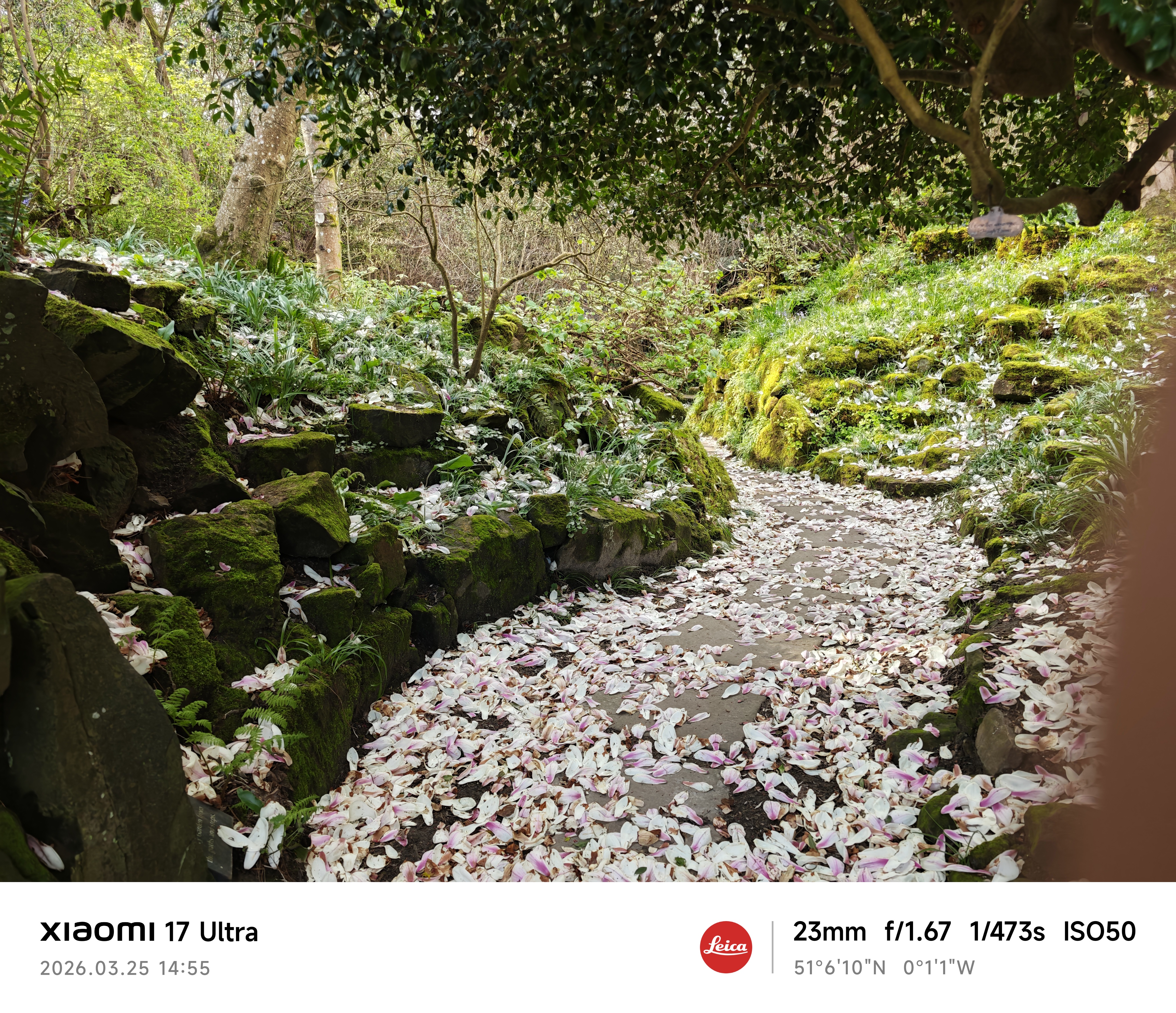
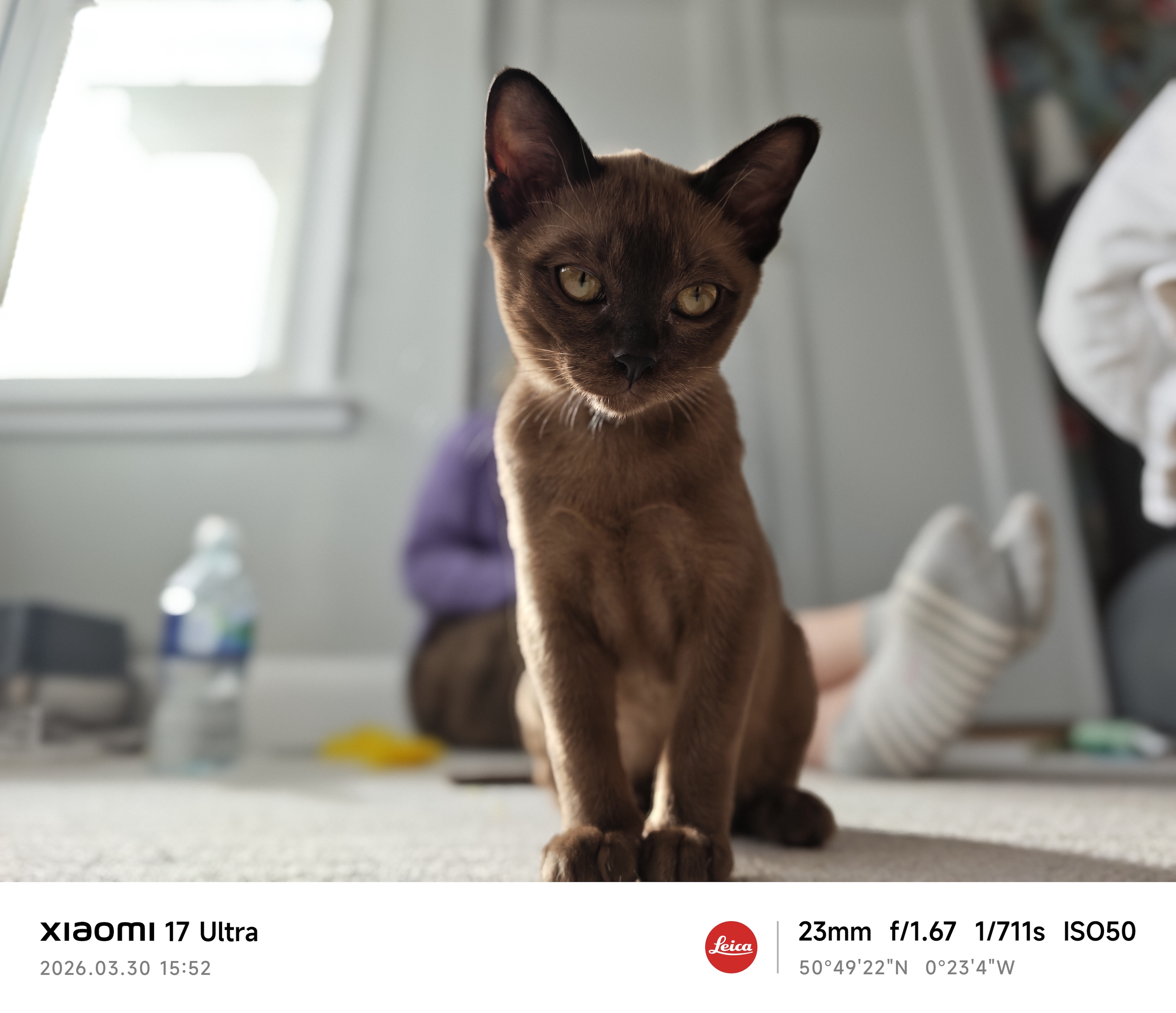
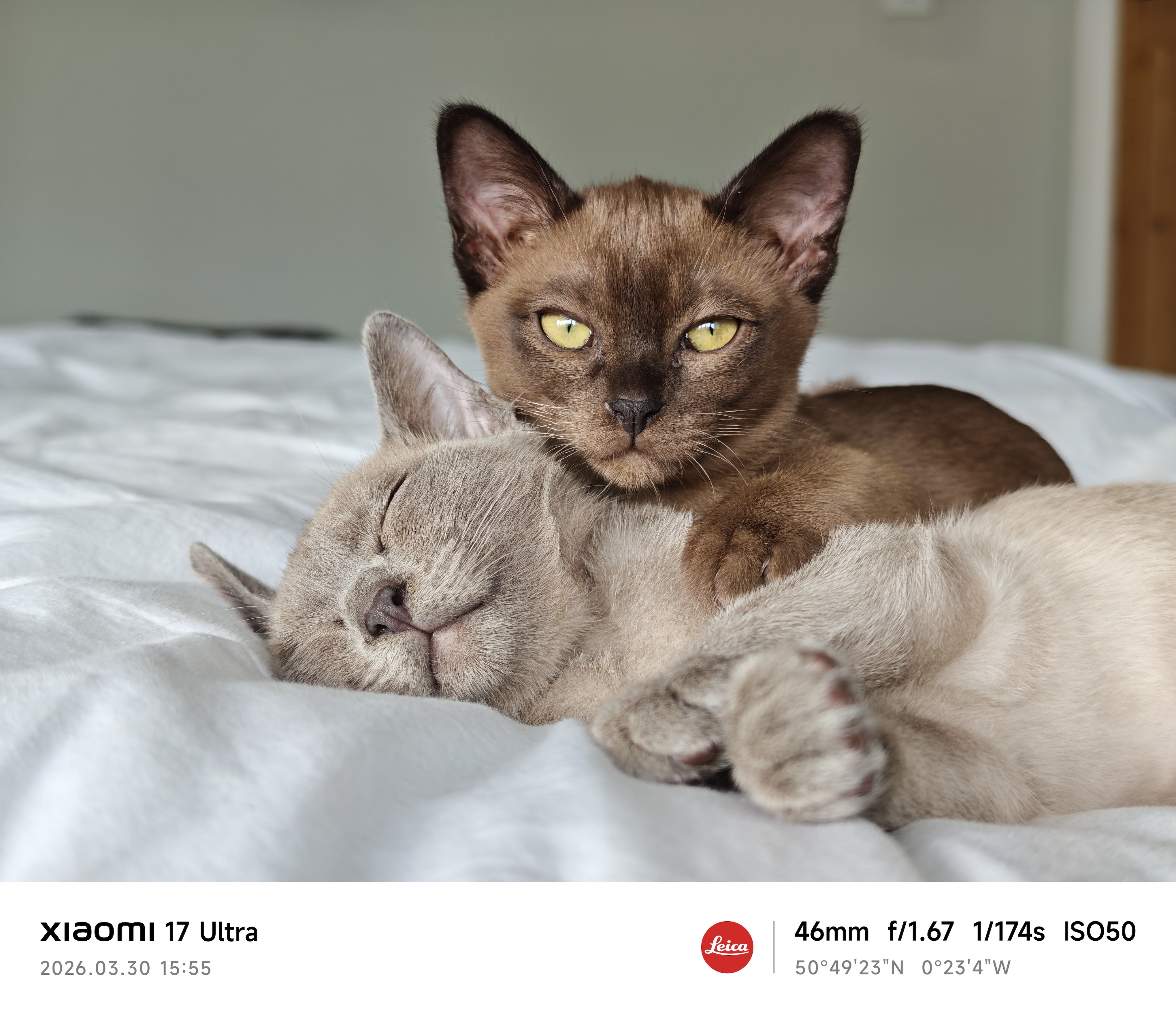

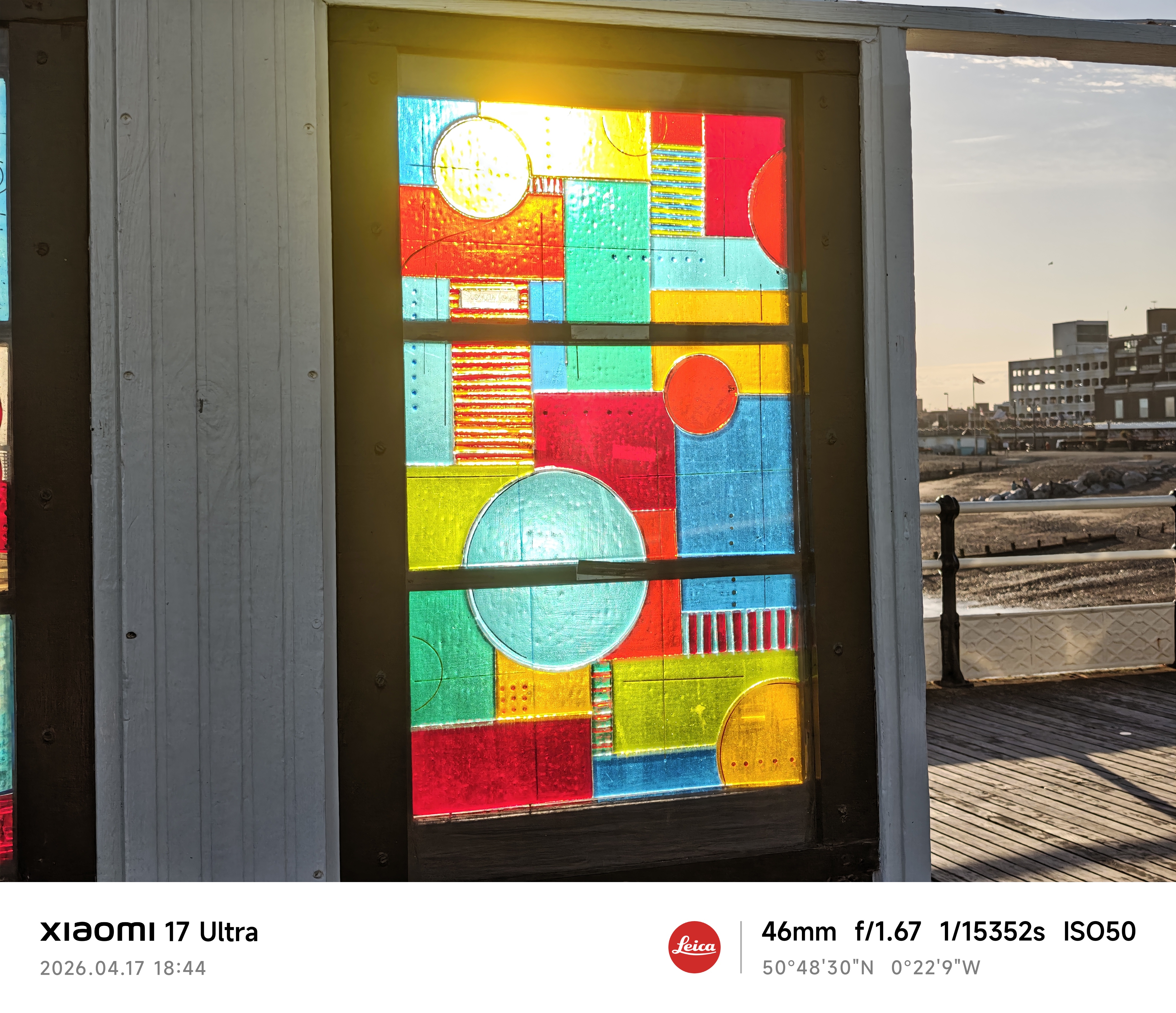
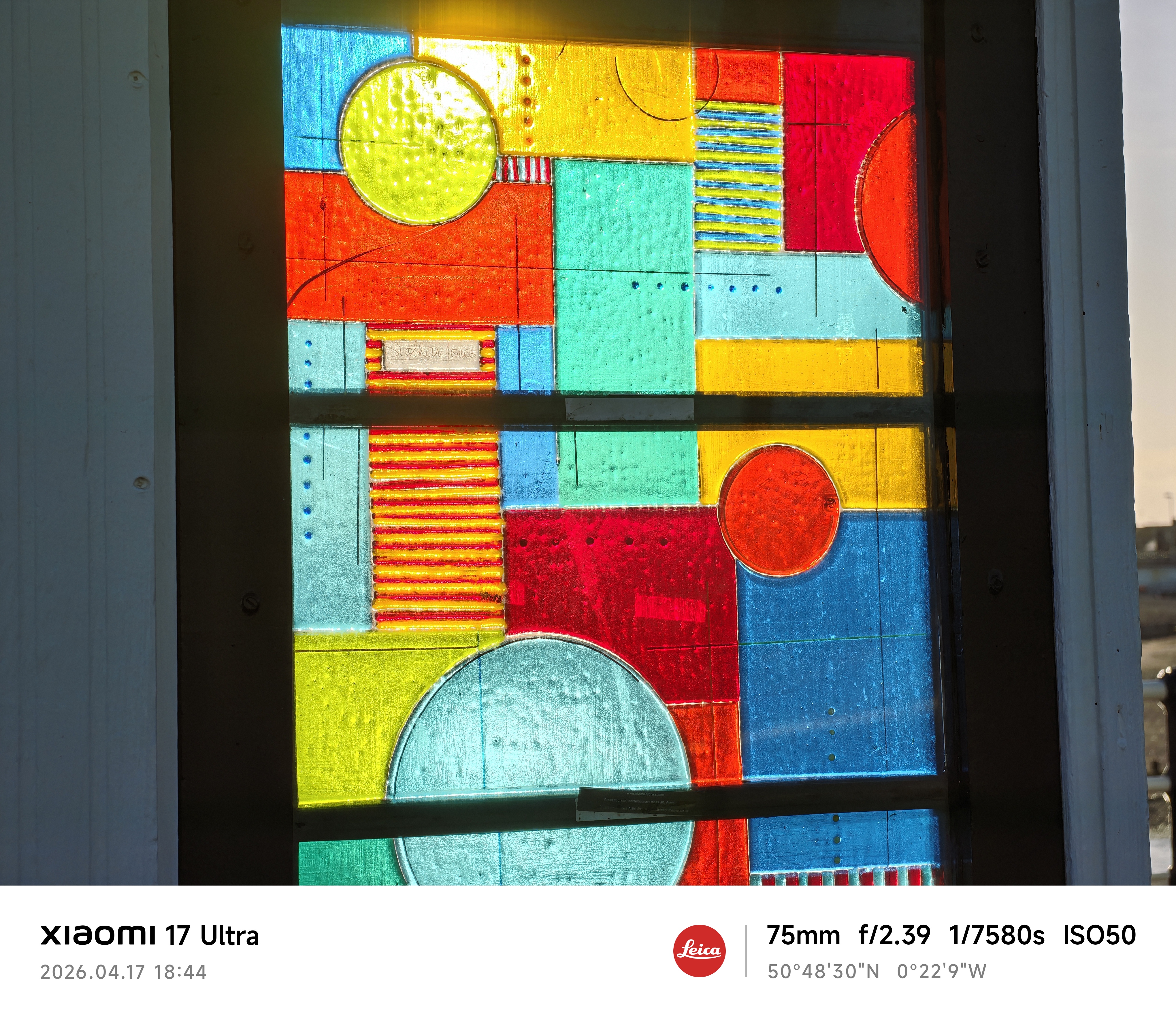
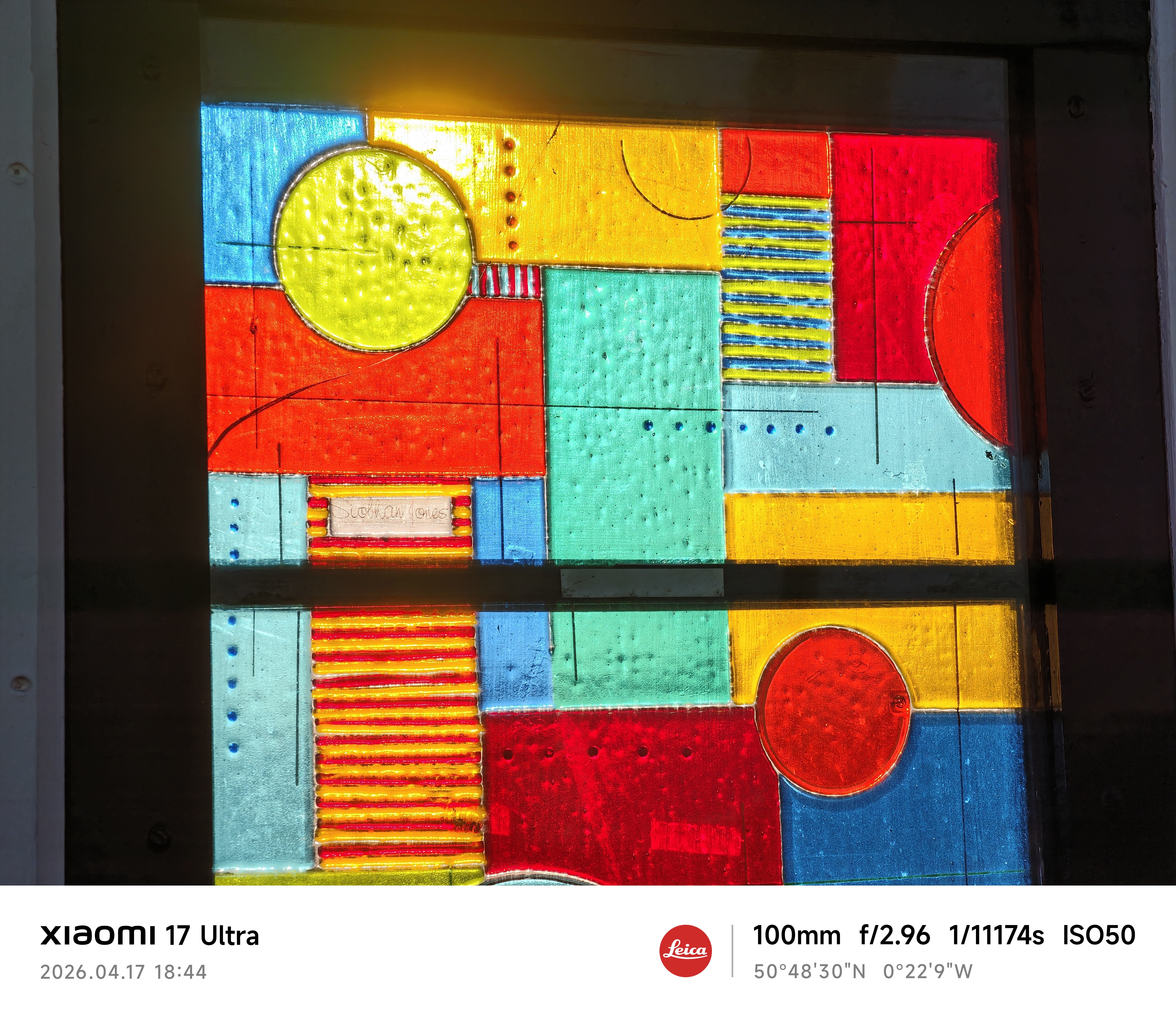
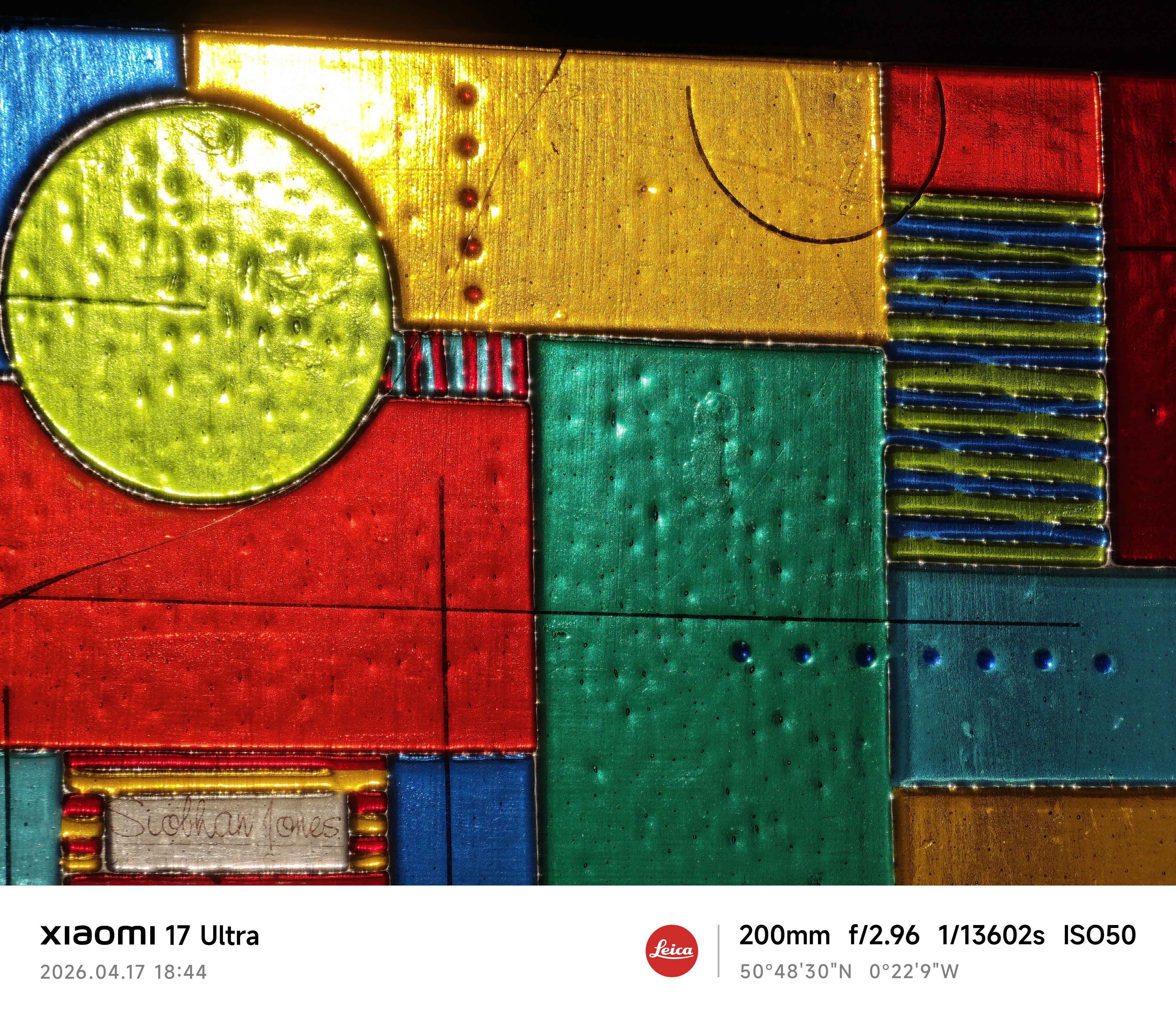
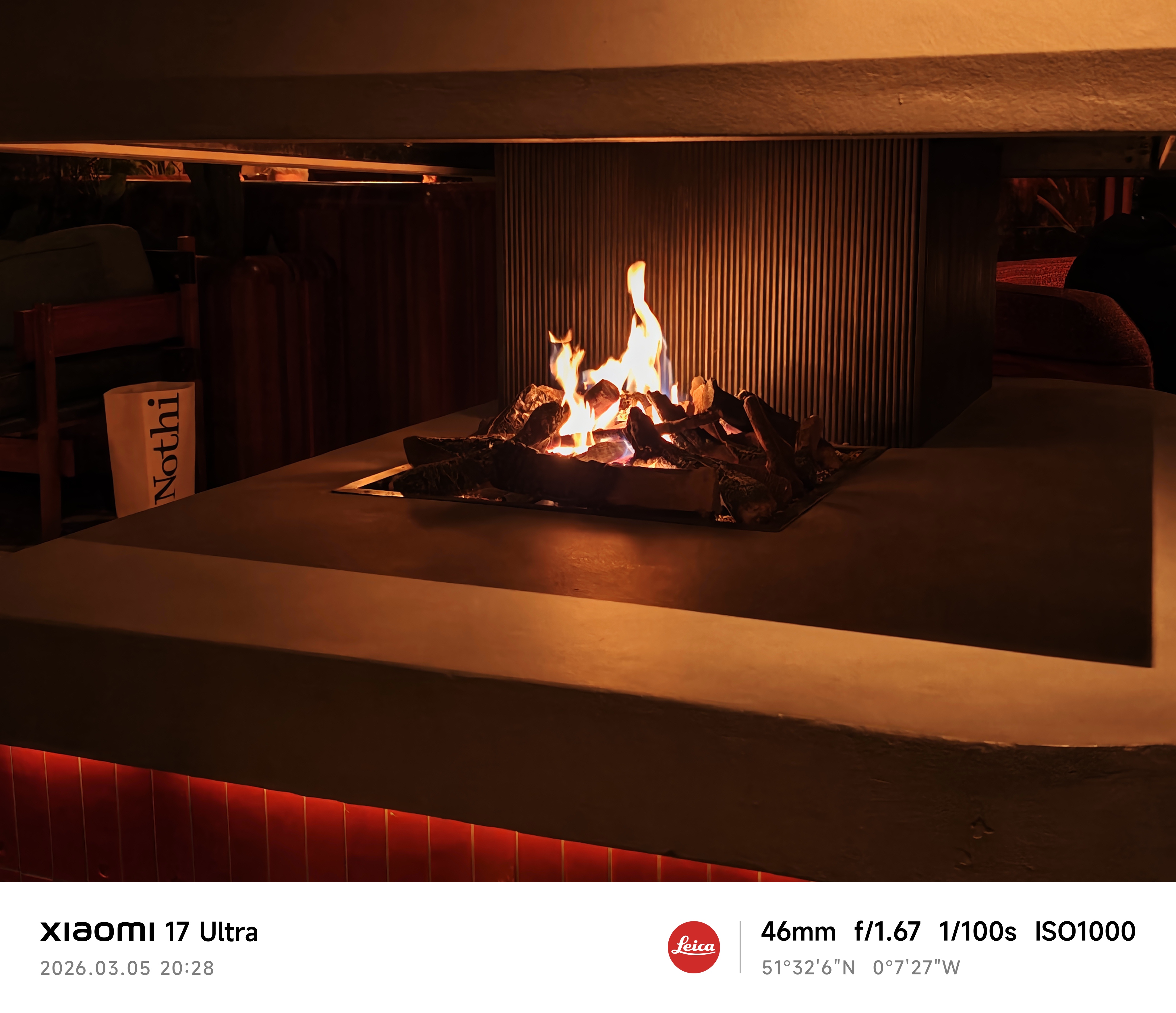
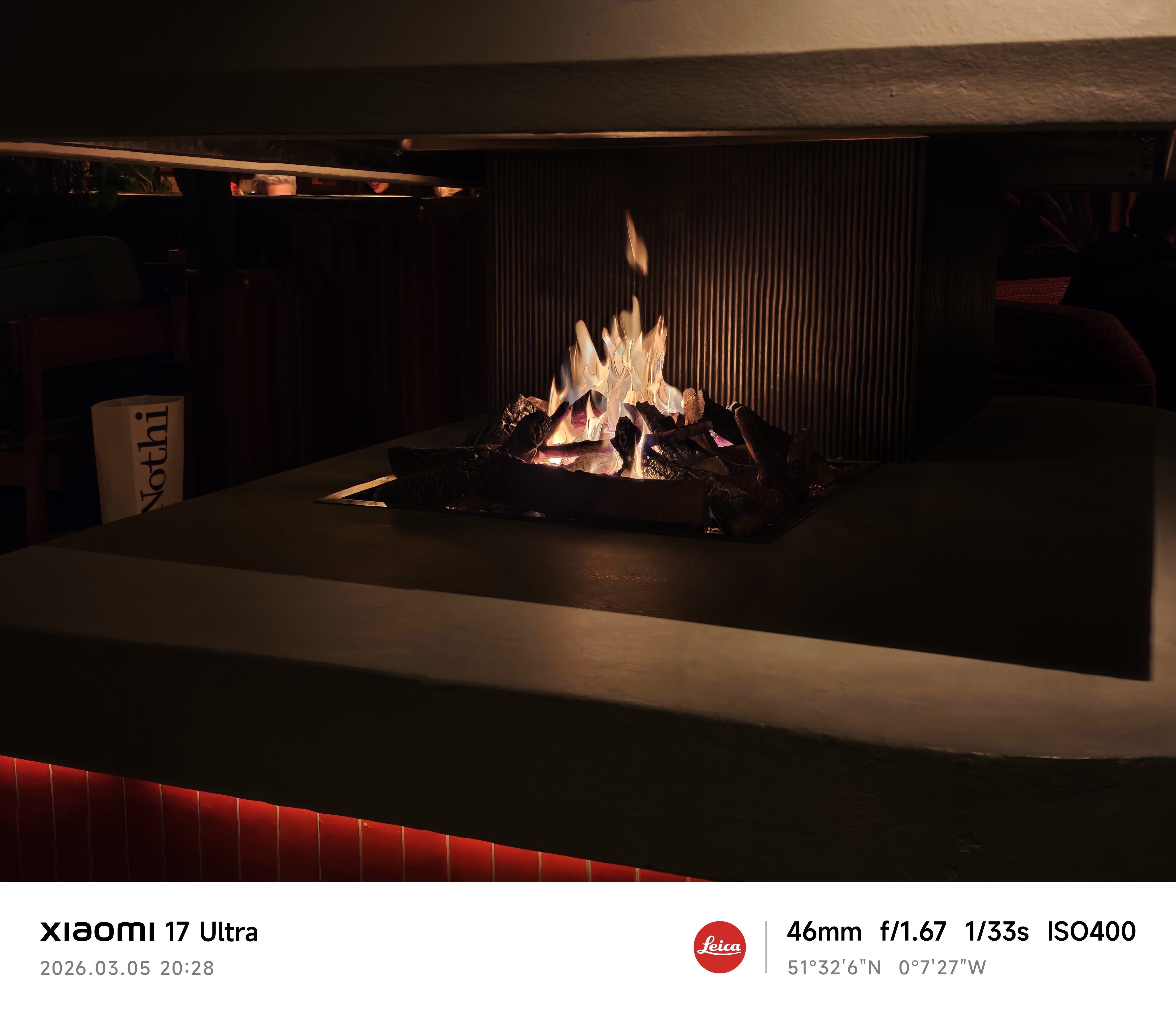
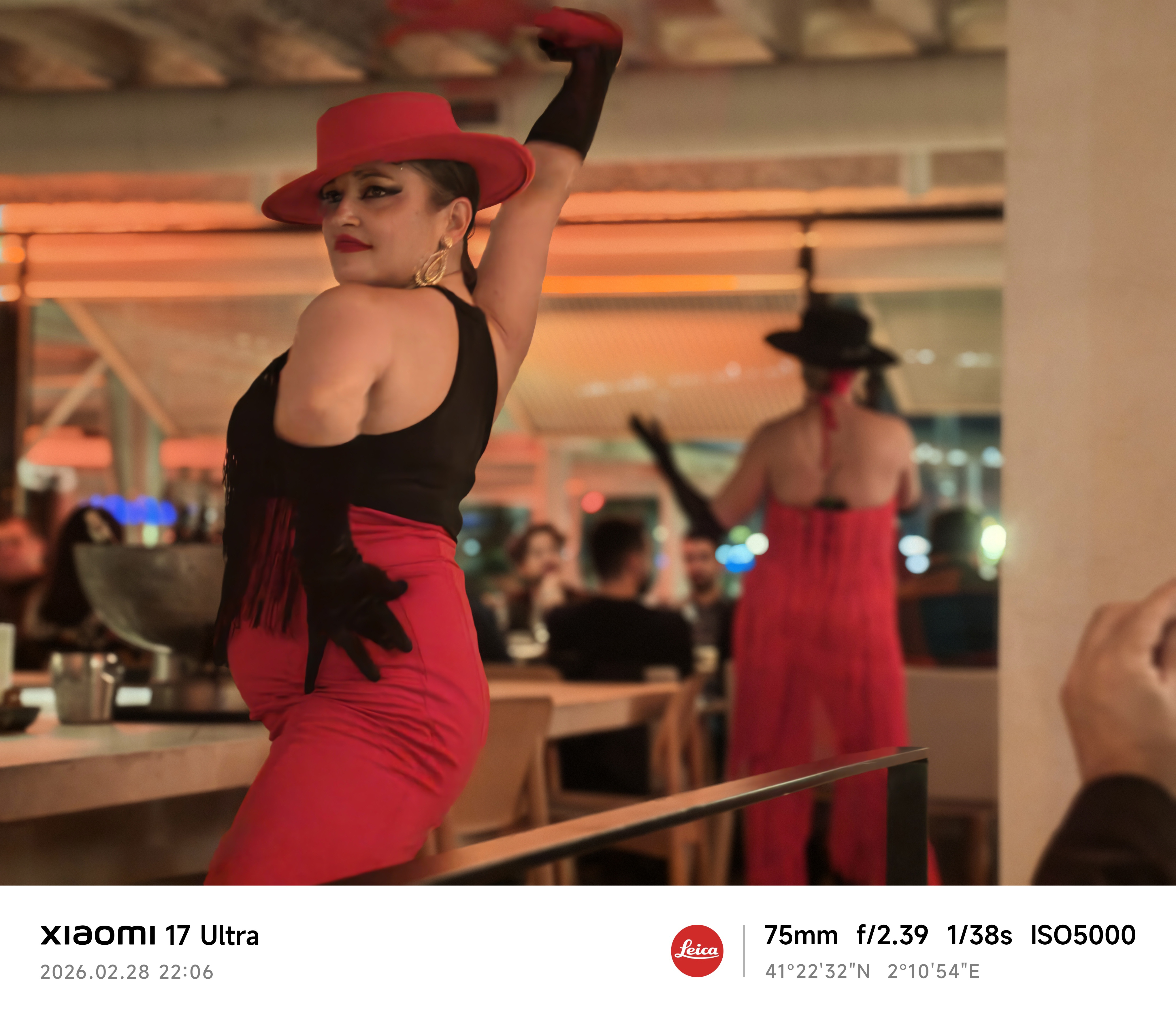

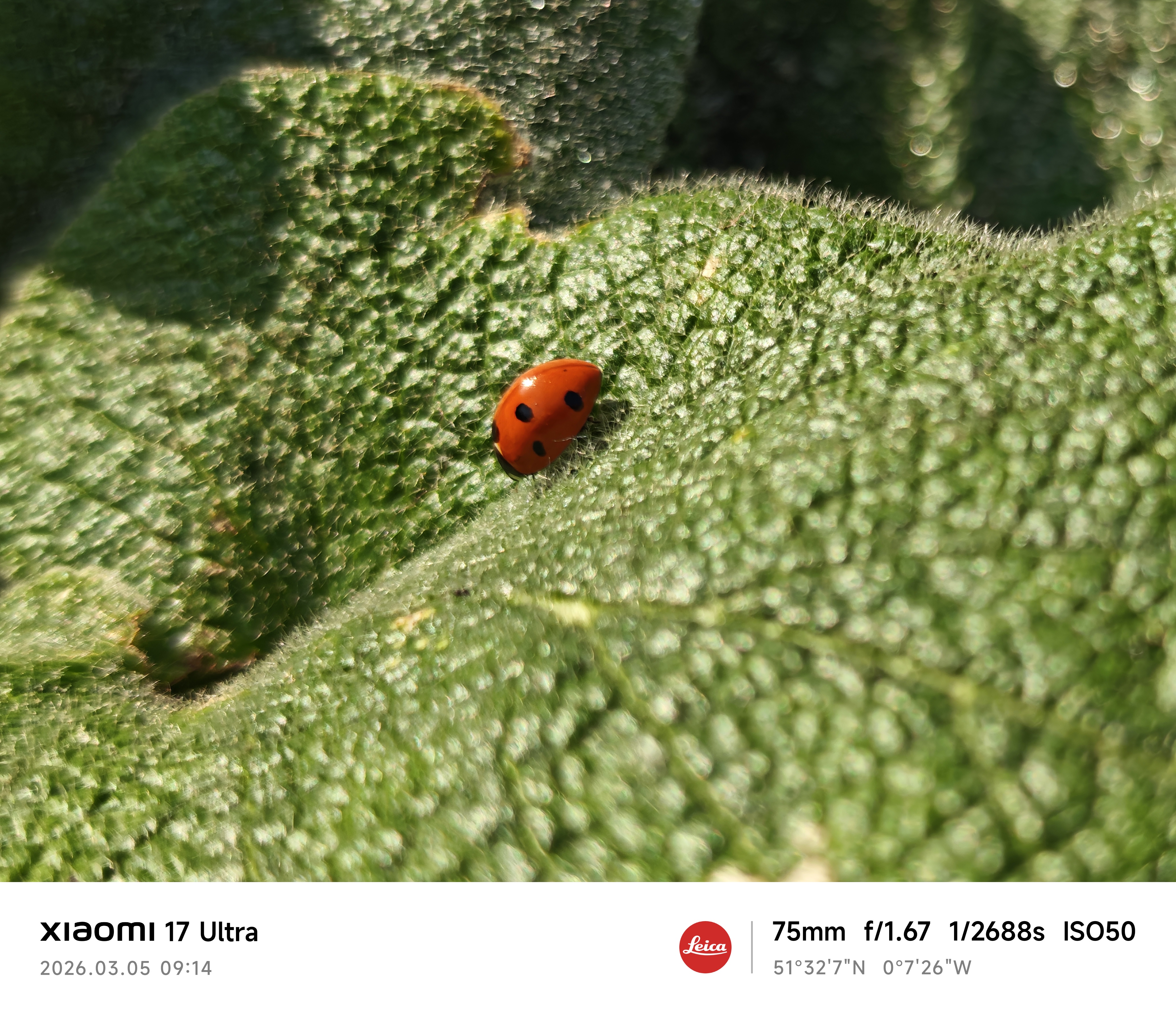
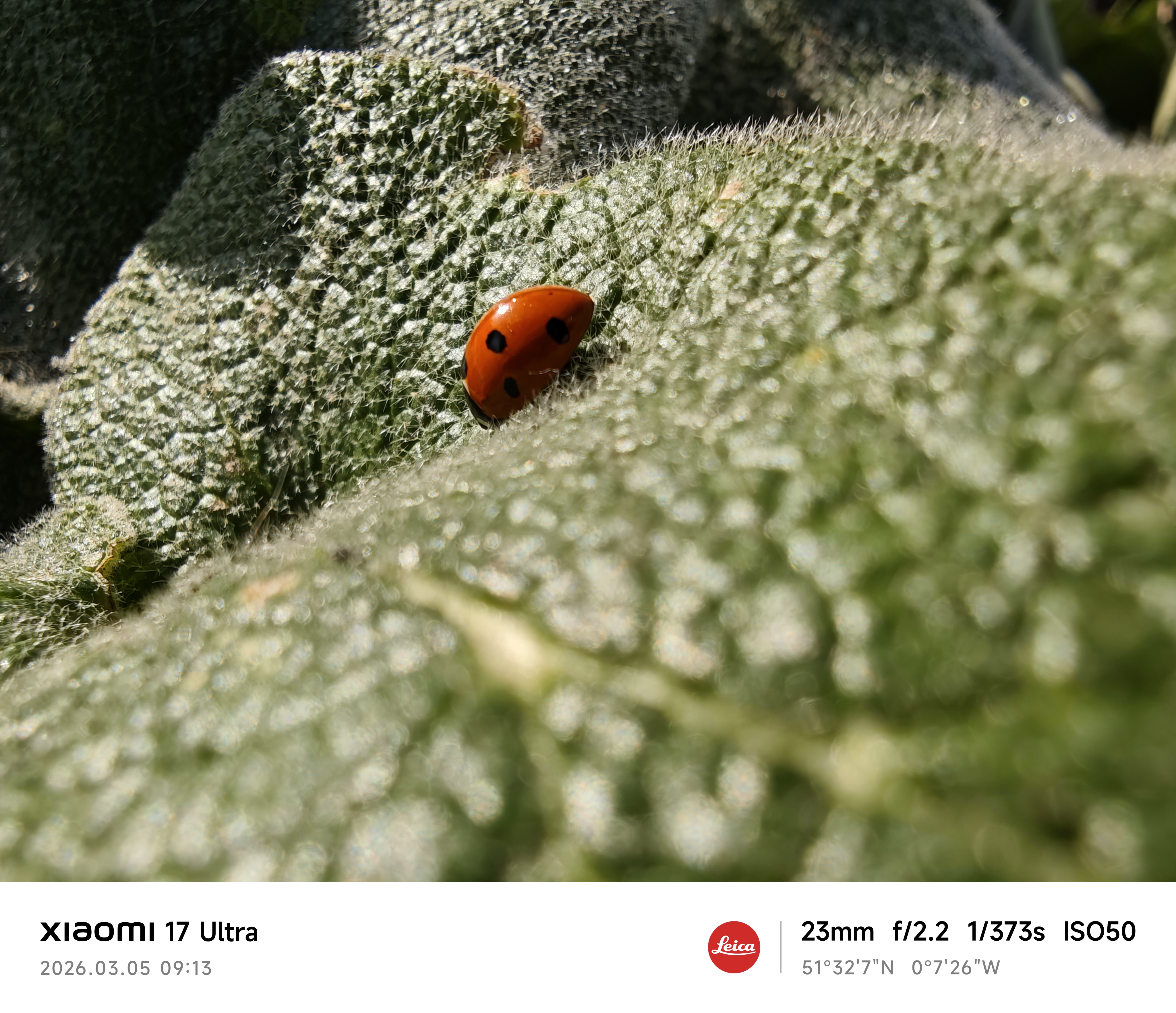
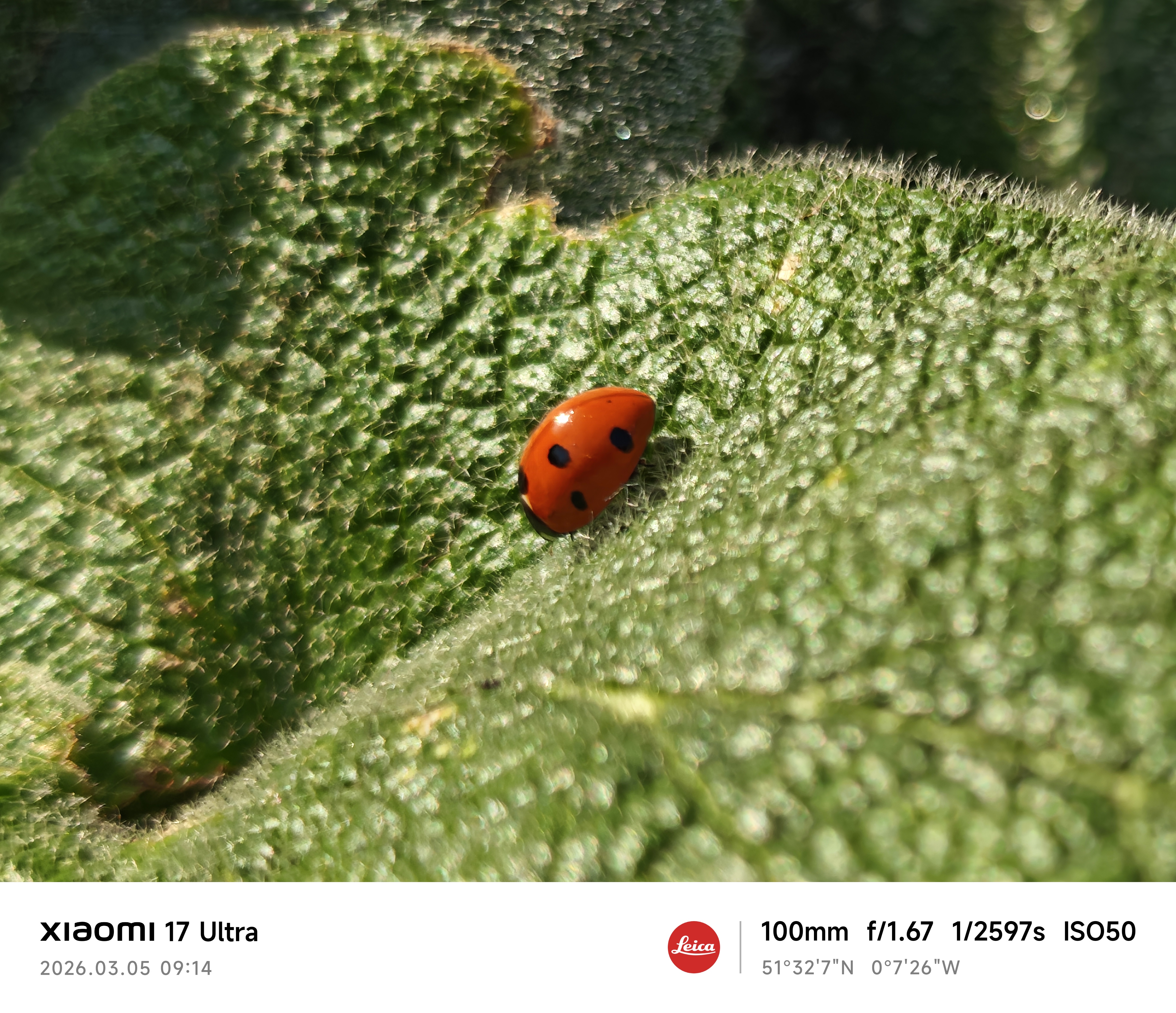
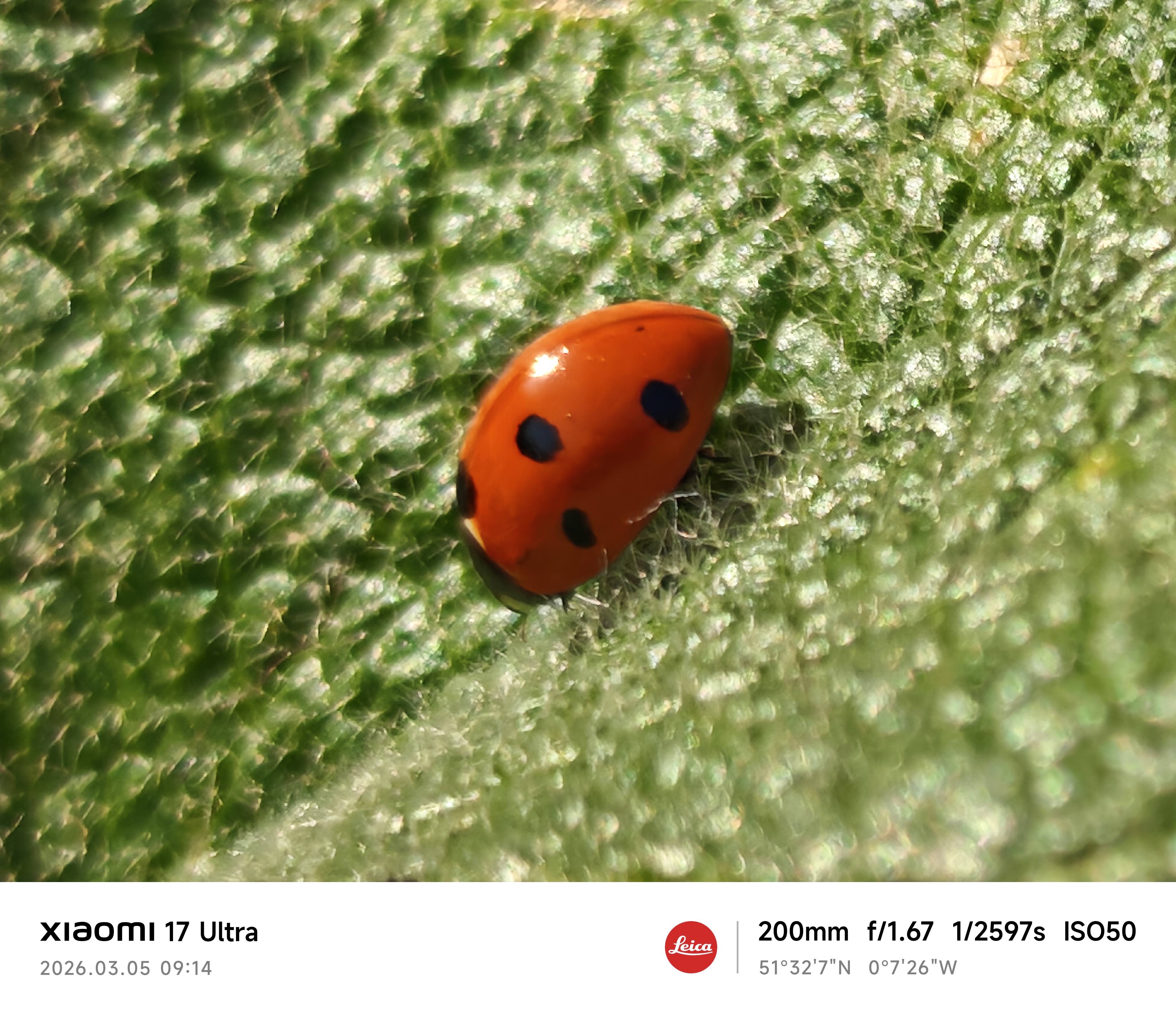
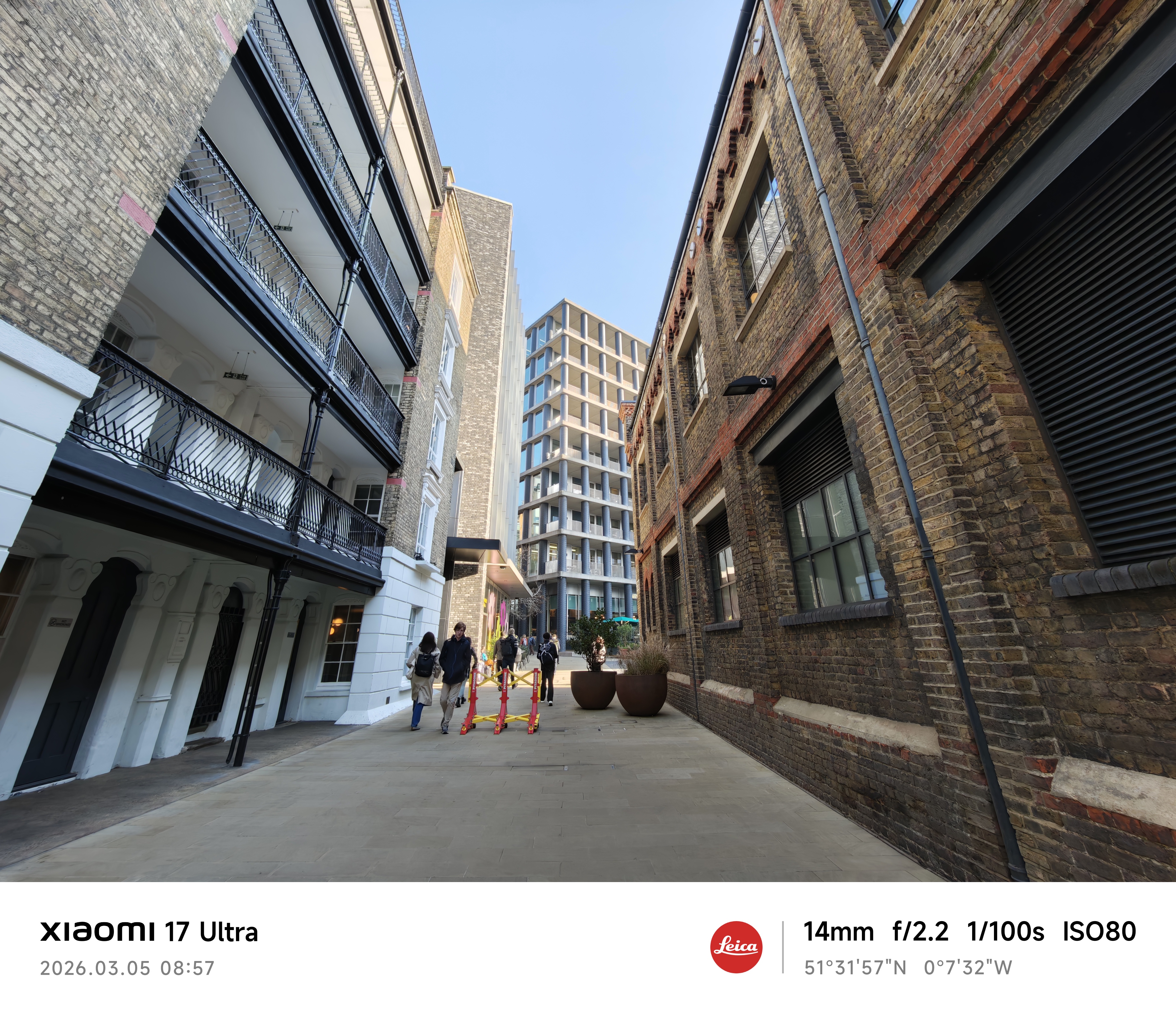
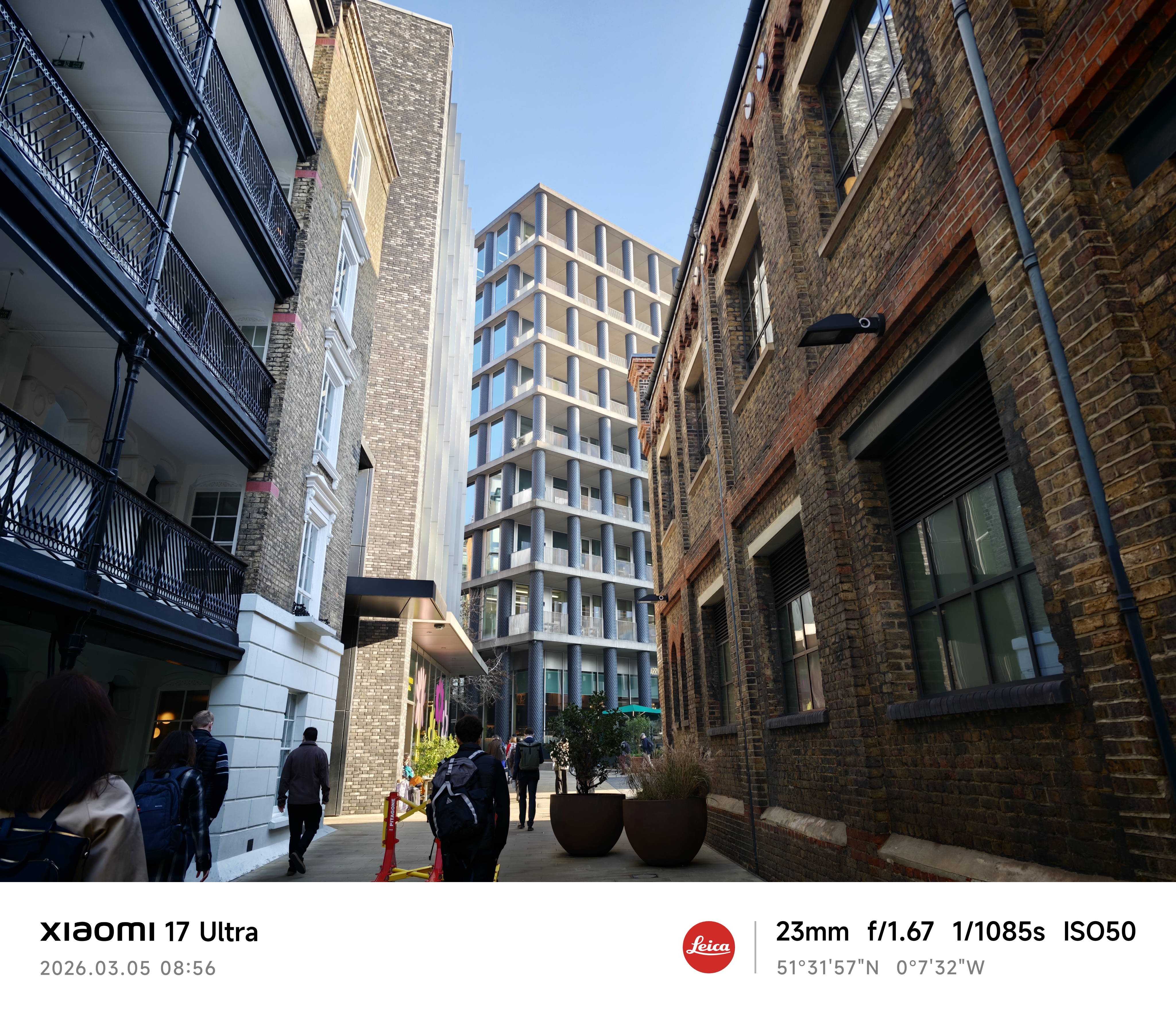
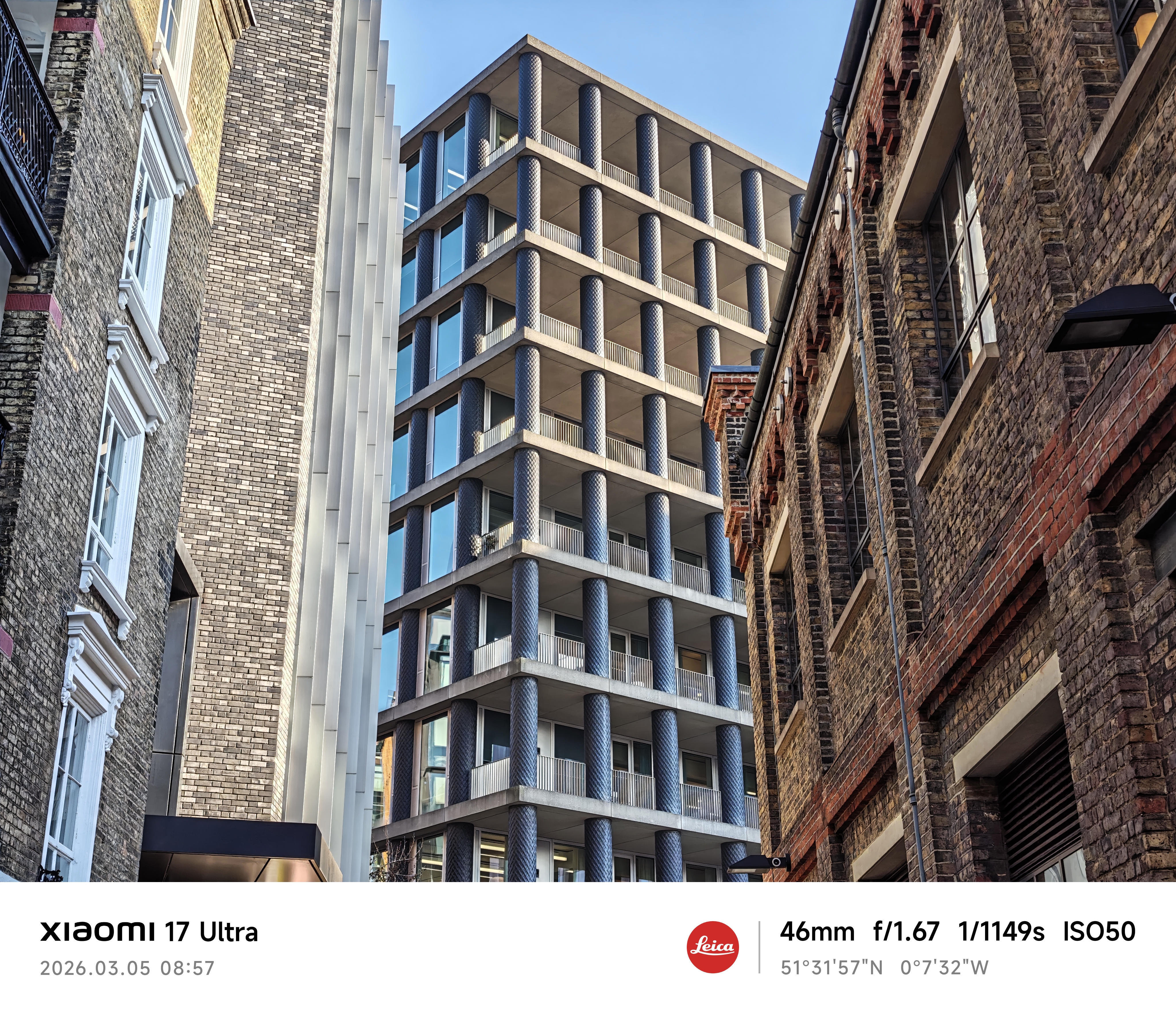
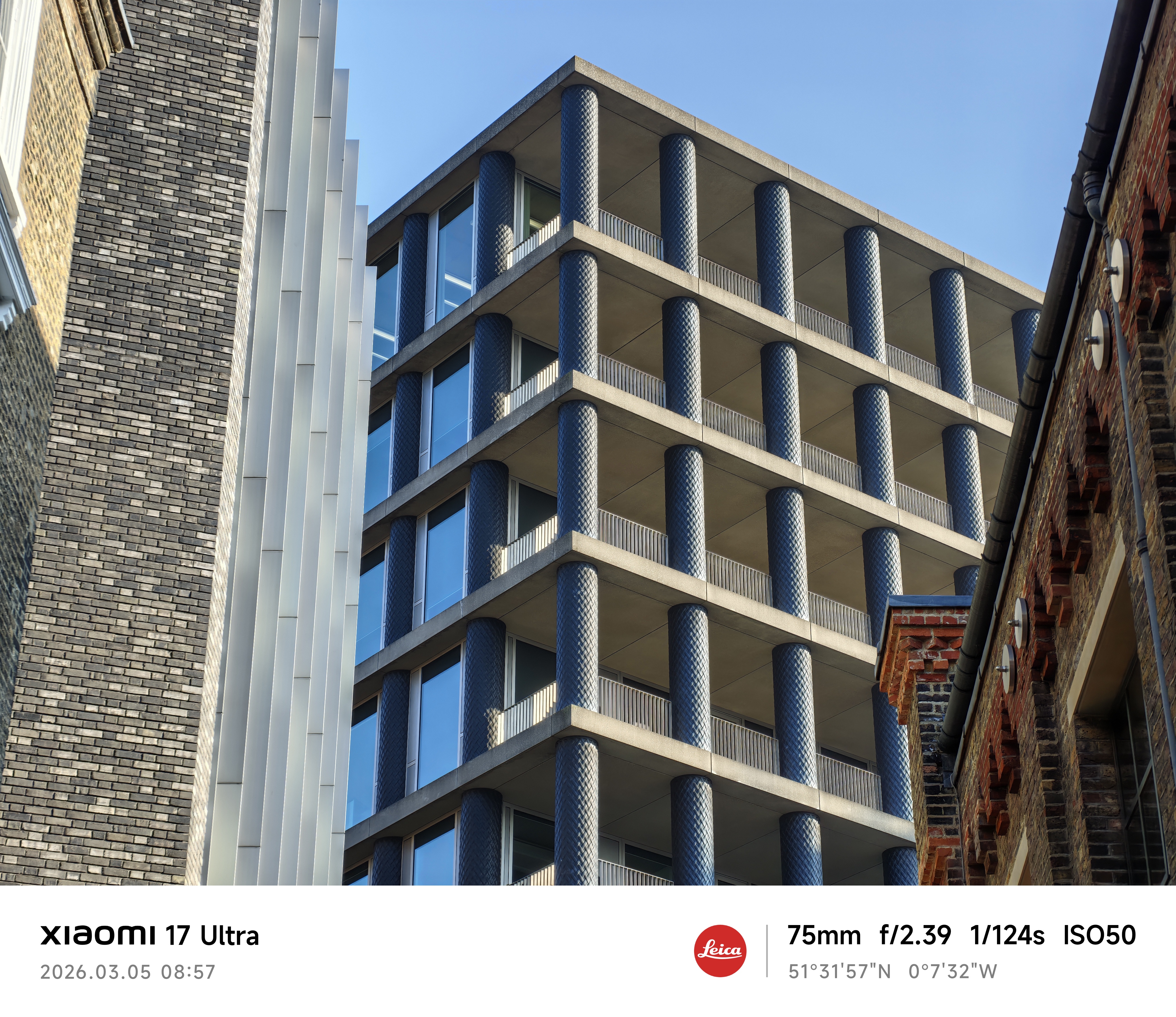
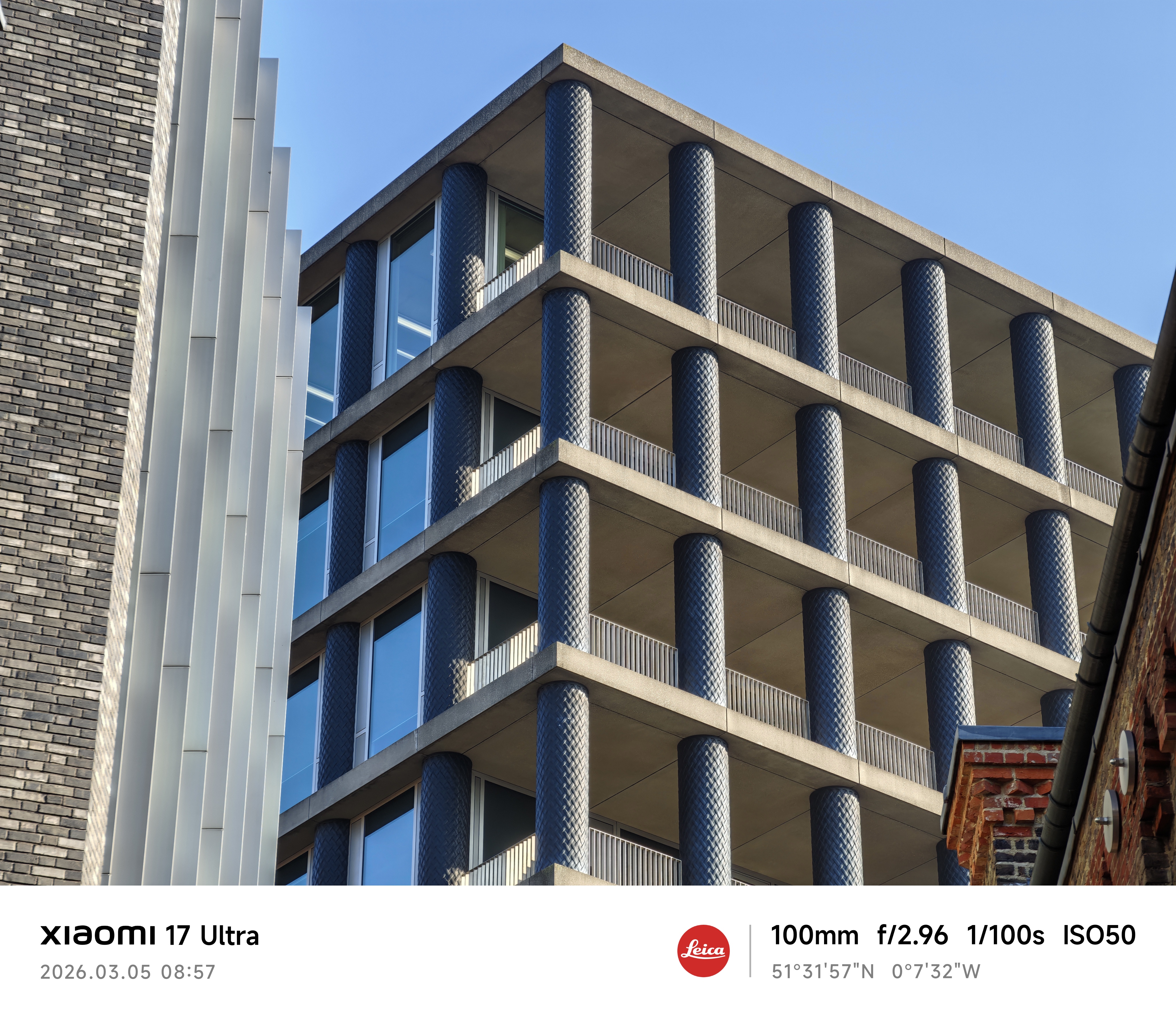
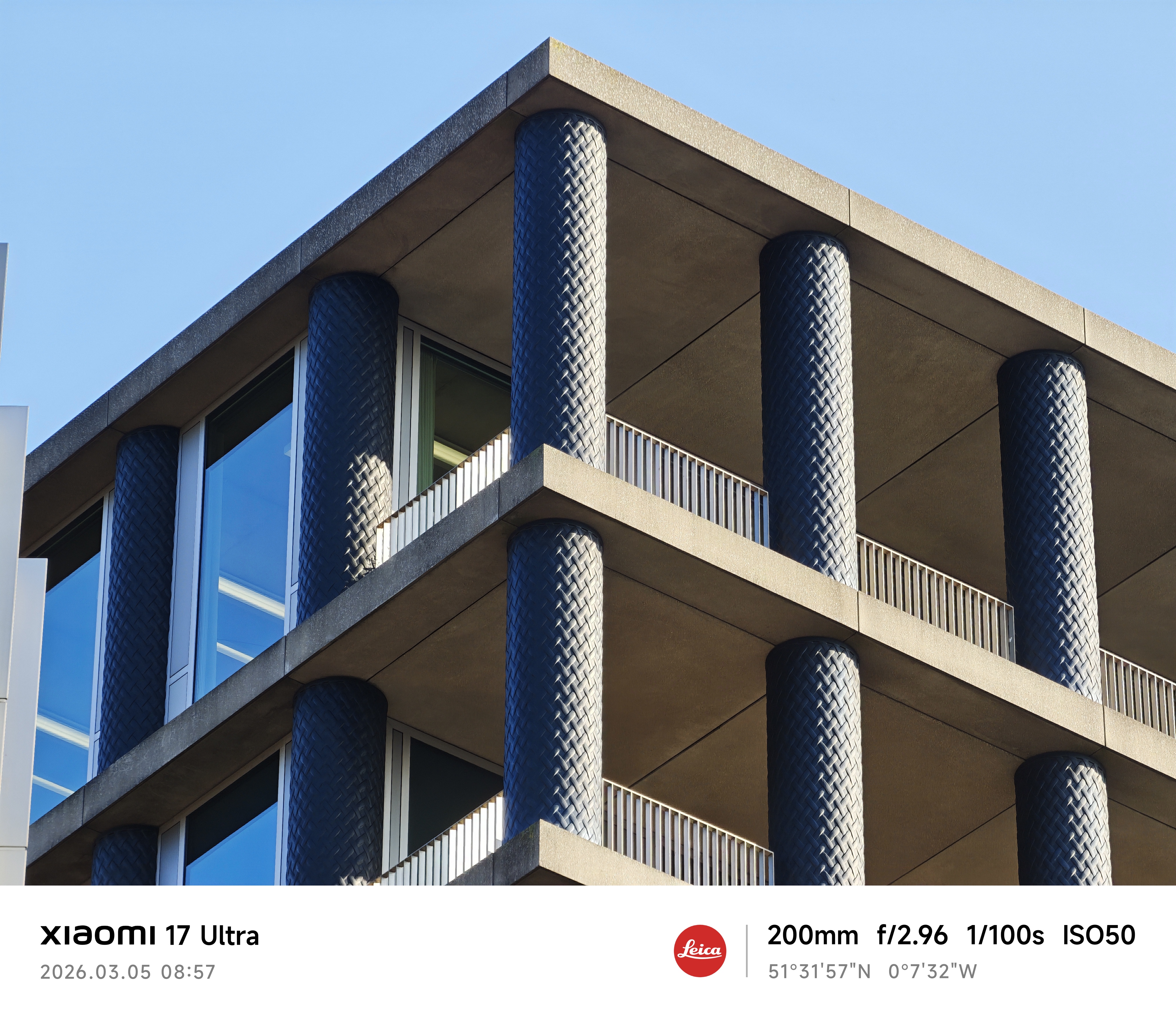
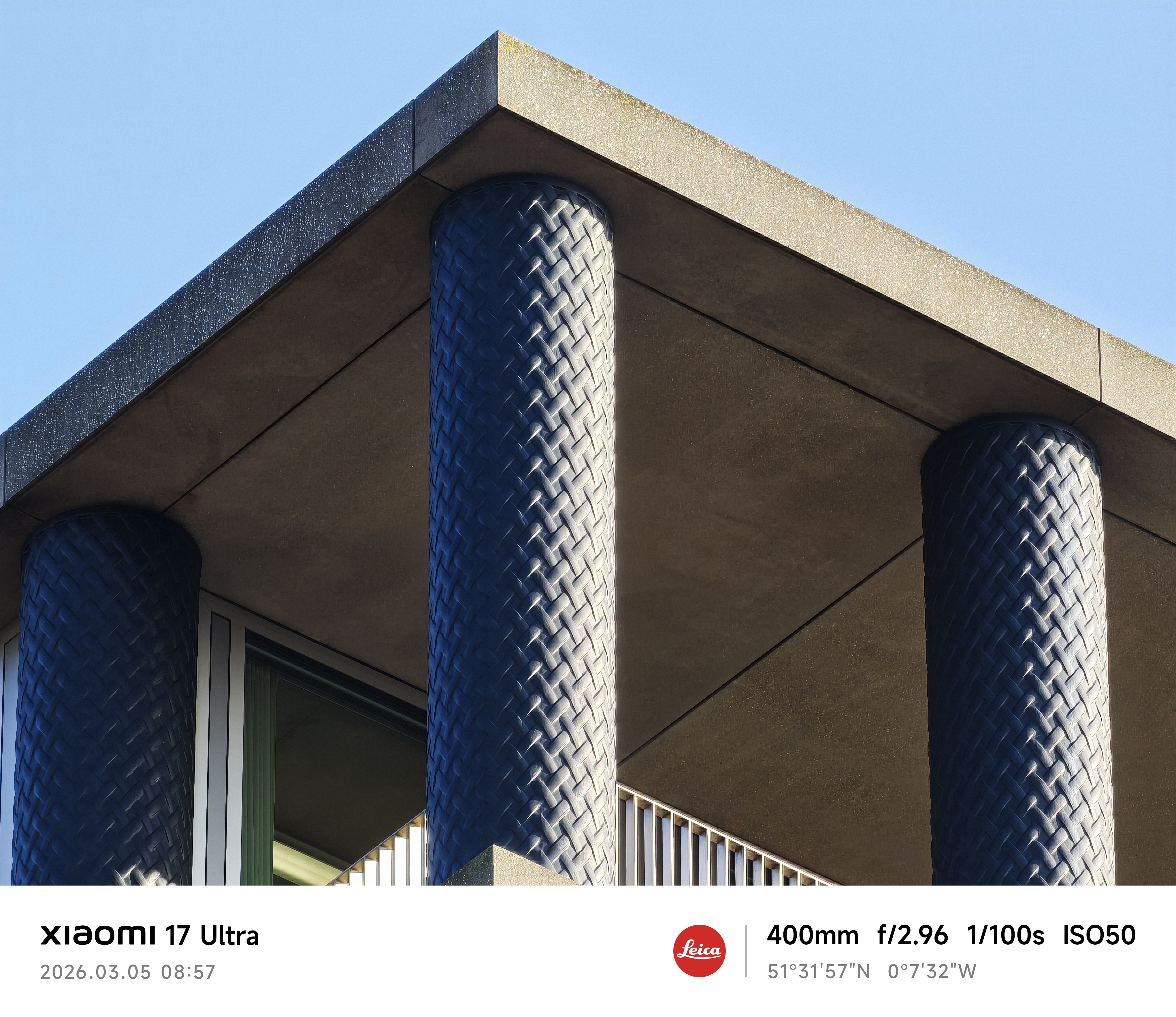
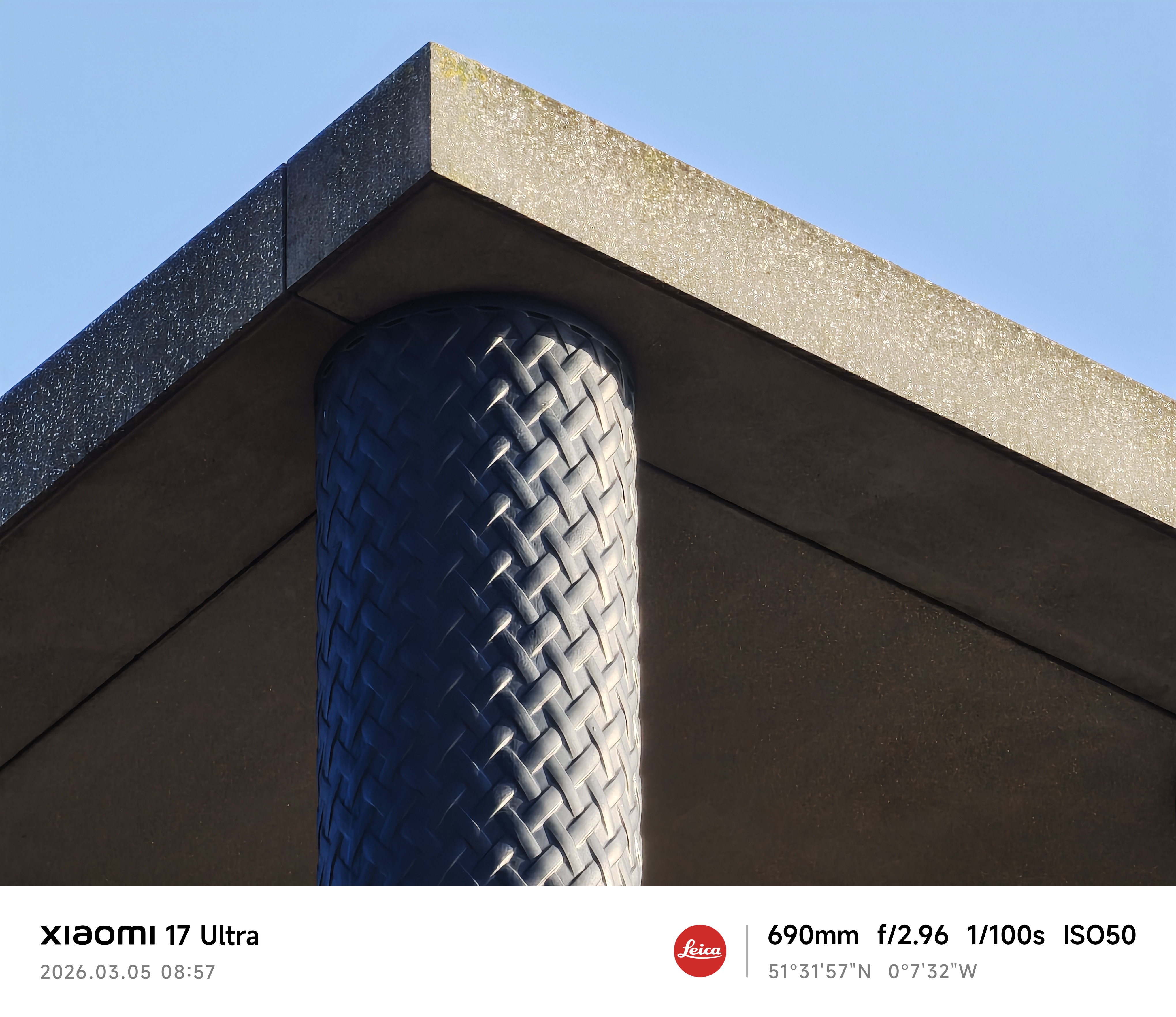
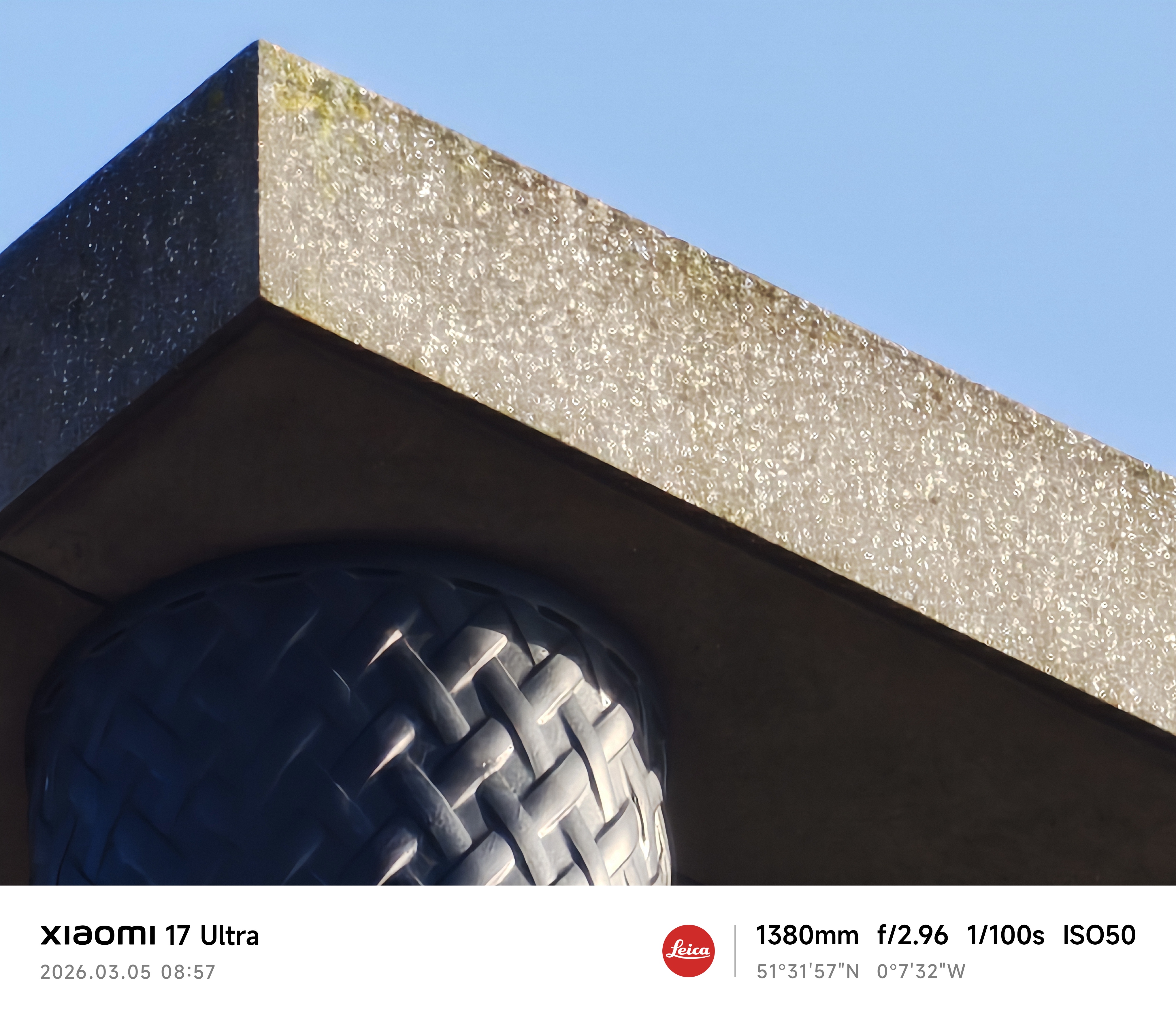
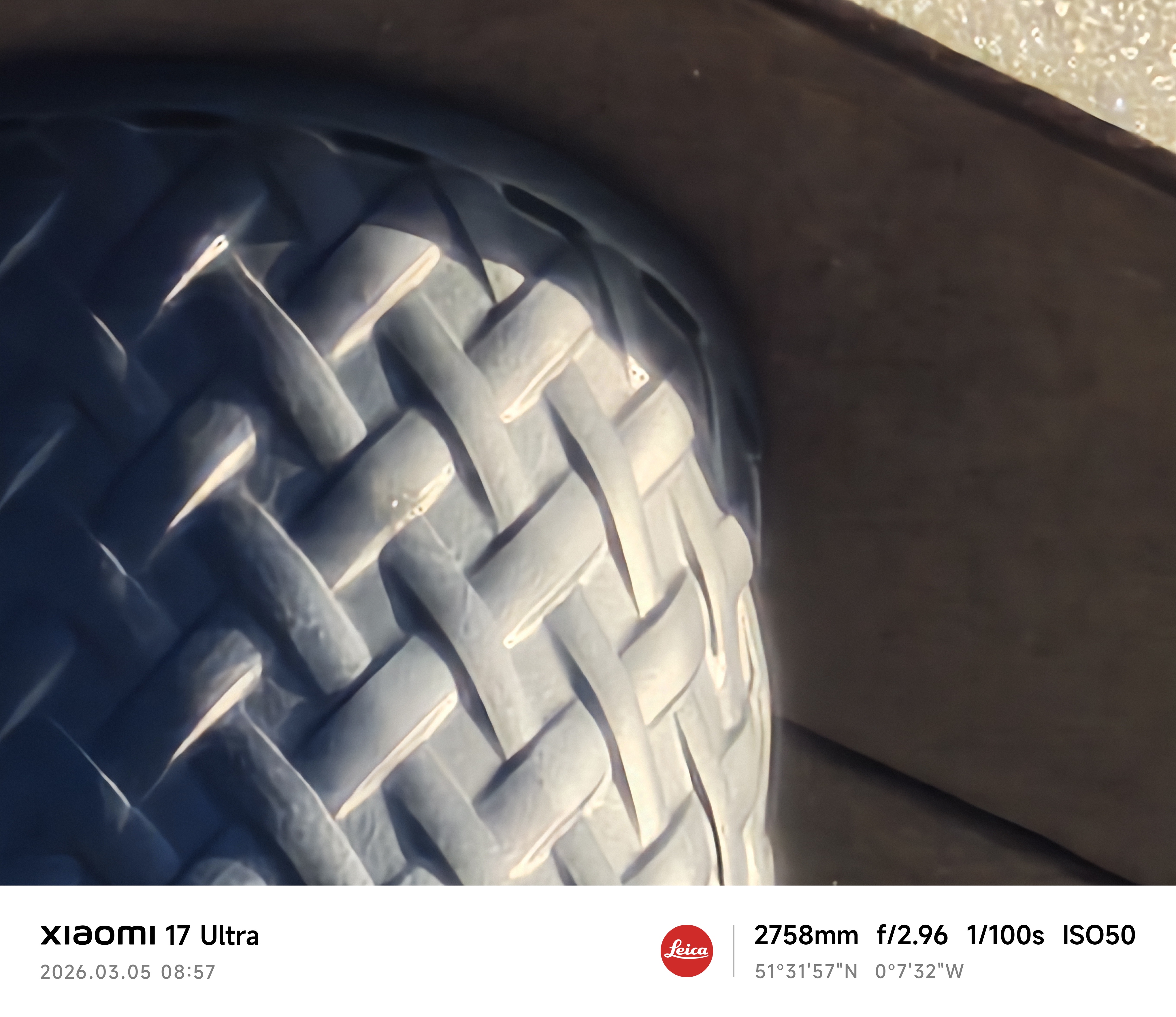


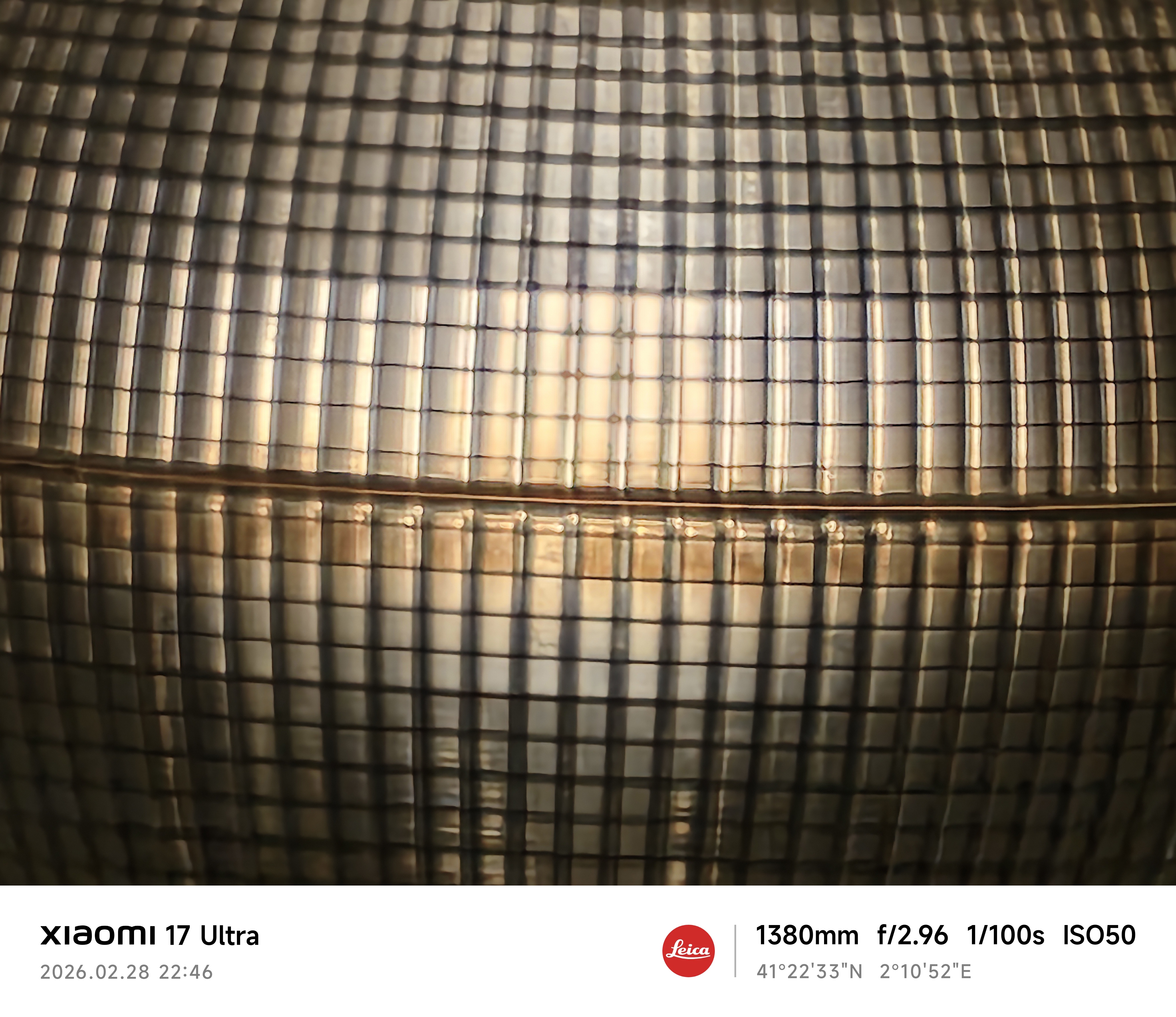
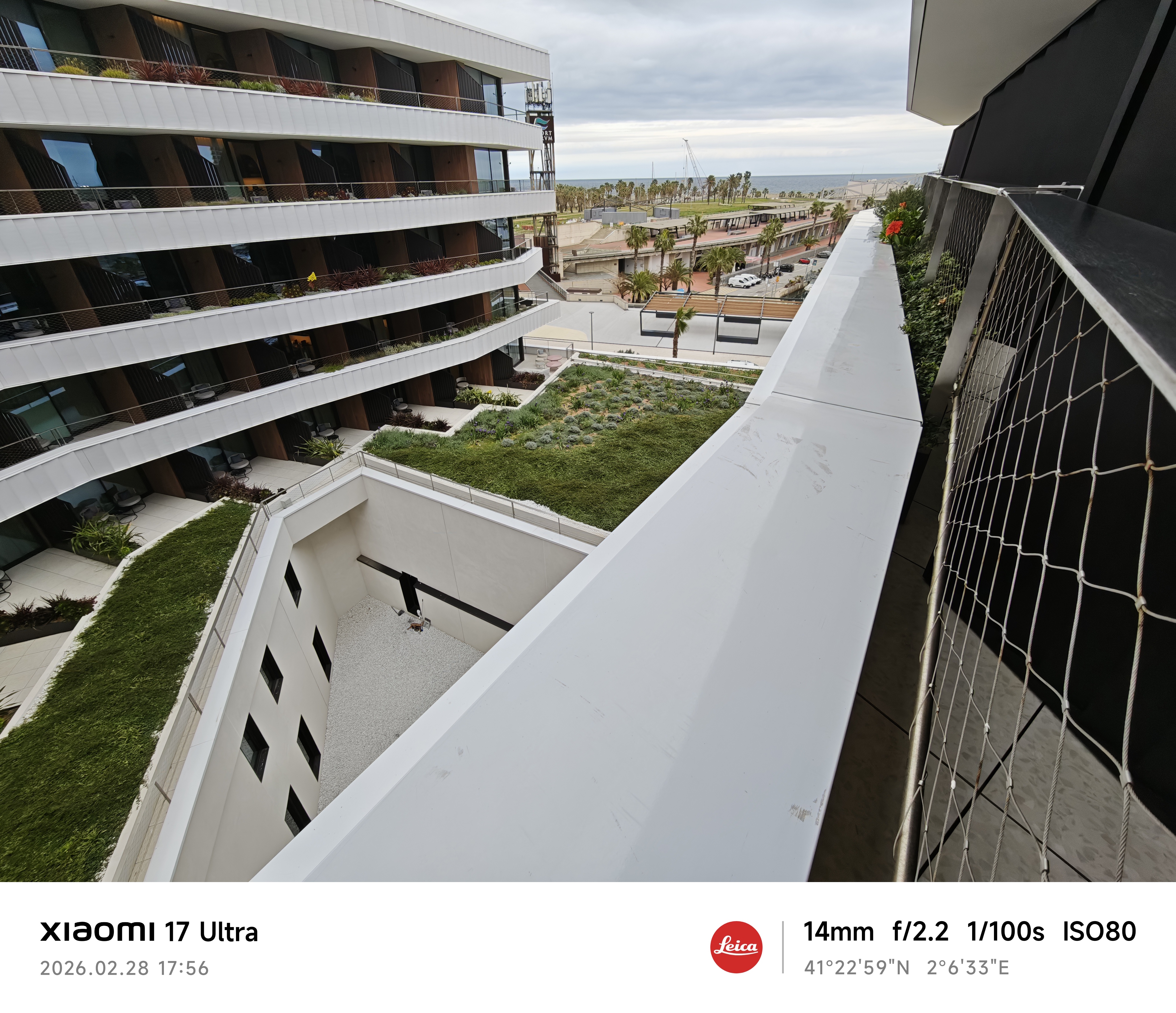
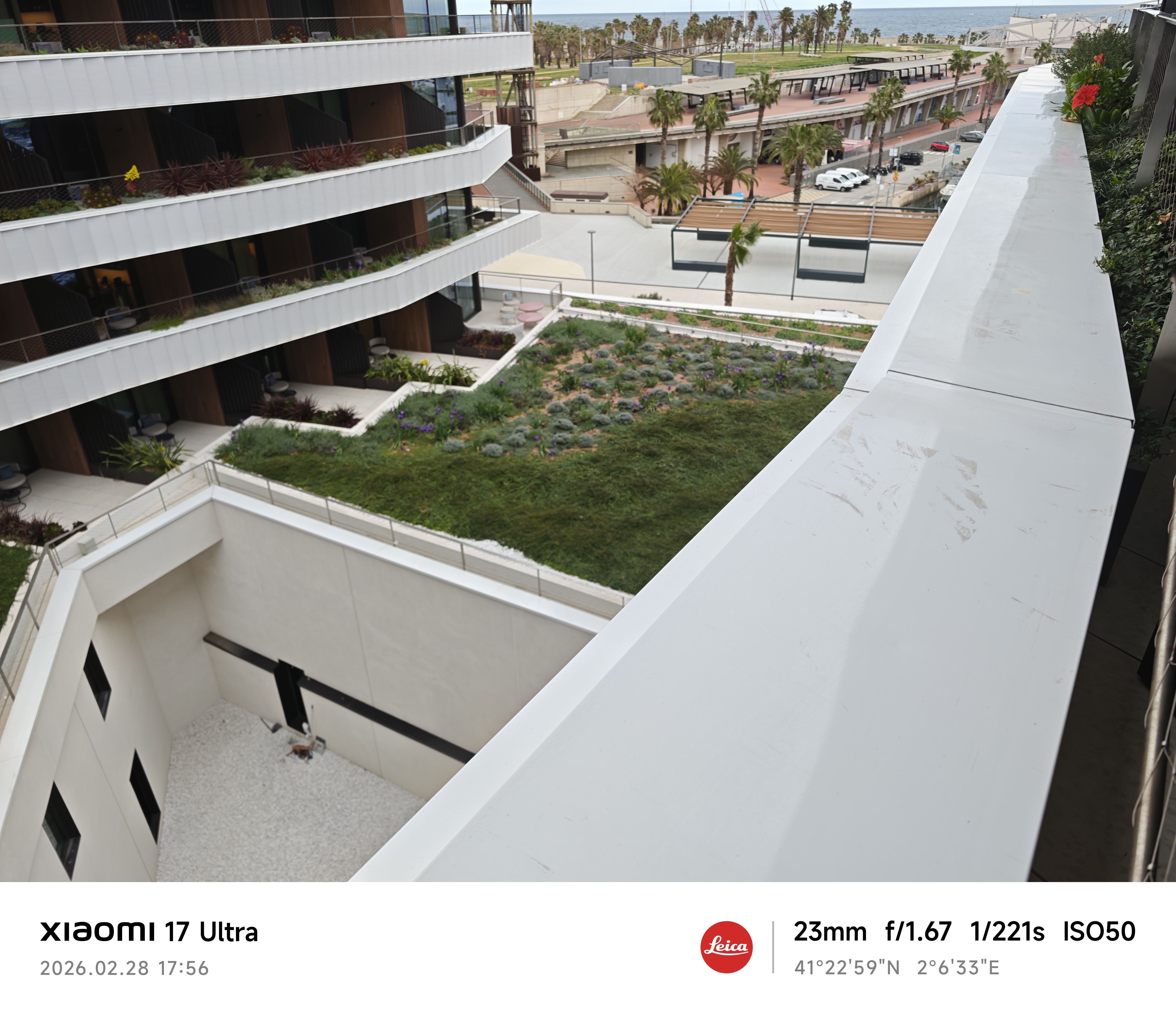
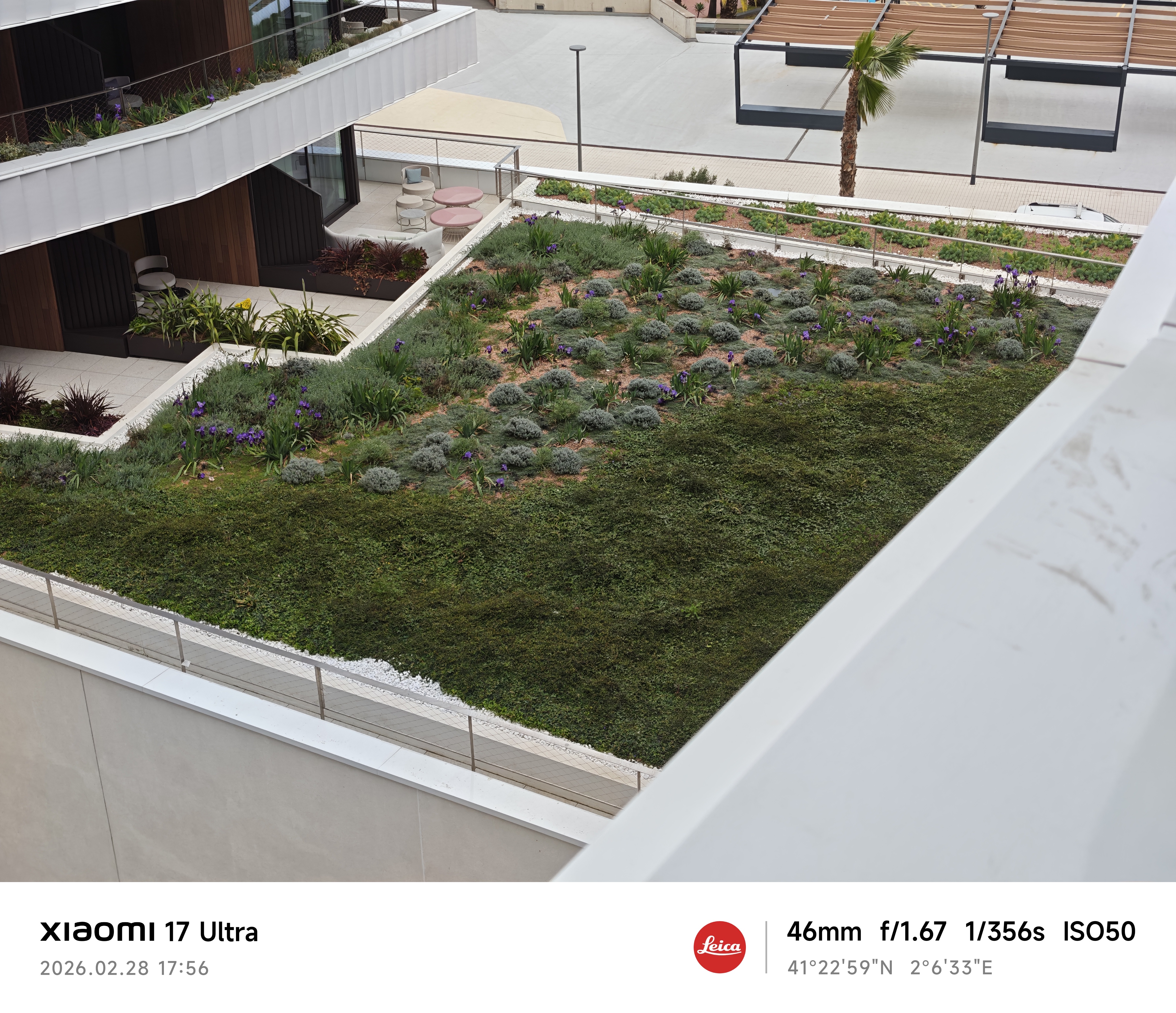
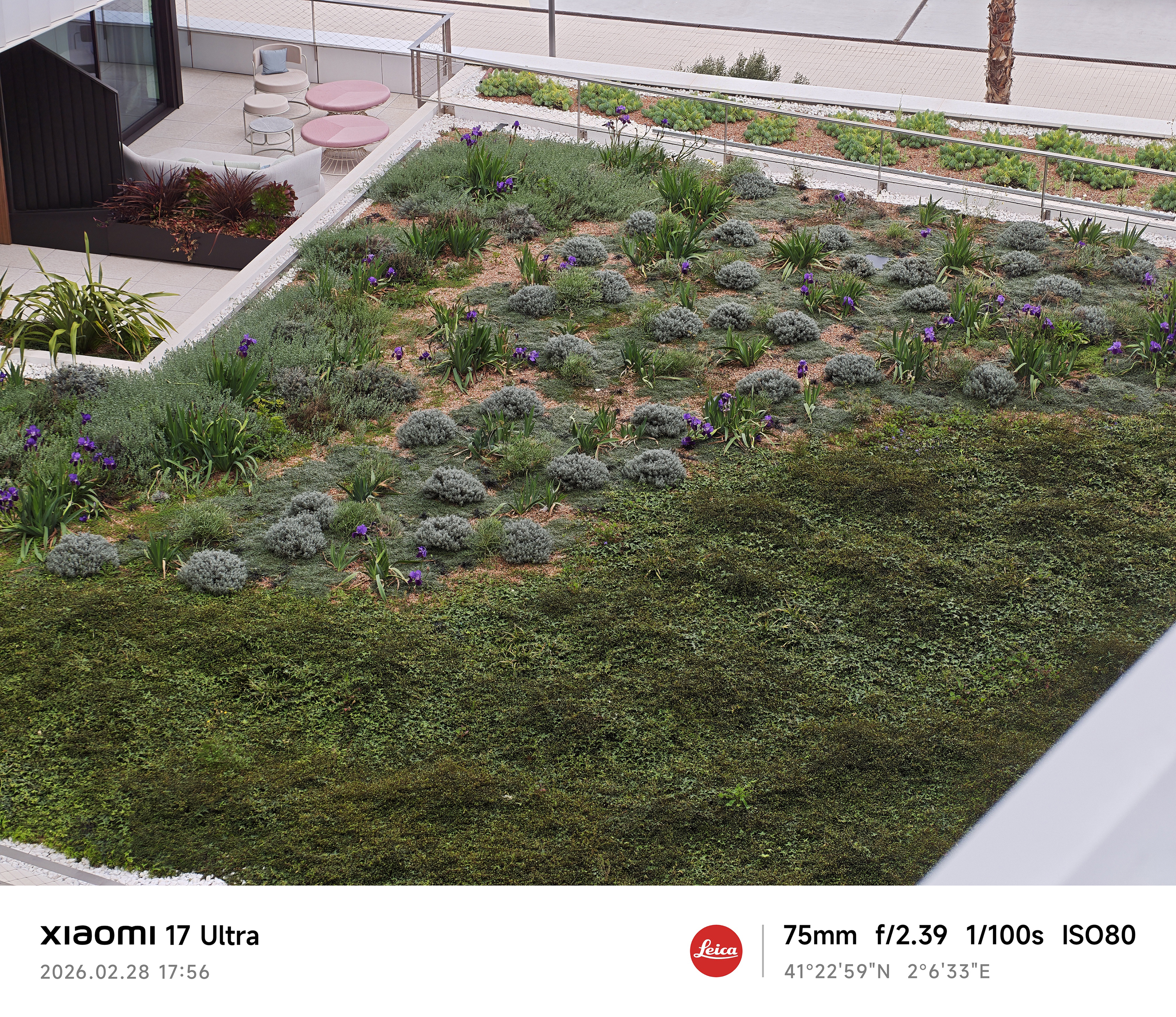
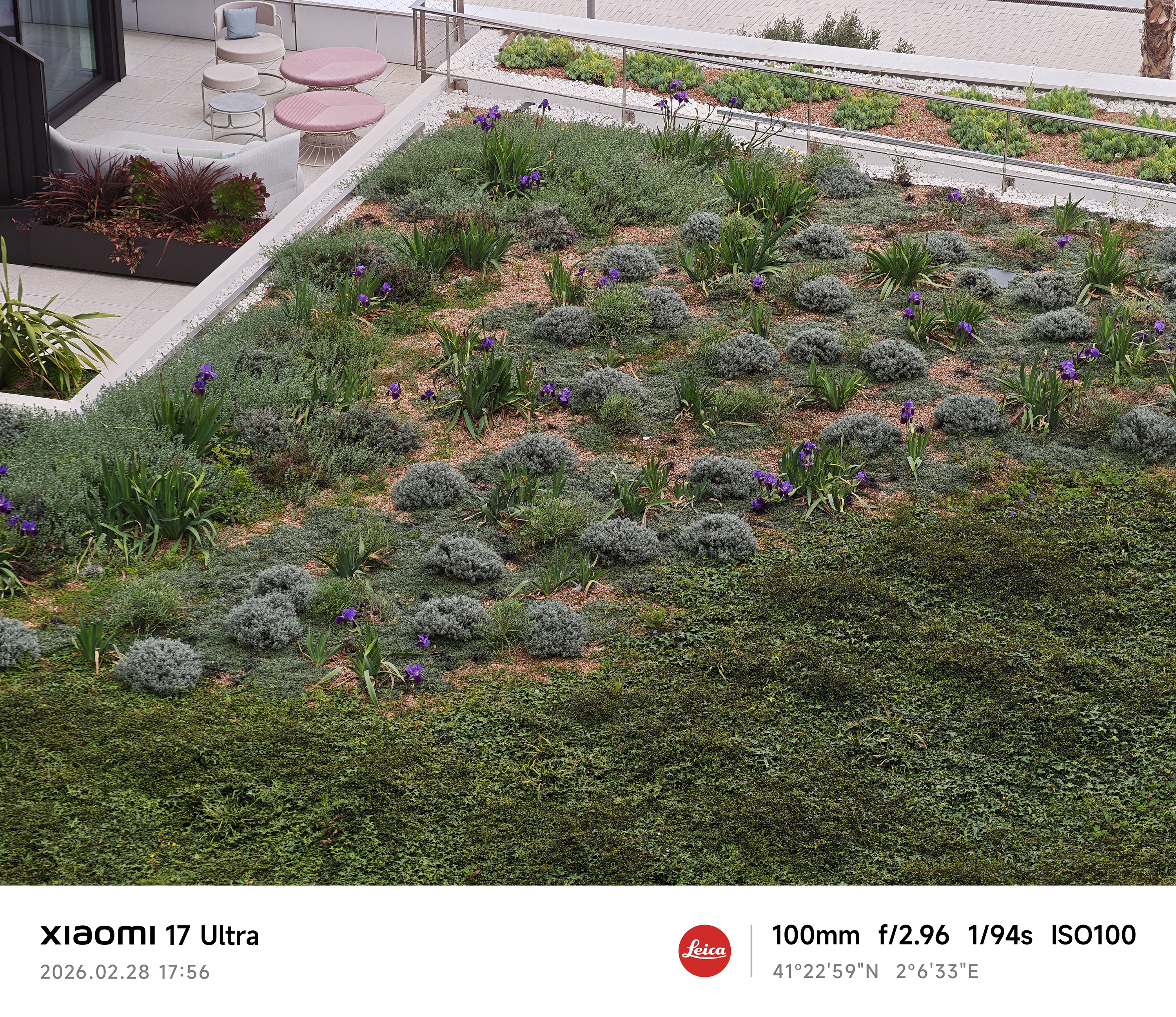
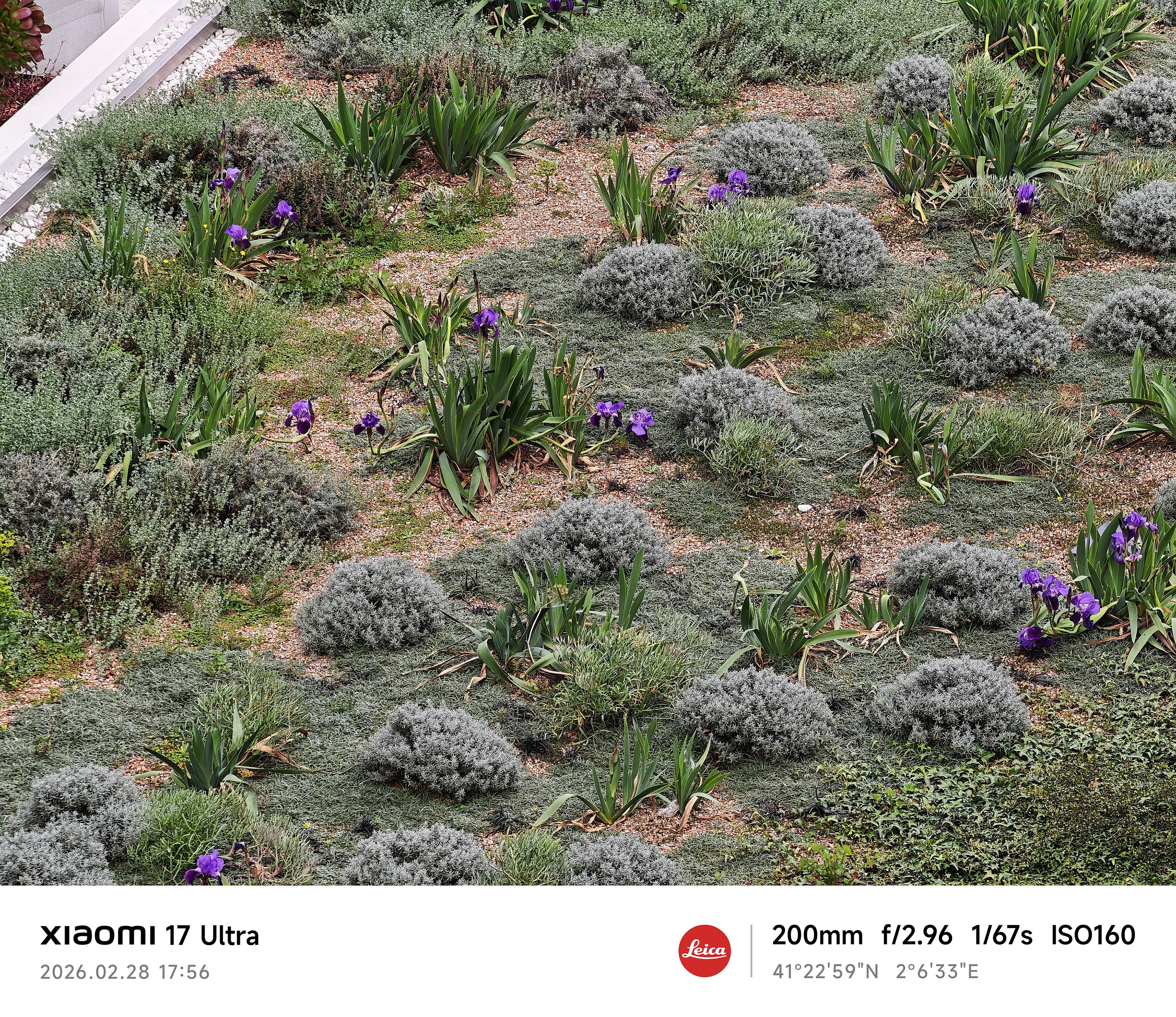
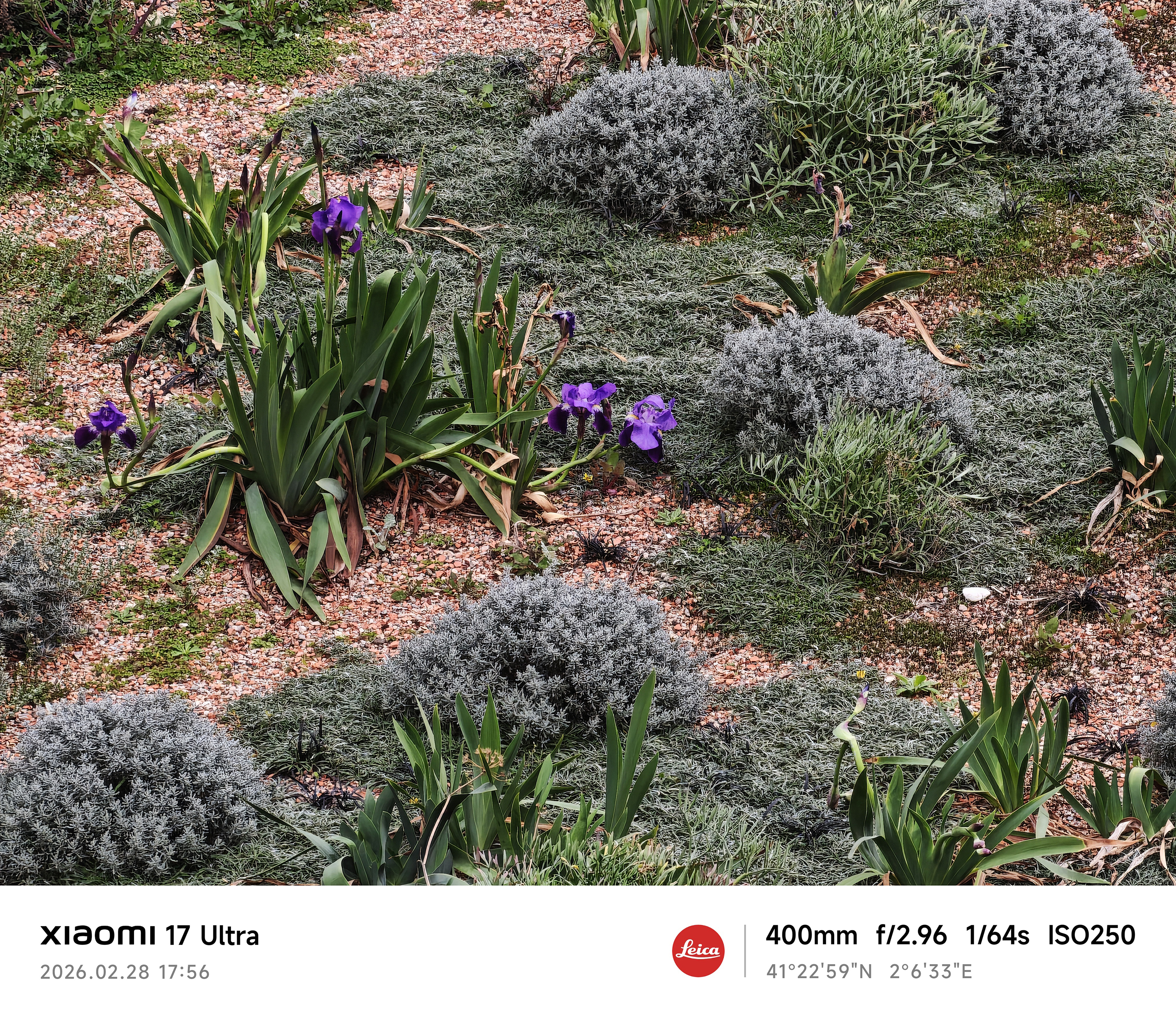
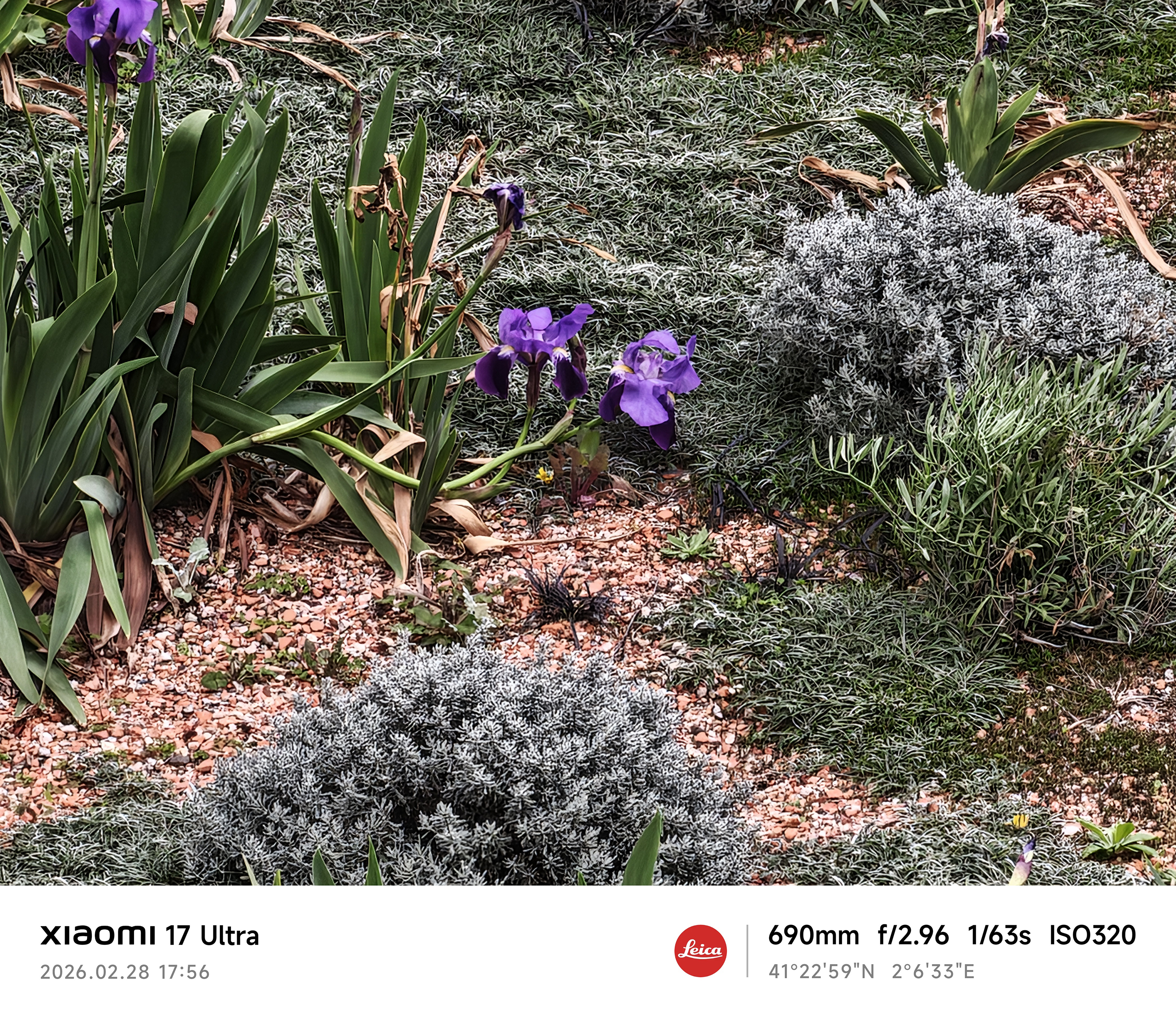
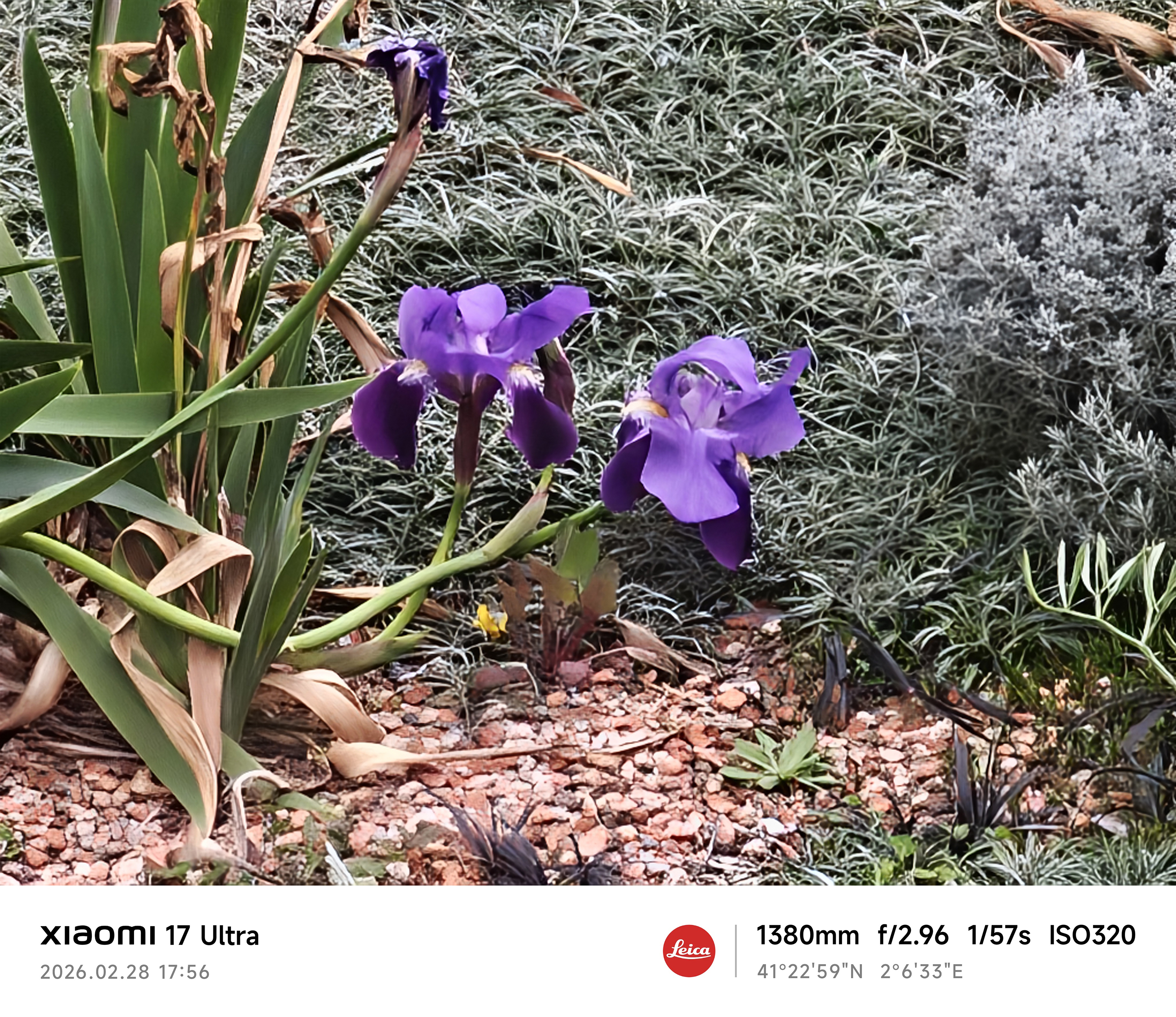
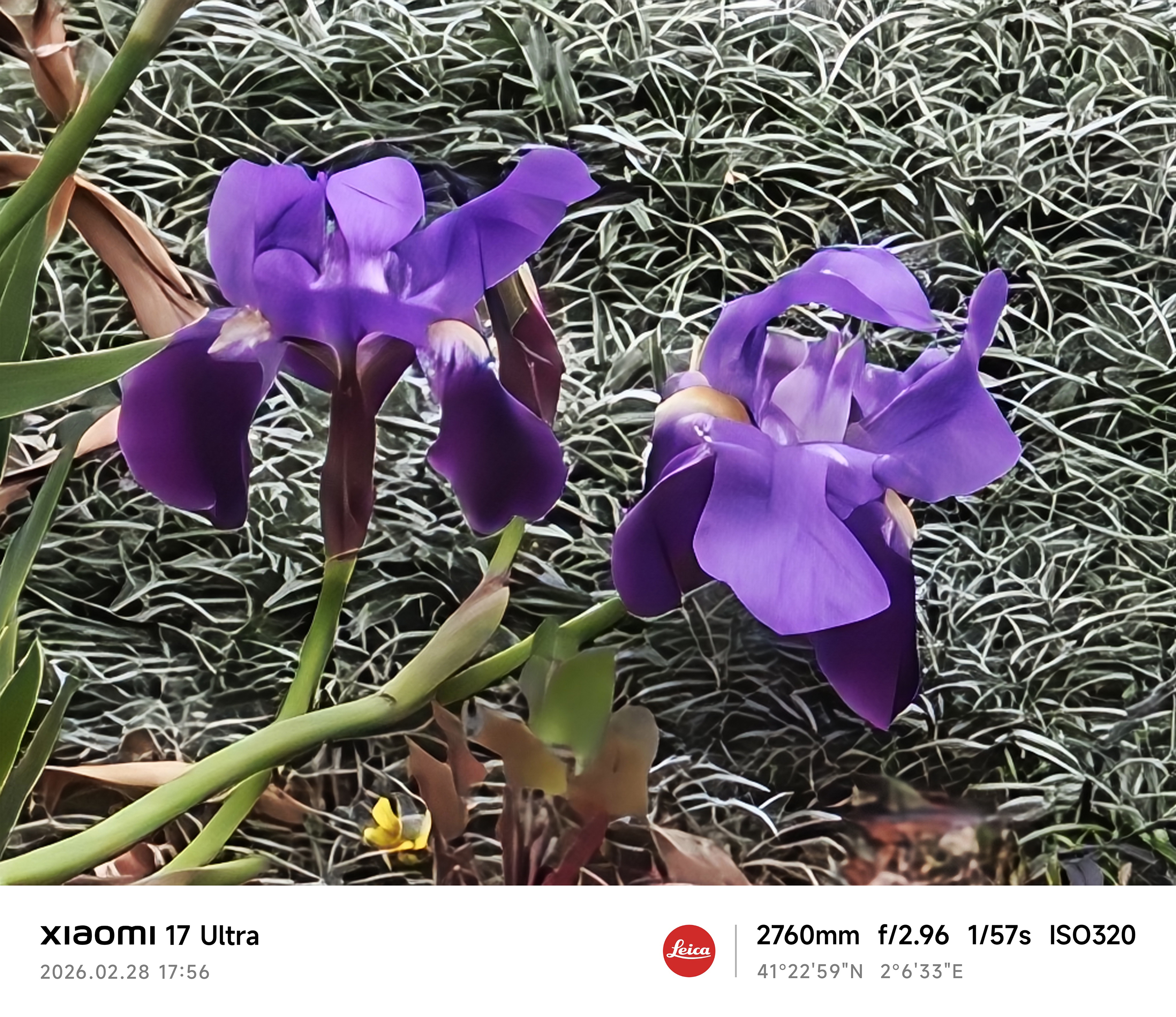
Dynamic range is, understandably, the star of the show with the shots produced by the Xiaomi 17 Ultra, but it honestly excels in all sorts of ways.
Colors are vivid without looking cartoonish, skin tones are well reproduced, there's nary a hint of meaningful noise (even in low-light scenes), and the bokeh (further augmented by Xiaomi's and Leica's processing, of course) looks pleasing and natural.
Although the minimum focus distance isn't anywhere near as close as the 15 Ultra, the new telephoto still delivers when it comes to macro photography, while the high-resolution selfie snapper offers crisper visuals too.
The versatility of the triple-lens system is also undeniable and carries across to video capture. Expect impressively smooth transitions when switching between focal lengths, respectable image stabilization, and the ability to shoot at up to 120fps in 4K, with Dolby Vision or LOG capture enabled. 8K 30fps recording is on the table, too.
Within the native camera app, you also have the ability to leverage that new main sensor's LOFIC tech from a dedicated shooting mode, as well as helpful tools like focus peaking with a false color overlay and zebra stripes for correct exposure in Pro Video mode.
Even with all these inclusions, though, it's clear that, unlike its predecessor, the 17 Ultra is unquestionably built to excel at still photography first and foremost.
While there's a clear difference in image processing when comparing stills to video — namely with the default color science at play — Xiaomi's imaging pipeline can't redeem the low-light video performance offered up by the ultra-wide in low light. By comparison, footage is soft, noisy, and significantly darker than footage captured using the phone's other lenses, undermining its versatility for videographers.
The company has seemingly walked back on its professional video pipeline aspirations for the Ultra series, too. The official Xiaomi Rec. 709 LUT that was introduced with the 15 Ultra (along with accompanying documentation) is no longer available from official sources, while features are seemingly tied to the native Xiaomi camera app.
You can't switch lenses while recording above 4K/60fps (instead, you're locked to either the main or telephoto sensor, once you hit record); there's no native option for industry-standard frame rates, like 23.98, 24, or 25fps; and that aforementioned LOFIC video mode isn't available if you want to use the phone's Pro Video controls.
Third-party apps can bypass Xiaomi's ISP and image processing to give you more direct control of the signal coming off the phone's sensors, as well as the ability to choose from more frame rates and codecs (including the Samsung's new APV codec, meant to rival Apple ProRes), but such apps lose out on support for the phone's mechanical zoom and — for those using the Leitzphone version — the ability to use the physical control ring, too.
- Cameras score: 4.5 / 5
Xiaomi 17 Ultra review: performance
- Qualcomm Snapdragon 8 Elite Gen 5 chipset
- LPDDR5X RAM & UFS 4.1 storage
- 3D dual-channel 'IceLoop' cooling system
Unless you're Apple, you can't really launch an uber-flagship right now without it sporting Qualcomm's current best mobile chip: the Snapdragon 8 Elite Gen 5.
It's the same SoC found in the likes of the OnePlus 15, Honor Magic 8 Pro, and the brand-new Oppo Find X9 Ultra, and as you might expect, it's a beast.
Artificial benchmarks place it at the top of the pile and, in the case of the Xiaomi 17 Ultra specifically, it actually outpaced the other 8 Elite Gen 5-powered phones I've reviewed in the likes of Geekbench, if only by a hair.
One of the biggest improvements between the 15 Ultra and 17 Ultra isn't the chip, but rather the newer phone's '3D dual-channel IceLoop' cooling system. Despite the thinner form of this year's Ultra, that new processor, paired to Xiaomi's more thermally conductive 5500mm² vapor chamber, grants the 17 Ultra notably improved power efficiency and heat dissipation.
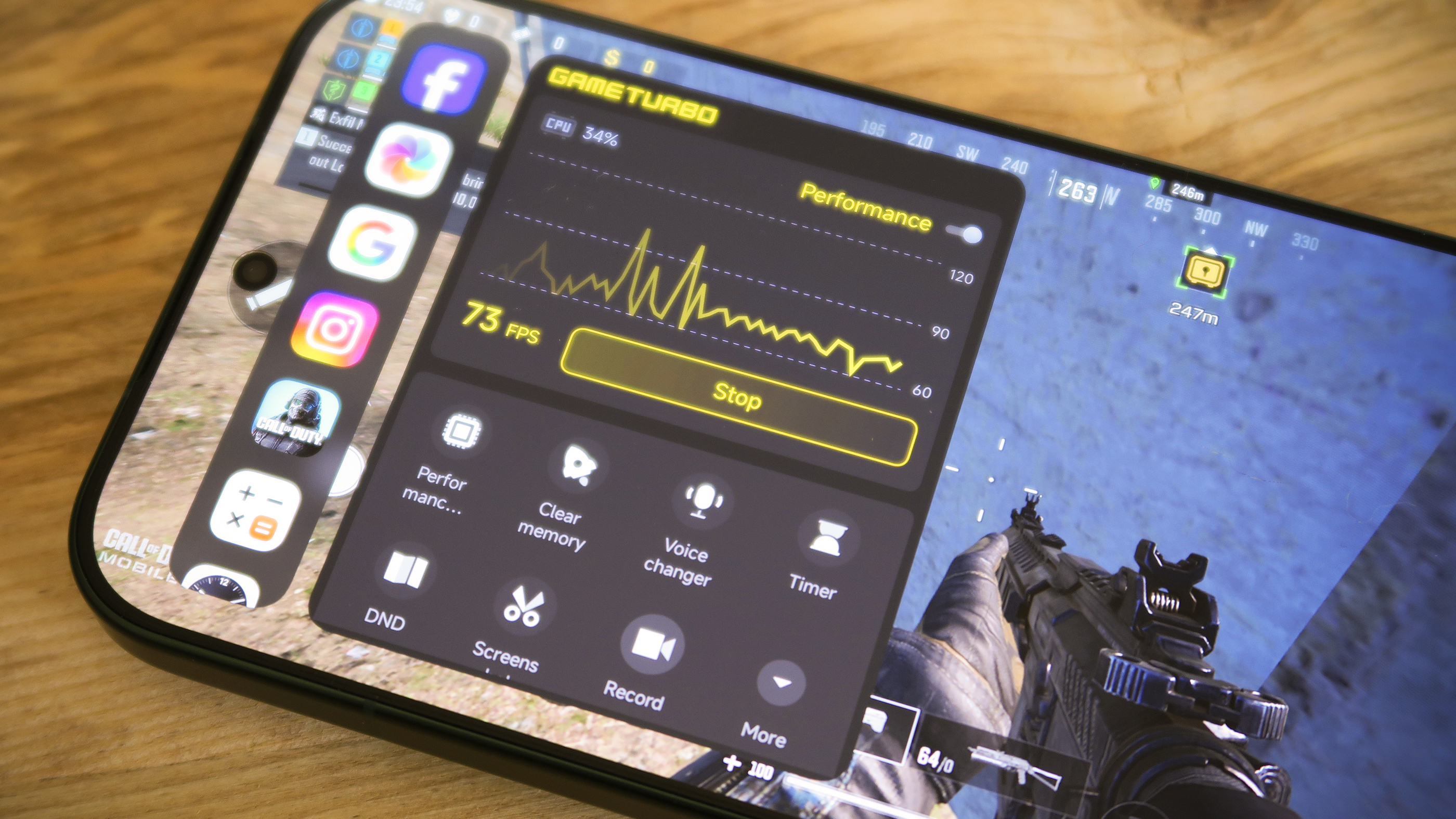
In real-world use, this means longer high-fidelity gaming sessions. The phone never really dipped below its 120fps maximum (with low settings) or 70fps (at max settings) in Call of Duty: Mobile, even with extended play time. You also gain longer video recording when using that impressive camera system, even at higher resolutions and frame rates.
In side-by-side tests with 3DMark's Wild Life Extreme stress test benchmark, the Xiaomi 17 Ultra repeatedly survived the 20-minute gauntlet, despite a 36ºC increase in temperature over the total run. Compare that to the Xiaomi 15 Ultra, which, despite even being actively cooled beforehand on some runs, had to abandon each attempt due to consistent overheating.
Pair this impressive performance with some of the fastest and most power-efficient RAM and storage standards in the business, and there's little the Xiaomi 17 Ultra can't handle, from a performance standpoint.
- Performance score: 5 / 5
Xiaomi 17 Ultra review: battery life
- 6,800mAh (China) | 6,000mAh (RoW) Xiaomi Si-C Surge battery
- Supports 90W wired, 50W wireless, and 22.5W reverse wired charging
Similar to Honor, the global models of Xiaomi's phones tend to come with smaller batteries in comparison to their Chinese counterparts, and that's as true as ever with the Xiaomi 17 Ultra.
Even so, the model I reviewed still comes with a sizeable 6,000mAh silicon-carbon power source; that's the same capacity as the battery inside the Chinese Xiaomi 15 Ultra, and 11% larger than the cell inside the international version of the 15 Ultra (which clocks in at 5,410mAh) I reviewed last year.
Factor in this larger cell, more efficient display and chipset, and improved thermal performance, and it's no surprise that the Xiaomi 17 Ultra outperforms its predecessor in terms of real-world longevity. It doled out eight hours of screen-on time in my testing, which is an hour more than the 15 Ultra managed; it's able to stretch to two days of use on a single charge, if you're careful.
While such an improvement here is welcome, that figure still lags well behind rivals like the OnePlus 15, whose 7,300mAh battery helped deliver more than twice the screen-on time.
You no longer need to rely on Xiaomi's own-brand chargers to replenish this phone at top speed.
As with the last few Ultras, Xiaomi hasn't seen the need to up the 90W wired and 50W wireless charging speeds, and honestly, I agree. Even though the smaller Xiaomi 17 benefits from even faster 100W wired charging, I was still able to refill the 17 Ultra in just 45 minutes, with the phone surpassing 80% charge in 30.
You technically have to enable 'Top Speed' charging mode within the phone's settings to get the best speeds possible, but even with the default charging profile, the phone still refills quickly.
Xiaomi's Surge batteries also come with the company's own assurances and protections, plus the promise of 80% retention of its original charge capacity after 1,600 cycles, which means longevity should be ensured over years of use.
Depending on the market in which you pick your 17 Ultra, it likely won't come with a power adapter in the box, but you no longer need to rely on Xiaomi's own-brand chargers to replenish this phone at top speed. Xiaomi has included support for PPS charging at 90W, as well as 22.5W reverse wired charging to boot, opening you up to alternative chargers and power banks, without compromise.
- Battery score: 4 / 5
Should you buy the Xiaomi 17 Ultra?
|
Attributes |
Notes |
Rating |
|---|---|---|
|
Value |
While undercutting its key rivals, this is still a seriously pricey flagship, especially if you opt for the Leica special edition. |
4/5 |
|
Design |
The thinnest of Xiaomi's Ultra phones to date still manages to fit in one of its largest batteries and offer exceptional thermal performance. |
5/5 |
|
Display |
A gorgeous, expansive, vibrant, dynamic 120Hz flagship-class OLED panel that's exceptionally bright and set within elegantly thin bezels. |
5/5 |
|
Software |
An enhanced software commitment renders this year's Ultra better value long-term, but HyperOS comes with a steep learning curve for the uninitiated. While powerful, it's also a little unoriginal in its approach. |
4/5 |
|
Cameras |
One of the best phones for photography you can buy, thanks to incredible optical hardware and Leica-tuned processing. Video performance is solid but falls short of professional-grade. |
4.5/5 |
|
Performance |
Top-tier performance across its chipset, RAM, and memory, paired to improved thermals, making this a solid endurance champ for gamers and creators. |
5/5 |
|
Battery life |
One of the largest batteries in an Ultra to date. Great fast charging with newfound support for more open charging standards. Now we just need even better longevity. |
4/5 |
Buy it if…
You want a killer camera phone
Leica partnership, hybrid glass APO lens, 1-inch main sensor, 1/1.4-inch telephoto sensor with mechanical zoom; the marriage of photographic hardware and software on the 17 Ultra is Xiaomi's best yet, and lets you capture incredible shots.
You like streaming or gaming
The 17 Ultra has one of the largest and nicest displays out there, which, paired with its improved battery life and top-tier performance, makes it a great option for avid mobile gamers or media junkies who enjoy high-quality streaming on the go.
Don’t buy it if…
You want the best battery life
While Xiaomi has clearly made strides with its silicon-carbon Surge Battery tech, longevity still lags behind comparable rivals in the flagship phone space.
Value is top priority
While the 17 Ultra undercuts Apple's and Samsung's best phones on price in many markets, only those with deep pockets willing to accept its comparatively shorter software support commitment need apply.
Xiaomi 17 Ultra review: also consider
Samsung Galaxy S26 Ultra
Samsung's latest Ultra phone is a more incremental upgrade on its predecessor, albeit with that fancy new Privacy Display. You're likely to more readily embrace One UI over HyperOS, and longer-term software support isn't to be sniffed at either. Superior still photography and fast charging grant the Xiaomi an edge over this Ultra, however.
Read our full Samsung Galaxy S26 Ultra review
iPhone 17 Pro Max
There's little reason to pick the iPhone over the Xiaomi, unless you plan on integrating your smartphone into a professional videography workflow. Video versatility and compatibility give the 17 Pro Max the edge over the 17 Ultra here. Not to mention HyperOS' biggest inspiration is iOS 26. The Xiaomi otherwise offers better hardware, imaging, and features.
Read our full iPhone 17 Pro Max review
Oppo Find X9 Ultra
The 17 Ultra's fresh-faced rival. The Oppo Find X9 Ultra sees a wider release internationally than its predecessor, and offers up some of the most competitive mobile photography specs and features the world has ever seen. I still prefer the look of the 17 Ultra's stills, but you might feel differently. It has a much larger battery, but a slightly higher starting price too.
Read our full Oppo Find X9 Ultra review
|
Xiaomi 17 Ultra |
Samsung Galaxy S26 Ultra |
iPhone 17 Pro Max |
Oppo Find X9 Ultra |
|
|---|---|---|---|---|
|
Screen: |
6.9-inch 120Hz 3,120 x 1,440 LTPO OLED |
6.9-inch 120Hz 3,120 x 1,440 LTPO OLED |
6.9-inch 120Hz 2,868 x 1,320 LTPO OLED |
6.82-inch 120Hz 3,168 x 1,440 OLED |
|
Chipset: |
Qualcomm Snapdragon 8 Elite Gen 5 |
Qualcomm Snapdragon 8 Elite Gen 5 |
Apple A19 Pro |
Qualcomm Snapdragon 8 Elite Gen 5 |
|
Storage: |
512GB / 1TB |
256GB / 512GB / 1TB |
256GB / 512GB / 1TB / 2TB |
256GB / 512GB / 1TB |
|
OS (at launch): |
HyperOS 3 atop Android 16 |
One UI 8.5 atop Android 16 |
iOS 26 |
ColorOS 16 atop Android 16 |
|
Rear cameras: |
50MP main; 50MP ultra-wide; 200MP 3.2x-4.3x telephoto |
200MP main; 50MP ultra-wide; 10MP 3x telephoto; 50MP 5x telephoto |
48MP main; 48MP ultra-wide; 48MP 4x telephoto |
200MP main; 50MP ultra-wide; 200MP 3x telephoto; 50MP 10x telephoto |
|
Front camera: |
50MP |
12MP |
18MP |
50MP |
|
Battery: |
6,800mAh (China) | 6,000mAh (RoW) |
5,000mAh |
4,823mAh (nano SIM) | 5,088mAh (eSIM) |
7,050mAh |
|
Charging: |
90W wired, 50W wireless |
60W wired, 25W wireless |
40W wired, 25W wireless |
100W wired, 50W wireless |
How I tested the Xiaomi 17 Ultra
- Review test period: Two months
- Testing included: Everyday use, web browsing, social media, photography, video calls, gaming, streaming video, music playback
- Tools used: Geekbench 6, Geekbench AI, PCMark, 3DMark, native Android stats
My Xiaomi 17 Ultra sample arrived just ahead of its international launch in February 2026, and I've been using it constantly since then.
It's been with me practically every day, and as such I've spent plenty of time testing the usability of HyperOS 3, conventional usage and multitasking, gaming (with titles like Call of Duty: Mobile and The Division: Resurgence), streaming HDR content, and liberal camera usage.
Beyond putting the camera to the test across a myriad of scenarios, Xiaomi did later send me the official Photography Kit, so I could test its usefulness as an official accessory when shooting out in the wild, too.
I already owned an official 120W Xiaomi charger, which I used to test the phone's fast-charging abilities, once I enabled 'Top Speed' within the battery settings, while real-world use was the main driver for my screen-on time figures.
I've been testing smartphones for the last 15 years, and have the context of the majority of the latest flagships on hand for comparison.
Read more about how we test.
- First reviewed: April 2026


Comments
Post a Comment