Campaigner review 2026
Campaigner has been in the email marketing business since 1999, slowly building up to a platform that goes well beyond basic broadcast sending.
The platform covers email automation, SMS marketing, advanced segmentation, and ecommerce integrations for Shopify, WooCommerce, and BigCommerce. Two things consistently set it apart from simpler tools: multi-channel automation that combines email and text in the same sequences, and advanced add-ons that offer enhanced security and analytics.
TechRadar Pro has been reviewing business software since 2012, with our contributors covering email marketing platforms from Mailchimp to ActiveCampaign year after year. This Campaigner review draws on hands-on testing alongside analysis of its 2026 pricing, features, and support structure to help you decide whether it fits your needs.
My experience with Campaigner
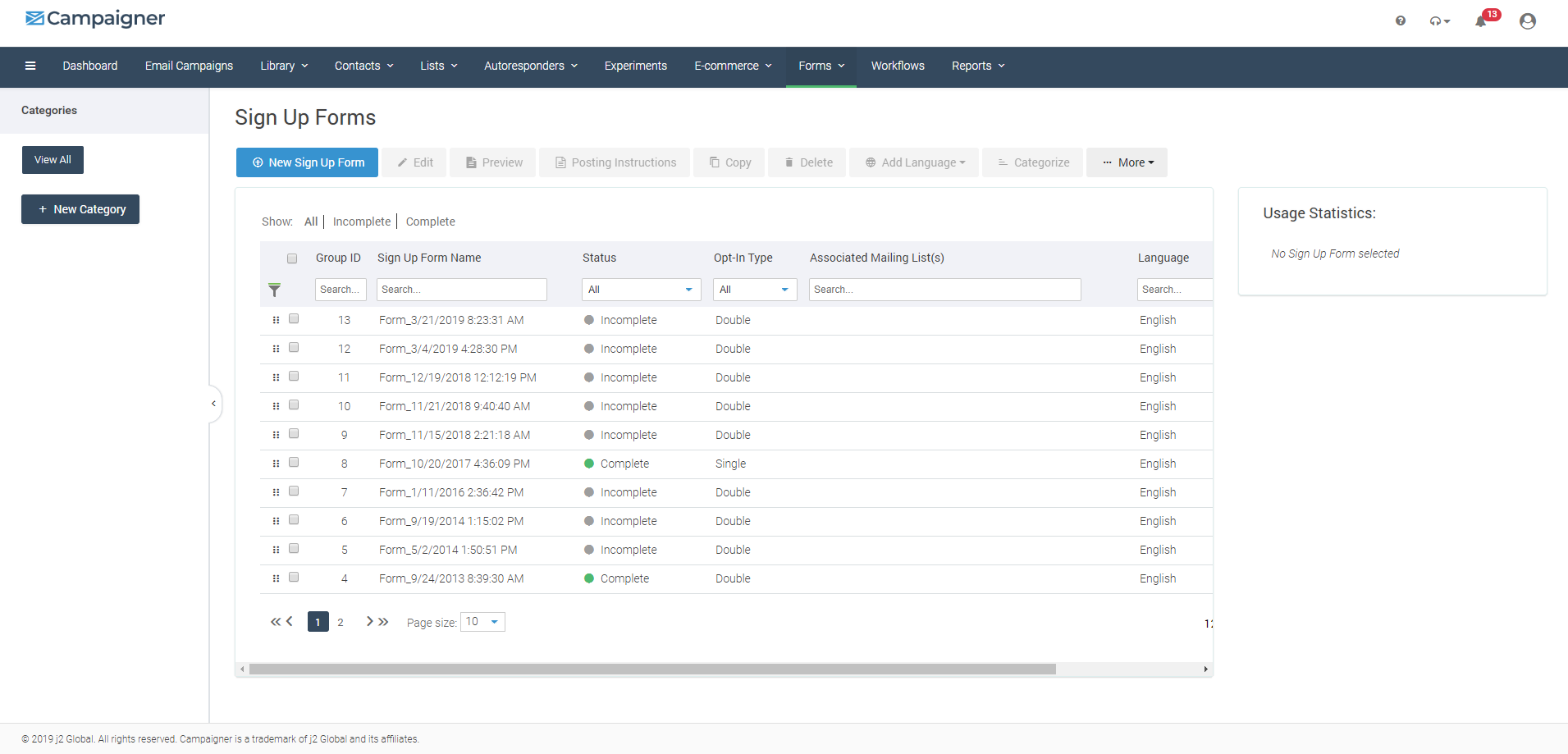
Signing up is quick, though you'll need to provide credit card details to start the 30-day free trial. That's a slight friction point, especially when many competitors let you explore without payment details upfront. Once inside, the drag-and-drop email editor is approachable, with a wide range of templates to start from and a full HTML editor for those who want more control over the code.
The platform performs well on core tasks, but where we'd push back is on the add-on model. Features you might expect to be included, like Reputation Defender for list health monitoring, cost extra on top of your base subscription. For teams budgeting carefully, those additions can push the effective monthly cost well beyond the advertised price.
Campaigner review: Features
Campaigner's feature set splits clearly between its two self-serve plans.The Essentials plan covers the basics: drag-and-drop editor, pre-built templates, one-time and recurring campaigns, A/B testing, autoresponders, and standard reporting. It's a workable setup for teams running straightforward campaigns without complex automation needs.
On the Advanced plan, the feature set gets much more interesting. You get automation workflows covering simple straight-line sequences and complex multi-path journeys, alongside advanced segmentation, dynamic content, conditional triggers, and purchase behavior tracking for ecommerce stores.
The segmentation tools let you build dynamic segments that update automatically based on subscriber activity, and you can layer in custom fields and purchase history for more targeted sends. SMS can run within the same workflows as email on bundle plans, keeping multi-channel campaigns manageable in one place.
Reputation Defender, the platform's proprietary list health tool, is not included in either plan by default. It's an optional add-on priced at 20% of your monthly plan cost. For high-volume senders where deliverability is critical, that's a feature you'll likely want — but it's not free, and the pricing scales up as your contact list grows.
Campaigner review: User experience
The interface has a clear structure and good design. A visual, drag-and-drop workflow builder makes it accessible for marketers who haven't built automation sequences before. The email editor is solid, gives you enough control over layout without overwhelming you, and the template library covers most standard use cases.
The overall design does feel a little dated, though. Some admin screens don't scale cleanly on modern displays, while day-to-day navigation can feel slower than more modern platforms. There's no dedicated mobile app either, so campaign monitoring on the go is limited to what your mobile browser can manage, a noticeable gap for teams that work across devices.
Campaigner review: Customer support
Support is available via email and live chat on all plans, with phone access also available during operational hours. For routine queries, response quality is reasonable, though some users report slower turnaround on technical issues, particularly where it has to do with deliverability and integration setup.
The Custom plan adds a dedicated account manager and deliverability consulting, which is worth knowing about if you're running at a serious scale. For Essentials and Advanced users, email and chat should cover most day-to-day needs, but you won't get proactive account support unless you negotiate that separately.
Campaigner pricing and plans
|
Plan |
Cost (starting at) |
Contacts |
Cost (top end) |
Contacts |
|---|---|---|---|---|
|
Essentials |
$14/mo |
1000 |
$409/mo |
100,000 |
|
Advanced |
$35/mo |
1000 |
$649/mo |
100,000 |
|
Custom |
Contact sales |
Contact sales |
Contact sales |
Contact sales |
Both plans are priced by contact count, with a slider on the pricing page letting you see the exact cost at your list size. Automation workflows, advanced segmentation, and ecommerce integrations are exclusive to the Advanced plan, which stays competitive at smaller list sizes. At larger volumes of 50,000 contacts to 100,000, the Advanced plan starts to overlap in cost with more feature-complete platforms.
Reputation Defender is an optional add-on available on all plans, priced at an additional 20% of your monthly subscription. A 30-day free trial is available, though it requires a credit card to start. There's no permanent free plan.
Campaigner review: Specs
|
Spec |
Details |
|---|---|
|
Free plan |
No; 30-day trial only |
|
Number of contacts |
1,000 - 100,000 |
|
Automation workflows |
Advanced plan only |
|
SMS marketing |
Requires separate subscription |
|
Ecommerce integrations |
Shopify, WooCommerce, BigCommerce |
|
Optional add-ons |
Reputation Defender, AI Insight Builder |
Should I buy Campaigner?
|
Attribute |
Notes |
Score |
|---|---|---|
|
Features |
Advanced plan is strong, but key tools cost extra |
3.5/5 |
|
Performance |
Good deliverability options, UI can feel sluggish |
3.5/5 |
|
Design |
Functional but dated, no mobile app |
2.5/5 |
|
Value |
Competitive base pricing, add-ons inflate real cost |
3.5/5 |
Buy it if…
- You want automation without a high entry price. The Advanced plan starts at $35/mo for 1,000 contacts, which makes multi-step workflow automation accessible to smaller teams that don't need to manage huge lists.
- You run an ecommerce store on Shopify, WooCommerce, or BigCommerce. The native integrations pull in purchase behavior, abandoned cart triggers, and back-in-stock data without requiring third-party connectors.
- You're running email and SMS together. Bundle plans let you manage both channels in the same automation sequences, which can simplify your stack if you're currently using separate tools.
Don't buy it if…
- You expect deliverability tools to be included. Reputation Defender, Campaigner's list health feature, costs an extra 20% on top of your plan. That's a meaningful addition if deliverability is a priority for your campaigns.
- You want a modern, polished interface. The UI has a legacy feel that slows down day-to-day work, and the absence of a mobile app adds friction for teams managing campaigns outside the office.
- You're growing a large list quickly. At 50,000 contacts and above, the Advanced plan runs $398/mo or more, at which point you're in the same pricing territory as platforms with more modern tooling.
Also consider
ActiveCampaign. If automation depth is your priority, ActiveCampaign includes sophisticated workflow building with a more modern interface at a similar price point for mid-size lists.
Klaviyo. For ecommerce businesses on Shopify, Klaviyo's native integrations and predictive analytics go deeper than Campaigner's, with automation accessible early in the pricing ladder.
Mailchimp. A more accessible starting point for smaller teams, Mailchimp includes basic automation across most paid plans and offers a cleaner interface — though its pricing also climbs at scale.
How I tested Campaigner
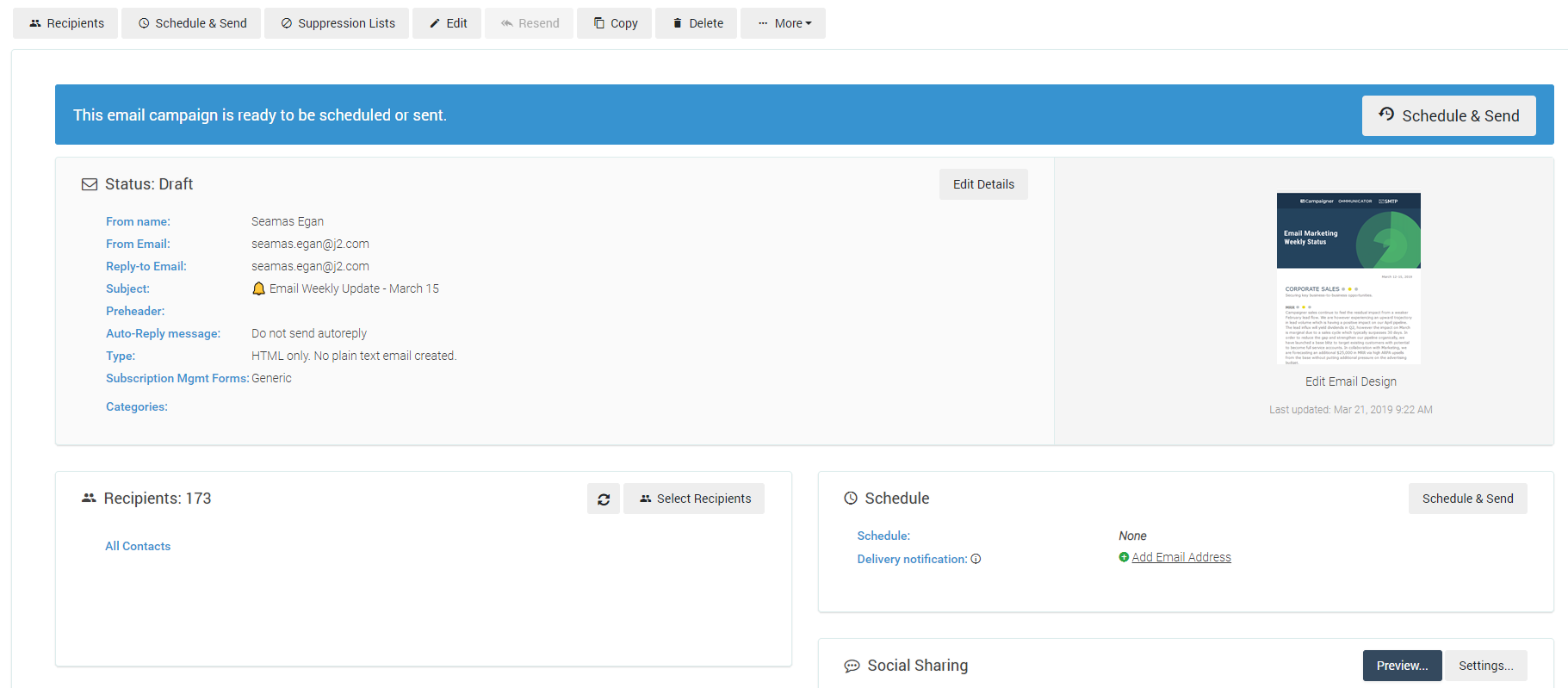
- Signed up for the 30-day free trial and built test campaigns using the drag-and-drop editor and template library, covering standard broadcasts and autoresponder sequences.
- Reviewed the workflow builder, segmentation tools, and ecommerce integration options hands-on, and cross-referenced feature availability across all pricing tiers against official Campaigner documentation.
- Assessed support quality, tested the reporting dashboard, and compared feature depth and pricing against competing platforms at equivalent contact tiers.
Testing involved setting up representative campaigns, including a recurring email sequence and a segmented broadcast, to evaluate the editor experience, preview rendering across devices, and the analytics interface. Pricing details were verified directly against Campaigner's official pricing page, including contact-tier pricing from the interactive slider.


Comments
Post a Comment