Monster Hunter Stories 3: Twisted Reflection is a creative creature-collecting RPG that more than scratches my turn-based itch
Alongside heroic questing and tear-evoking character arcs, an integral part of any RPG experience is the grinding. From prancing around fields in search of herbs to trawling caves for high-level beasties, this inevitable practice makes up a sizable chunk of any save file.
Platform reviewed: PC
Available on: PS5, Xbox Series X|S, Nintendo Switch 2, PC
Release date: March 13, 2026
Monster Hunter Stories 3: Twisted Reflection, the latest addition to Capcom’s beloved creature-catching dynasty, doesn’t shy away from this reality, providing moreish mechanical loops and plenty of side stories as you explore its glorious fantasy adventure.
Set in the pastoral kingdom of Azuria, you play as the prince or, in my case, the princess of the land, who, on top of their royal duties, acts as the leader of the Rangers, a group of eco-conscious warriors who maintain the land.
One day, during a routine realm-protecting venture, a group of troops from the less-than-thriving neighbouring kingdom of Vermeil is spotted, leading to a tense standoff between the two nations. What ensues is a complex action-packed role-playing game (RPG) that leads the regal heir to the throne down a pithy rabbit hole, opening up questions about their past as they venture beyond the edges of their home in search of answers.
One more troubling wrinkle here is that on top of the bureaucratic chaos, rogue monsters are becoming infected with a strange crystal sickness that turns them into raging, psychopathic beasts – very unfortunate timing. Over the runtime, these dual investigations start to intertwine, with Twisted Reflection culminating in an emotional finale I thoroughly enjoyed working towards.
A heavy helping of exposition and a host of time-consuming tutorials mean this expedition starts off slow, and seasoned Monster Hunter Stories players will likely need to button mash through much of this to get to the juicy turn-based meat. Still, if you’re new to the IP or this turn-based iteration, you’ll be well taken care of here.
The Wild Hunt
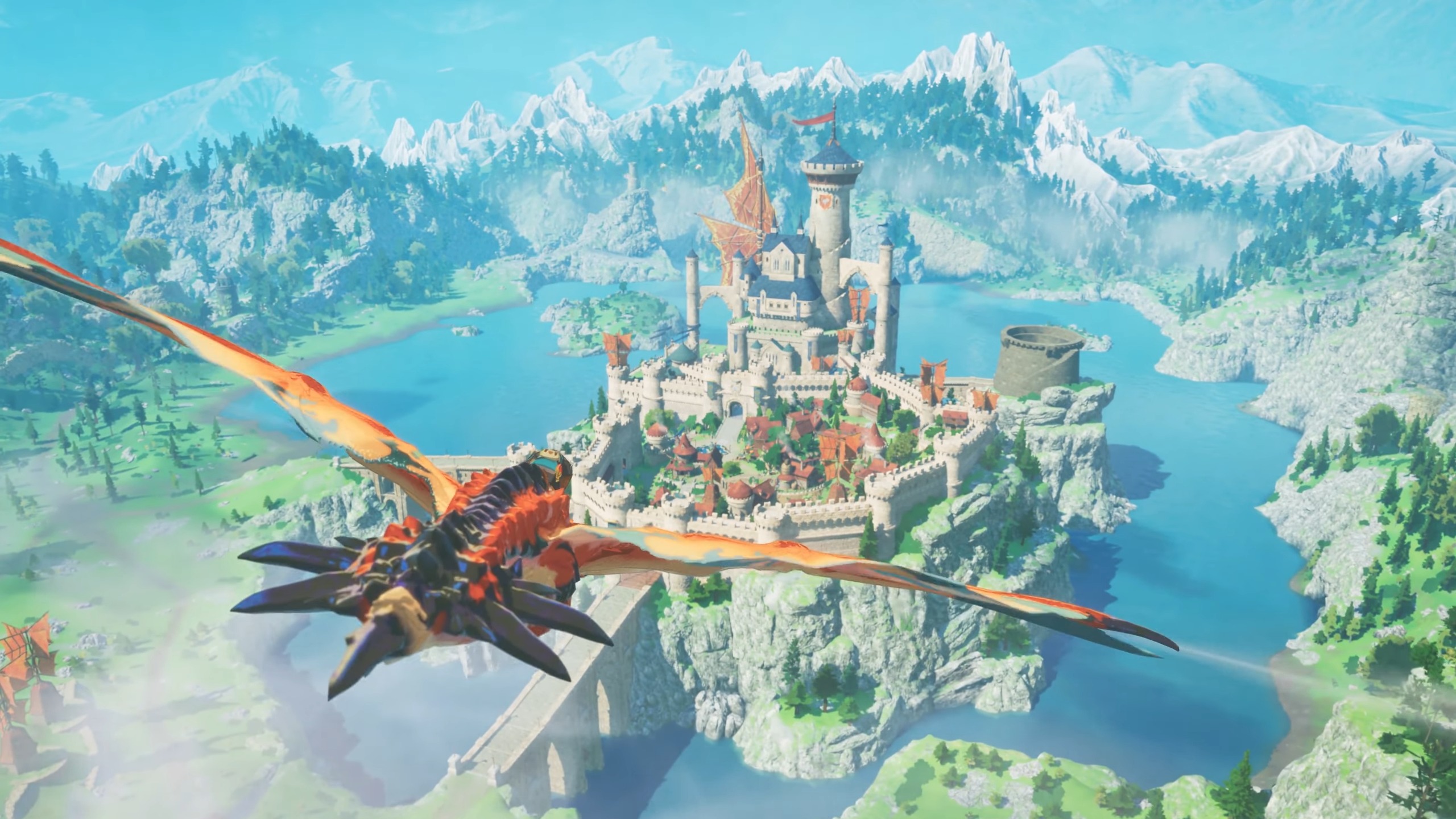
Unlike the mainline Monster Hunter series, Stories switches up combat, cleverly adapting the high-octane experience into a much more friendly turn-based one.
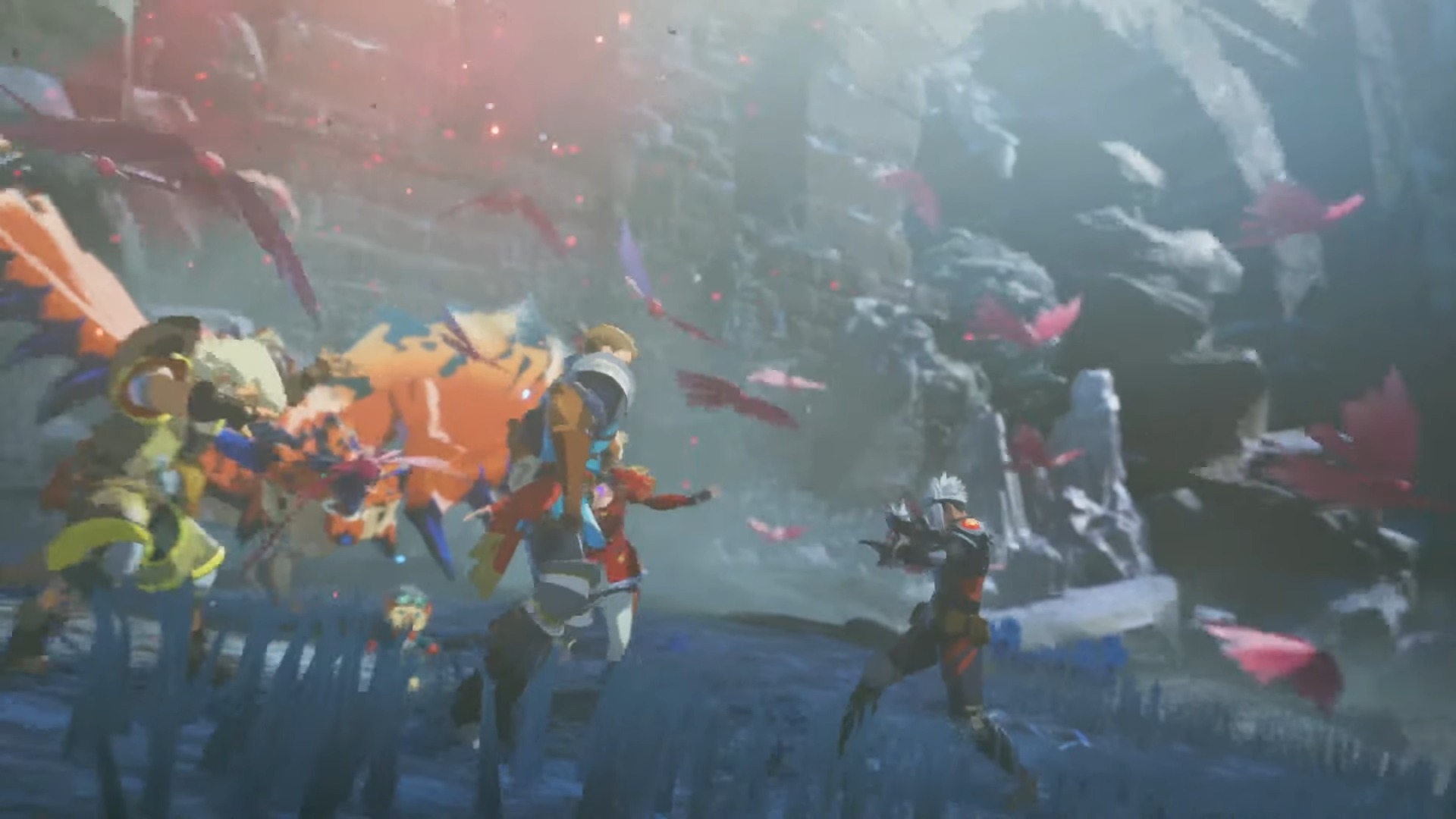
You’ll still need to target specific body parts of monsters, and use the right weapon to break foot bones, puncture inflatable necks, and break down health bars until the monster stops budging. Notably, you’ll have plenty of time to decide how to deconstruct your prey without fear of them running off or slaughtering you mercilessly. Important disclaimer, though — even with the extra time on your side, they still might.
In combat, you control yourself and your monster, sharing hearts in the process, though you’ll often fight with compatriots from the Rangers team, too. Each member specialises in a type of support, with the adorable pink-haired Thea offering a higher critical hit rate with the caveat of lower defence, where the chiselled Gaul tends to heal up your party with his utility belt of items.
Picking a solid ally is extremely important to success, especially as you face more feral opponents down the line. While you’ll inevitably stumble along the way to finding your perfect match, the process is gratifying nonetheless, with failure never feeling too punishing.
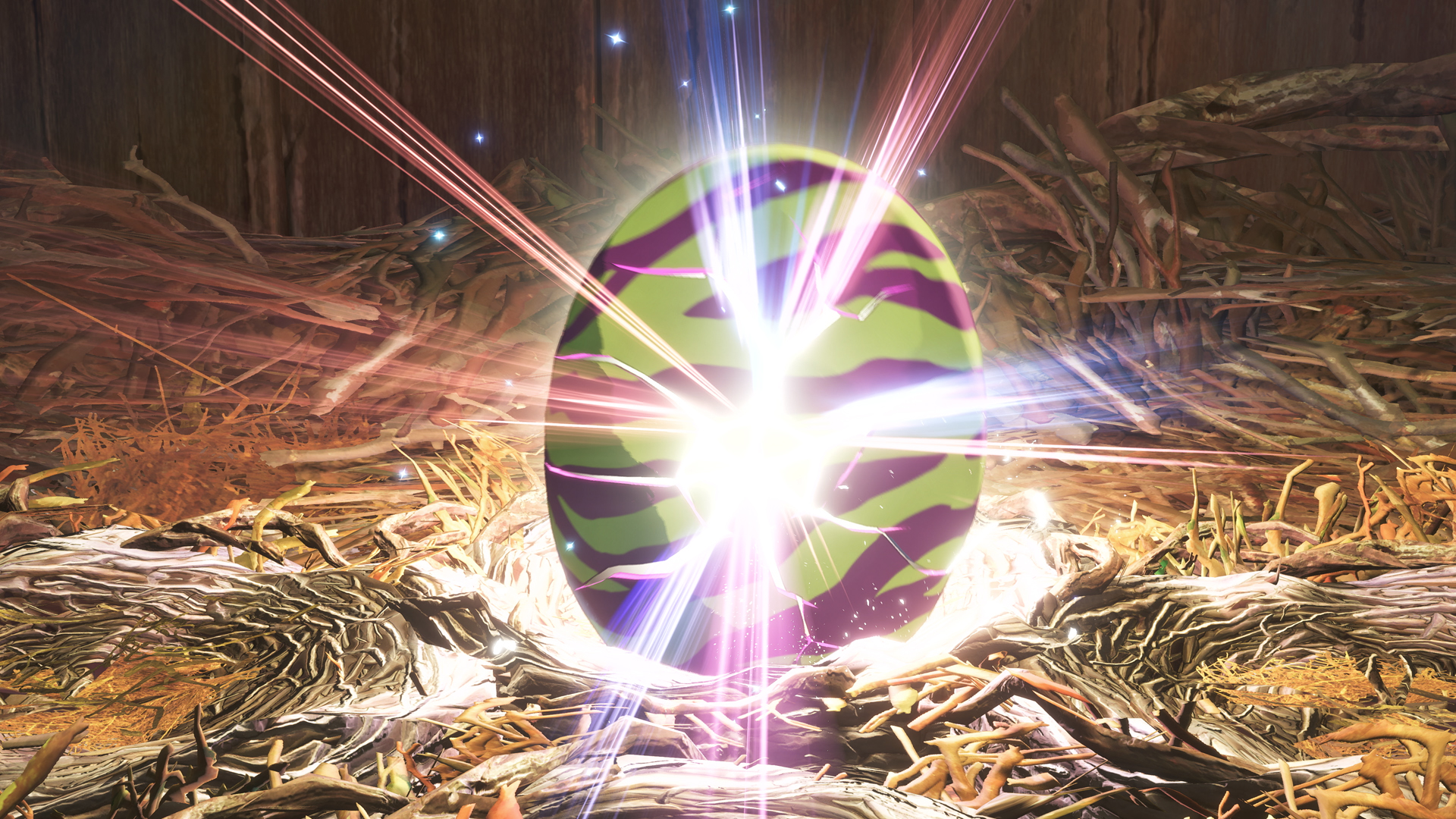
Nurturing digital pets can be hard work, but it’s extremely fulfilling. Twisted Reflection provides another opportunity for players to raise a lineage of virtual beings, procuring them in egg form and coaching them to become lovable killing machines. With six menacing protege pets in your pocket, you can name, train, and gleefully ride them across shifting horizons, bonding with your new buddies all the while.
As you can tell, I thoroughly enjoyed Twisted Reflections’ combat, and, beyond the expected elemental attacks, buffs, debuffs, and stamina bar to contend with, there is a standout feature here – the attack type system.
A carryover from the previous Monster Hunter Stories games, this system plays a lot like rock, paper, scissors, but instead of losing to a friend, your life is on the line. During a battle, you and your prey have a chance to target each other, leading to a nerve-racking head-to-head.
If you correctly guess the beast's type – between Power, Technical, and Speed – and deal the opposing damage type, you have a chance to boost your destructive power. However, if you lose, you’ll take more damage as a result. The more you fend off enemies, the more you’ll get a feel for countering attacks, which leads to a satisfying cycle that encourages you to take risks and bet on yourself.
Combat is more than just a means to an XP end, though, and you’ll also earn some handy monster parts which can be crafted into gear to fortify your stats. From a technical perspective, I found great joy in recycling guts and scales into bows and armour, with beloved monsters like the Chatacabra and Nerscylla reimagined into stylish defensive garb and weapons.
Perhaps the greatest aspect of this process, though, is that what you craft carries the visual markers of monster parts, too. Ergo, if you cook up the leftovers from a fight with a Kut Kut into gear, your fit will have a distinct orange-scaled look. There’s a lot to love about these hectic designs, particularly as the outfit you choose will show up in cutscenes, leading to some unintentionally hilarious interactions.
What’s most important, though, is that it provides you with a reason to go out and hunt specific creatures beyond story progression and XP alone, which is important as you glide towards the challenging late game.
Dragon Quest
Over the course of this expansive journey, you’ll venture into fresh biomes like jungles and deserts, sneaking peeks and battling against a wider variety of creatures. If you aren’t familiar with Monster Hunter, the series has always made an effort to ensure the eponymous monsters feel at home where you find them, and I’m happy to note that Twisted Reflection is no different.
Where the lakes and rivers of each biome house aquatic creatures like the salamander-esque Ludthroth or bulldog-faced Somnacanth, the plains feature packs of scrappy scavengers like the Velocidrome. These touches ensure the world has a lived-in feel, as if it existed long before you decided to drop in and start swinging your sword.
It’s clever that the creatures in your party are held to the same standard, and to reach the peaks and valleys of each area, you’ll have to switch between rides – your winged steed isn’t going to take a dip just because you want to collect some herbs. It’s a shame, then, that the platforming can be extremely hit-and-miss.
I lost count of how many times I fell off a solid edge, plummeting from tree stumps or slipping off a vertical cliff, only to have to scale whole mountains again. Invisible walls appear out of nowhere, too, swiftly taking you out of the fantasy. Given all the intentionally immersive features, it’s a shame that a game so geared toward exploration struggles to make the process fun in the long term.
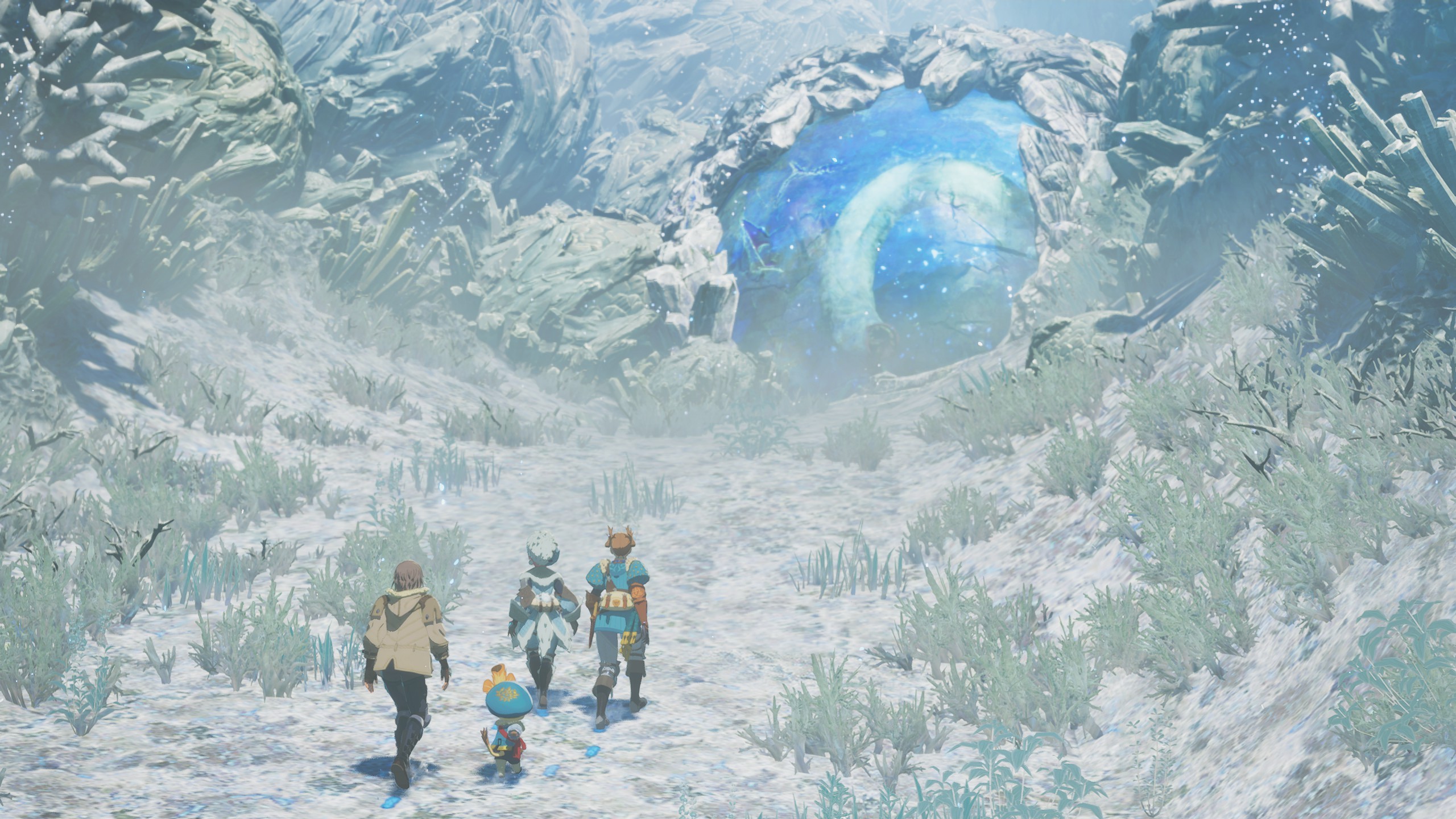
Side quests appear periodically across the saga, bolstering the story by reminding you that, on top of the impending threat of crystallised super monsters, you have a duty as a ranger, too. The missions are fairly simple fetch quests for the most part, sending you off to find specific monster eggs or herbs with some cute moments peppered in.
Thankfully, there are more focused friendship quests to complete, too, that feel much more thoughtfully written and allow you to embed in Twisted Reflection’s world and build richer relationships with the other rangers in your squad. Here you’ll get to know Kora, the tough warrior with a harrowing history, and Ogden, a warm if not eccentric father figure within the group.
If you don’t complete them as they appear, the story's pacing goes off kilter a touch, and you’ll find yourself warped back to maps that you almost certainly shouldn’t be visiting in context to the story at large. Still, if you can suspend your disbelief, the stories are silly and heartwarming, bolstered by spirited vocal performances from the game’s cast.
Should you play Monster Hunter Stories 3: Twisted Reflection?
Play it if...
You’re looking for a lengthy RPG set in a rich fantasy land
Monster Hunter 3 Stories: Twisted Reflection is a fantastic adventure, flush with fantasy fetch quests and heartwarming side stories to boot. Completionists will have hours upon hours of content at their fingertips.
You like the lore of the Monster Hunter series, but don’t love the speedy combat
Monster Hunter Stories trades the real-time combat of the mainline series for a much more approachable turn-based system. While there are quick-time events in battle, there is still ample time to react if you’re an anxious player.
Don't play it if...
You aren’t keen on grinding for XP
While there are plenty of side quests to check out, as well as a rogues' gallery of monsters to find, inevitably, you will need to grind out battles to level up your team. It’s not egregious by any means, but it is a core part of the experience.
Accessibility features
You can access Monster Hunter Stories 3: Twisted Reflection’s settings anytime from the pause menu. There’s a Controller and Mouse and Keyboard submenu where you can rebind keys for traversal, battling, and cutscenes to suit your preferences. In the Options submenu is you can toggle font size for subtitles and adjust cutscene dialogue to display speaker names. You can also adjust your minimap to rotate with the camera's orientation or remain fixed.
Where objectives are concerned, you can tweak the quest marker to always be on and choose to have a caution icon appear when you approach monsters of a much higher level than you own. Those struggling in combat can also choose to have a hint message appear if they lose in certain battles.
How I reviewed Monster Hunter Stories 3: Twisted Reflection
We played Monster Hunter Stories 3: Twisted Reflection’s main campaign on PC for over fifty hours. During that time, we invested in the side quests, Ranger stories, and the habitat rehabilitation portion of the game, in addition to the main questline.
It was completed on a Lenovo Legion 5 Gen 10 (RTX 5070) with the internal speakers for audio. A mouse and keyboard were used intermittently, while the campaign was primarily played with an Xbox Wireless Controller.
First reviewed February-March 2026


Comments
Post a Comment