I had an absolute blast flying the DJI Avata 360 — it’s ‘the 360 drone to beat’
DJI Avata 360: one-minute review
Antigravity launched the world's first 360 camera drone in 2025, but now drone market-leader DJI has arrived with its own spin on the concept – and it's a quite different beast from the somewhat pedestrian Antigravity A1.
The clue's in the name: the DJI Avata 360 is not only a 360 drone but also an Avata drone — the latest model in DJI's line of sporty FPV flyers. If the A1 is a Fiat 500 (tiny, eye-catching, innovative, but not especially nippy), the Avata 360 is a VW Golf GTI – unassuming at first glance and much heavier, but faster, more responsive and more practical, yet (and here's where my automobile analogy breaks down) somehow cheaper too.
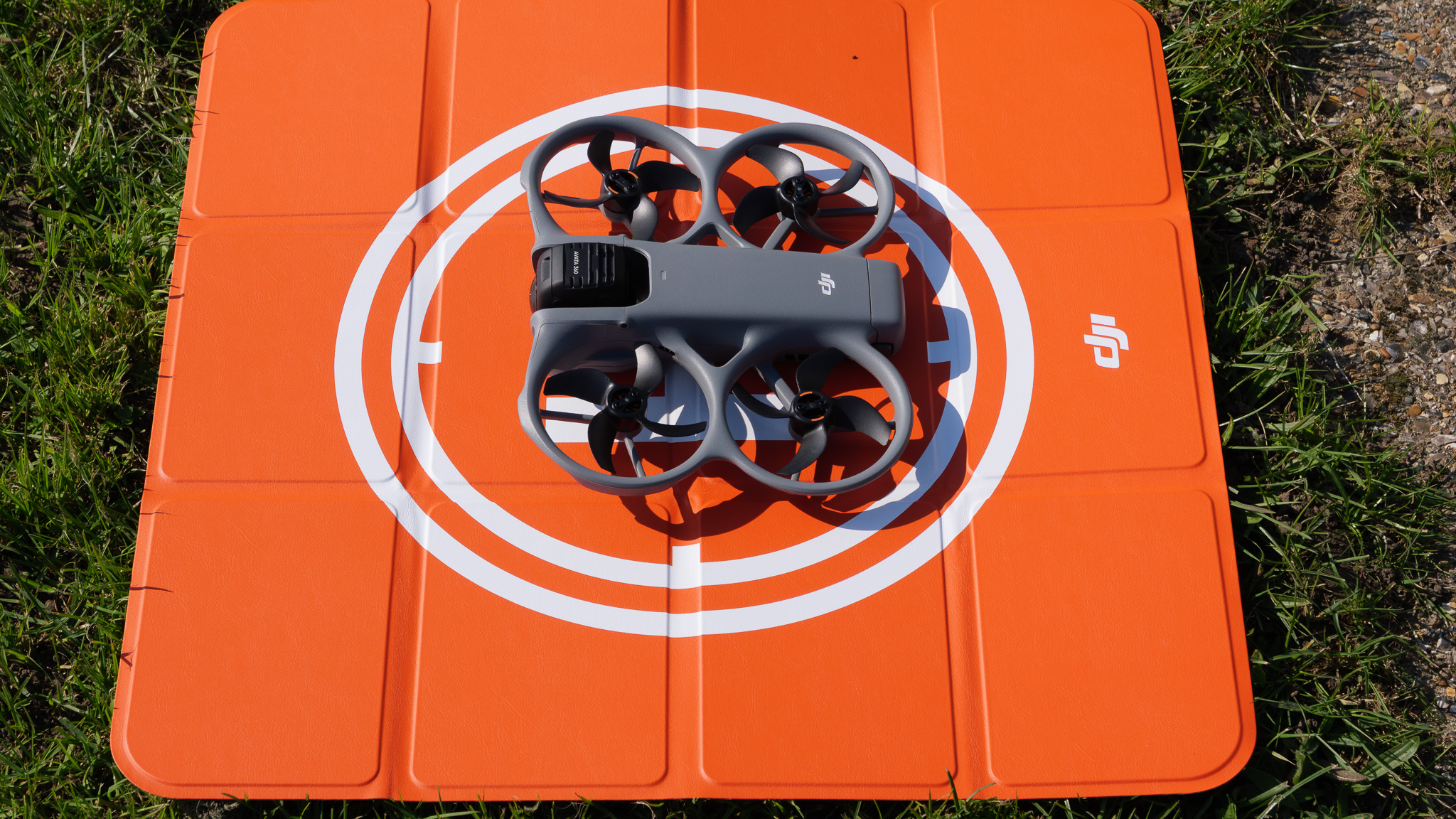
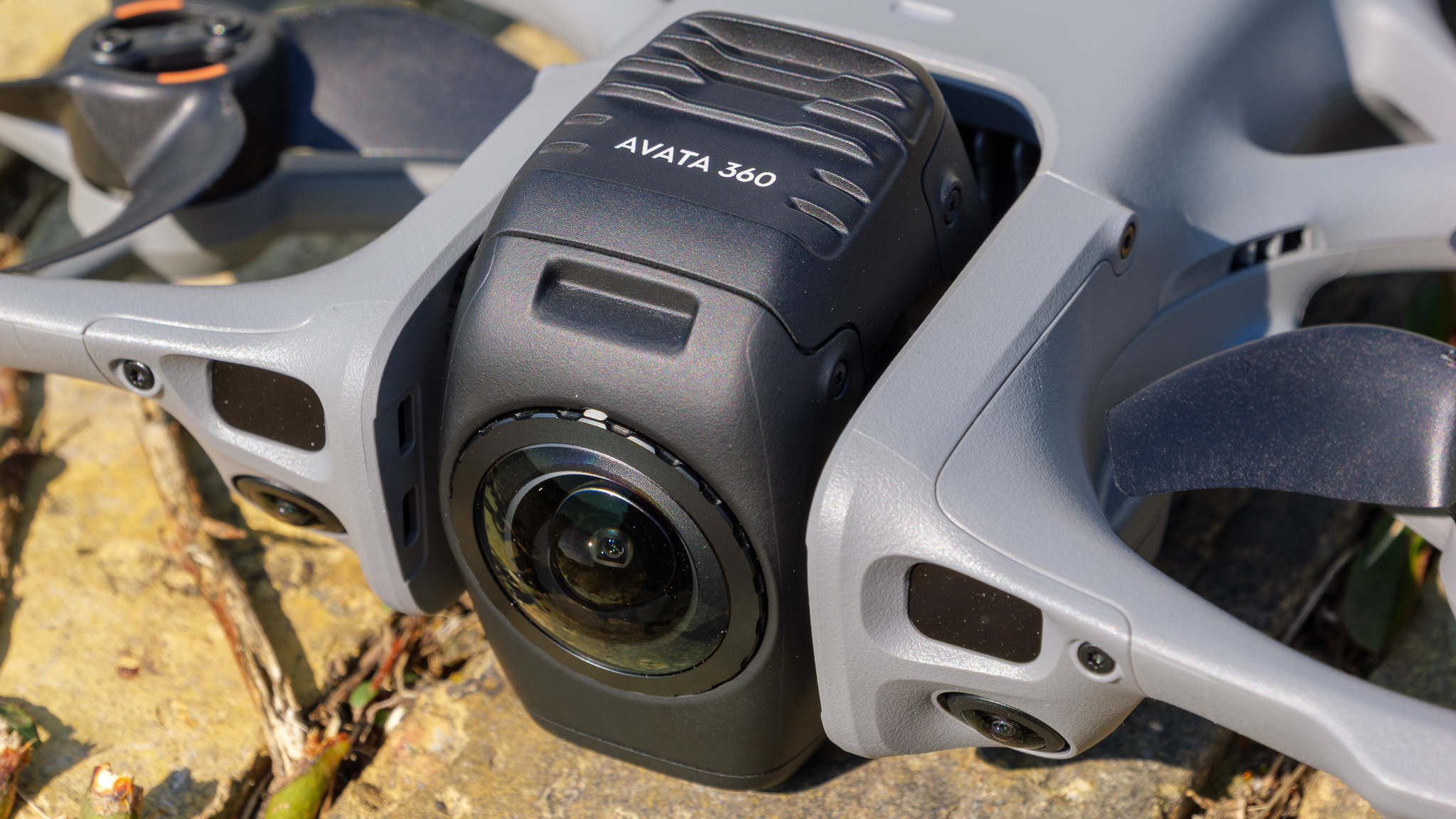
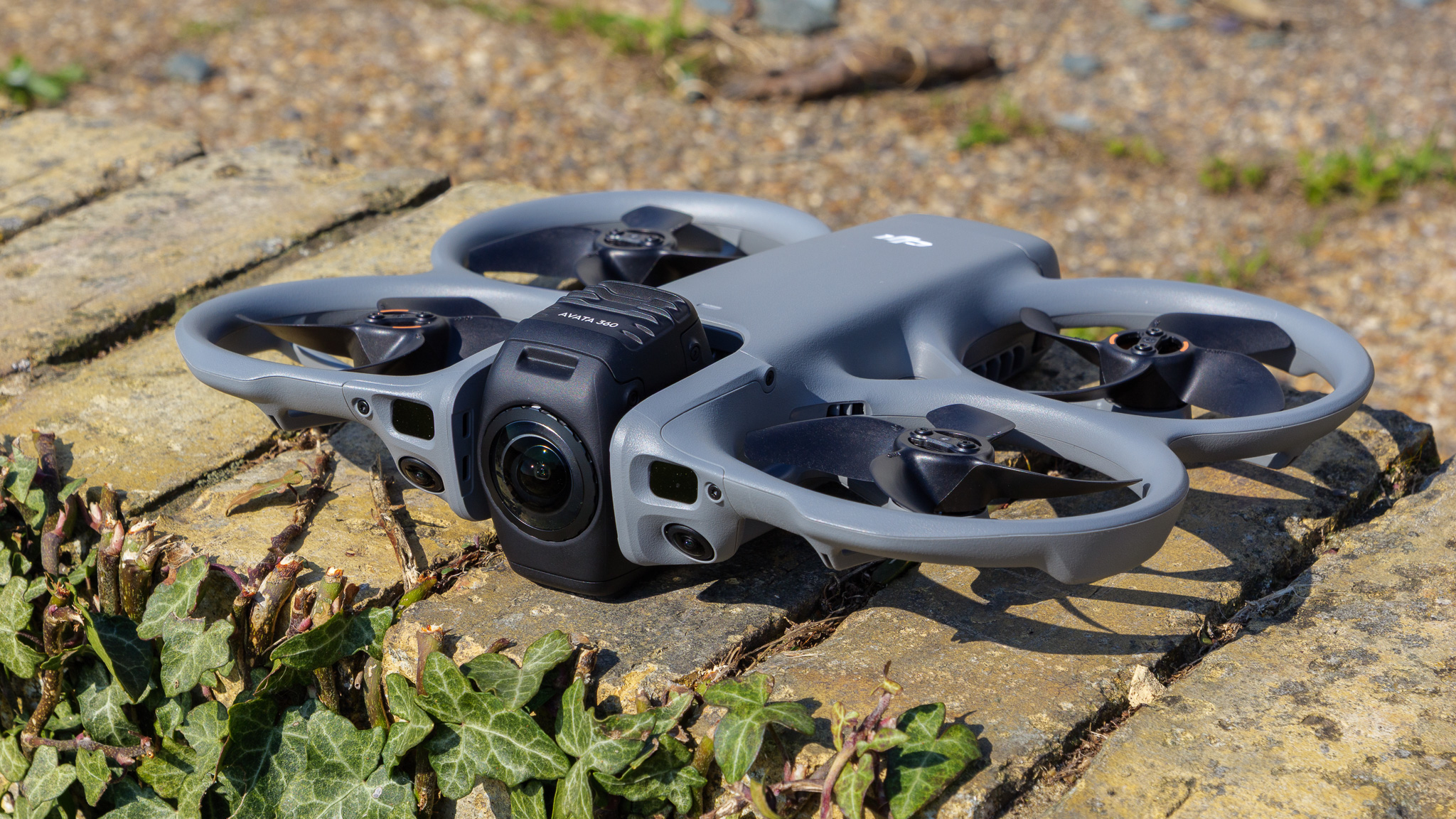
The Avata 360 looks a lot like the DJI Avata 2, or perhaps a larger DJI Neo 2, albeit with one obvious difference: its front-mounted camera has two lenses rather than one. Arranged on opposite faces of the gimbal, these record everything surrounding the drone (while using software to seamlessly unify the footage and remove any trace of the drone itself), allowing the user to re-frame footage in post-production using DJI's mobile or desktop apps.
I'll get more into how the 360 editing works in the full review below, but for now I'll just say that anyone who's used 360 cameras in the past will have little trouble creating some very impressive clips with this aerial version.
Where the Avata 360 differs from (and beats, in my view) the A1 is that, firstly, it offers a choice to fly it using a traditional twin-stick controller or the goggles-and-motion-controller FPV method. The A1 only supports the latter, and that means I need to bring a buddy along to act as spotter every time I fly it. If I'm on my own, I can't use the A1 at all (not legally, anyway), whereas I have the option to fly the Avata 360 using a RC 2 controller — no spotter required.
And in FPV mode I simply found the Avata 360 more enjoyable to fly than the A1: the design means it's faster, more agile and more responsive, even in high coastal winds, and switching it to single-camera mode (which uses one front-facing camera instead of the 360 setup, and records 4K 60fps footage) almost transforms it into an Avata 2.
Overall, the DJI Avata 360 feels like a more well-rounded (no pun intended) and flexible 360 drone than the A1, and at a more affordable price to boot.
DJI Avata 360: price and release date
- Launched on March 26 2026
- Significantly cheaper than the Antigravity A1 360 drone
- Available in four kits, including two Fly More Combos
DJI launched the Avata 360 on March 26 2026, with four different packages available. If you already own some form of compatible controller, you can buy the drone and a single battery for just £409 / AU$799. Packaged with DJI's excellent RC 2 touchscreen and twin-stick controller, it's £639 / AU$1,159.
Note: I haven't included US dollar pricing here, and you may have guessed the reason; DJI's troubles in the US are well documented elsewhere on TechRadar. Suffice to say this drone will not be officially launching in the States, which is a great shame.
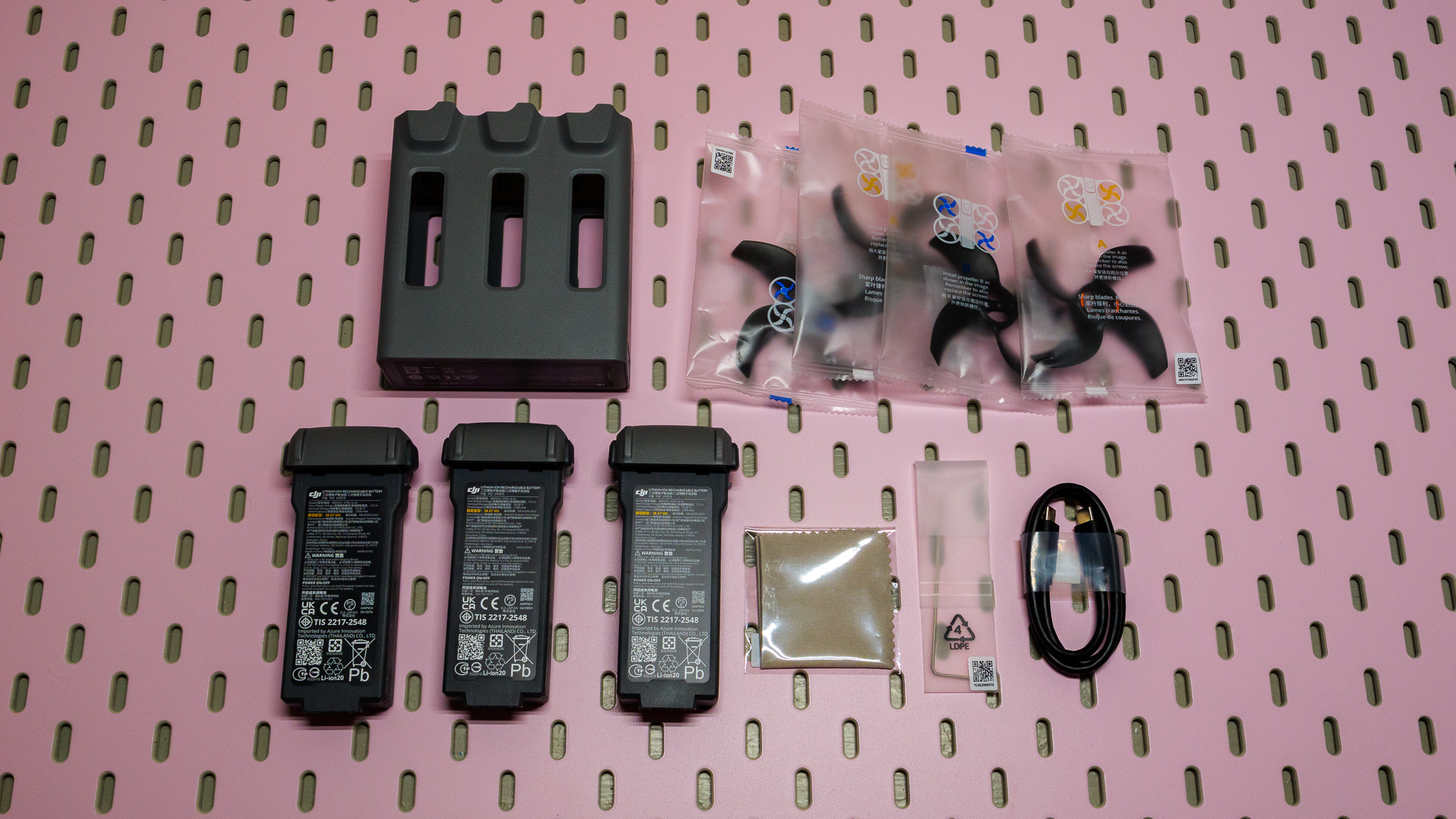
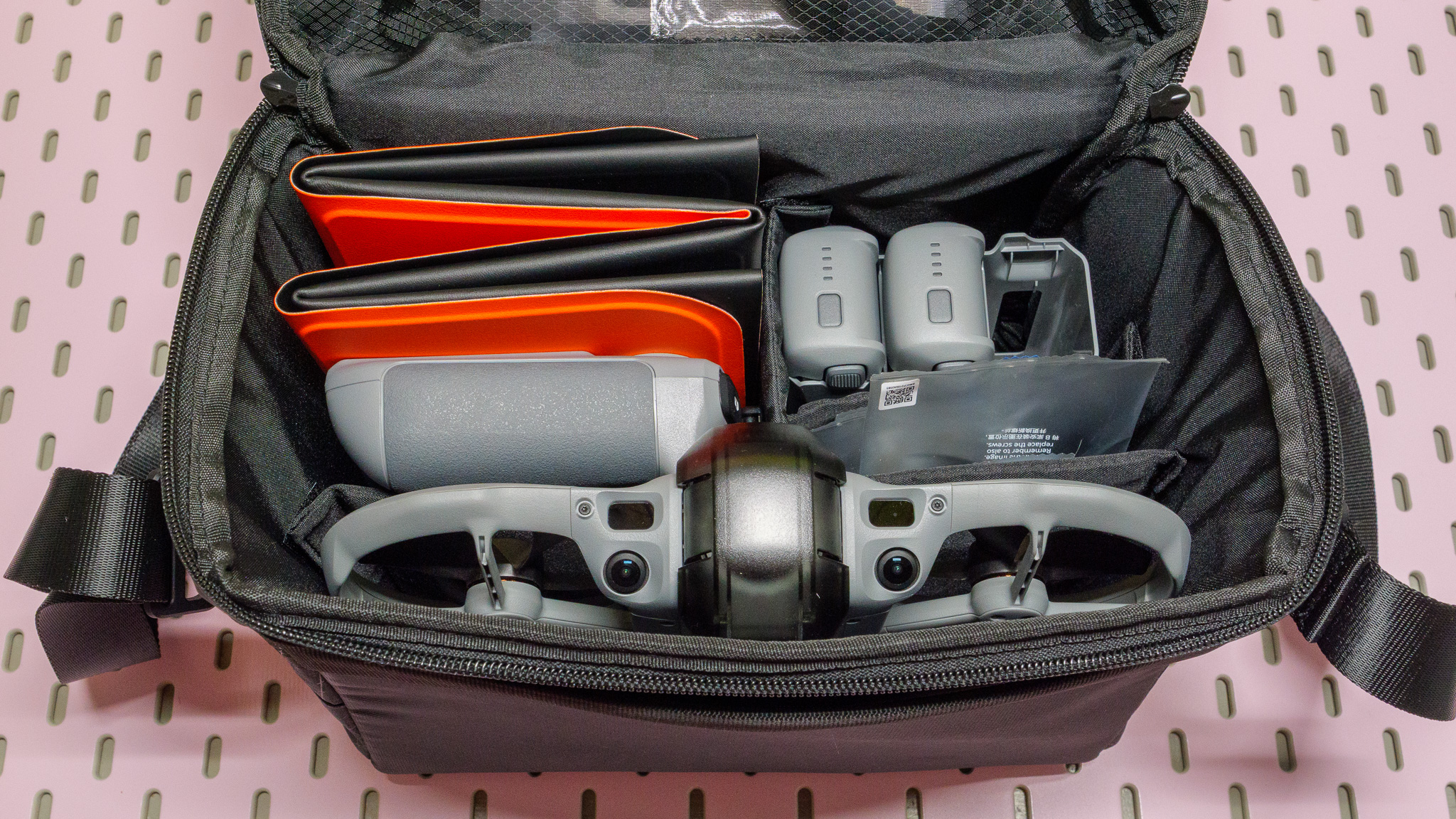
There are also two Fly More Combo bundles, both priced at £829 / AU$1,619, each of which includes a nice bunch of extras. Both include the drone, three batteries, a charging cradle (able to recharge all three batteries simultaneously, with support for 100W and 65W fast charging), a set of spare propellers, a folding take-off and landing pad (very useful when launching from tricky terrain or long grass, and something I've not seen included in a Fly More Combo before), and a sturdy, sectioned sling bag to keep everything in. But one of the Fly More Combos includes the RC 2 controller, and the other the DJI Goggles N3 and RC Motion 3. So you're immediately set up for either standard or FPV flight.
This is a really affordable drone, especially when compared to the competition. Even with recent discounts, the Antigravity A1 Standard Combo (which includes the drone plus Vision goggles, a Grip controller, drone carry case and an extra set of propellers) costs over £1,000.
- Price score: 5/5
DJI Avata 360: specs
|
Camera: |
2 x 64MP 1/1.1-inch square CMOS sensors |
|
Video resolution: |
8K, 6K, 4K |
|
Frame rates: |
60, 50, 48, 30, 25, 24fps |
|
Flight modes: |
Cine, Normal, Sport |
|
Storage: |
42GB internal, microSD card slot |
|
Battery: |
2700mAh, up to 22 minutes flight time |
|
Charger type: |
USB-C / Battery Charging Hub |
|
Weight: |
455g / 16oz (approx.) |
|
Dimensions: |
246 x 199 x 55.5mm / 9.7 x 7.8 x 2.2 inches |
DJI Avata 360: Design and build quality
- Flat, non-folding design
- Labelled UK1 / C1 class, weighing around 455g
- Choice between RC 2 or Goggles/RC Motion 3 control
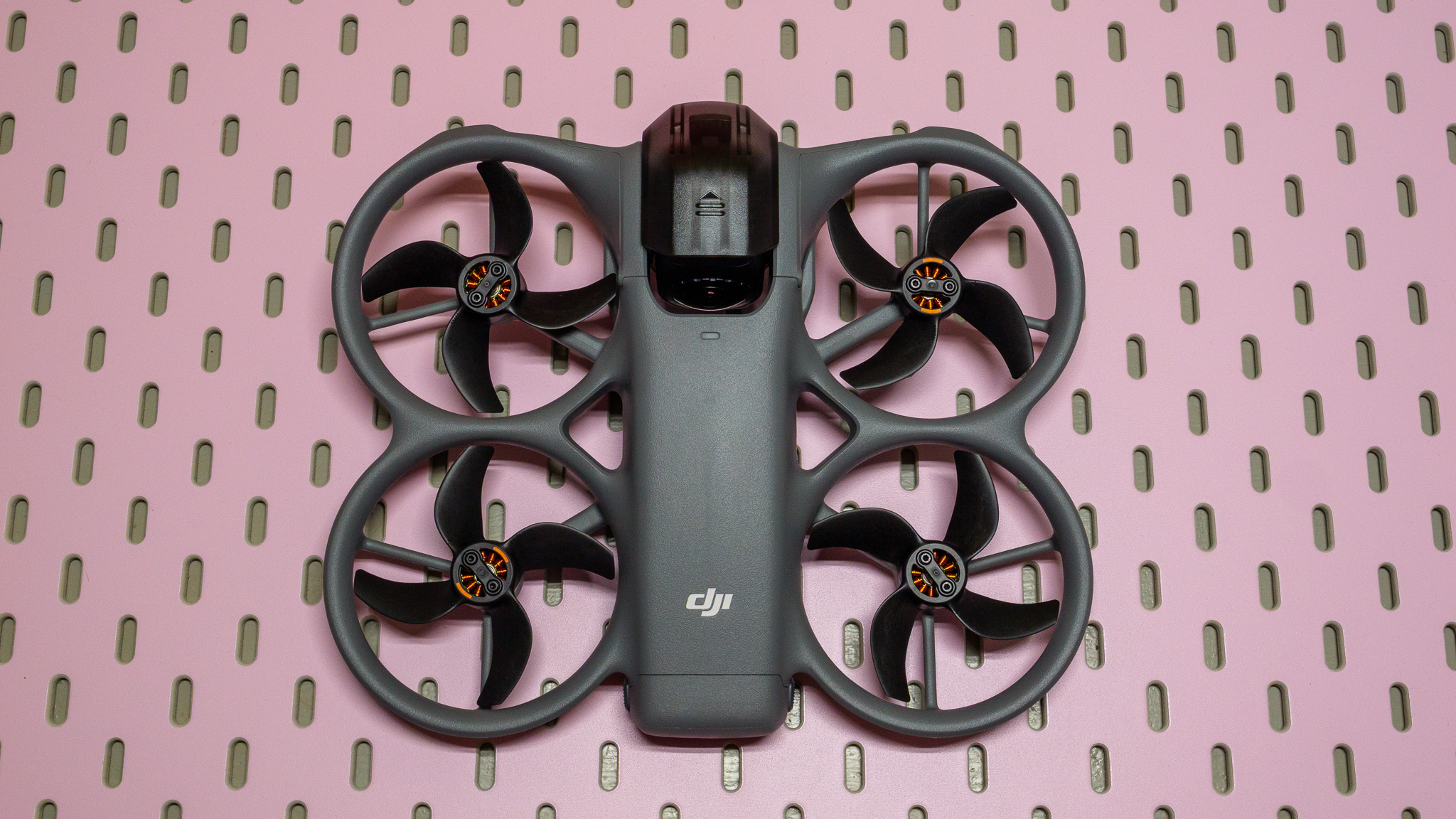
Rather than a folding design, DJI has opted for the same flat quadcopter shape it's recently used for the Avata 2, Neo and Neo 2. This means it's ready to go in moments (just pull off the included camera cover, if you're using it, and double tap the power button) and also that there are built-in prop guards to help protect the propellers from damage during collisions.
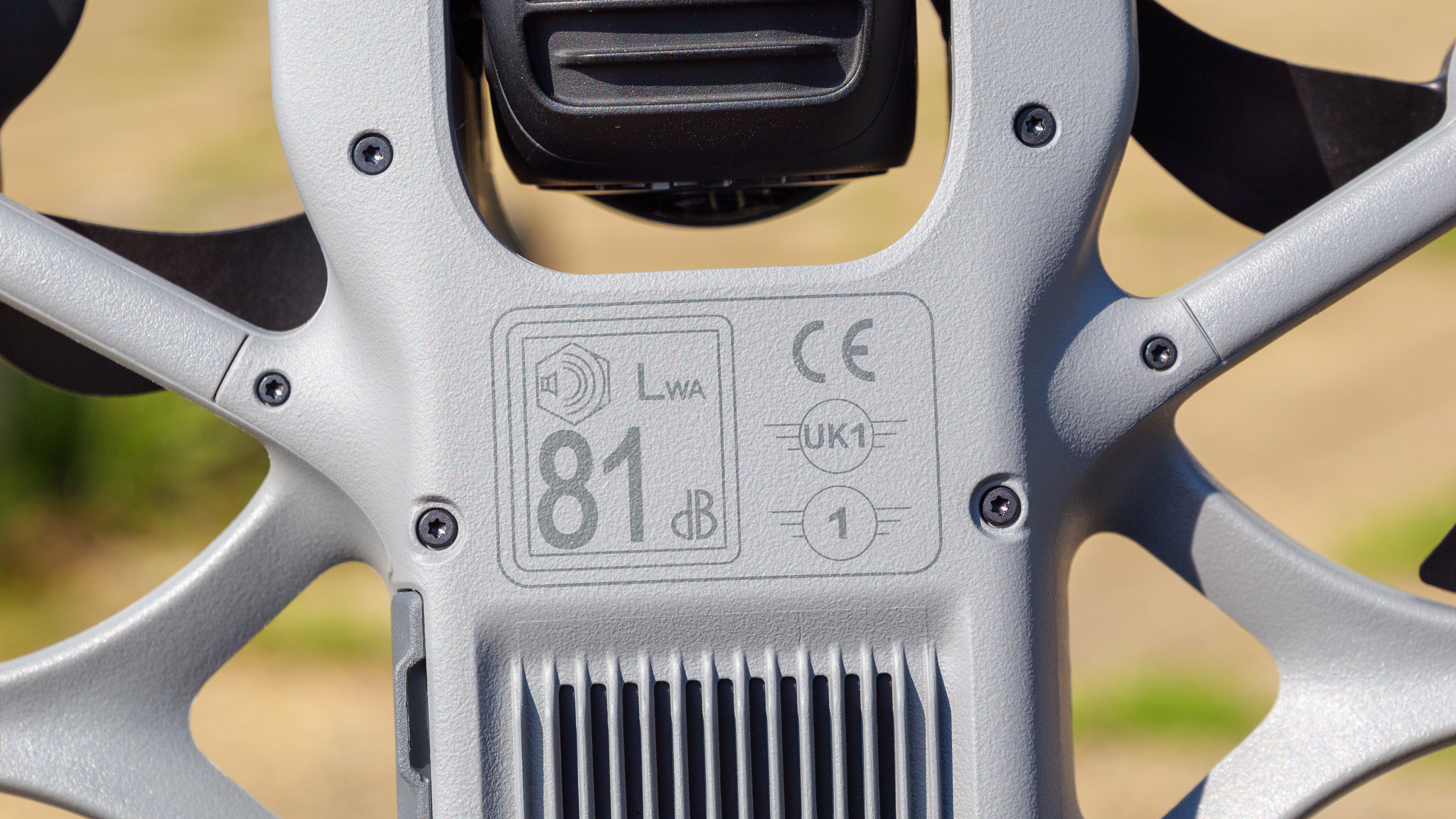
The Avata 360 isn't a super-lightweight drone; DJI claims it's around 455g, but my digital scales showed it to weigh 469g – well over the old sub-250g legal sweet spot. However, thanks to recent changes to UK law, this is no longer the issue it once was. This is the first drone I've seen that's labelled 'UK1' class, meaning that under new CAA guidelines it can be flown over uninvolved people (but not crowds) and closer than 50m to people horizontally. It can also be flown in residential, recreational, commercial and industrial areas. So, that's a good thing – it means I didn't have to venture to the middle of nowhere to test it properly.
It also means DJI hasn't had to make build-quality compromises to hit that magical sub-250g weight. The Avata 360 feels solid, sturdy, and likely to survive minor collisions without catastrophic damage, which isn't something I would say about the dainty, sub-250g Antigravity A1.
With no extended landing gear or feet, the drone doesn't have much clearance from the ground when landing or taking off, so it's important to launch and land on a flat, even surface in order to avoid potential damage. I found the folding orange landing pad including with the Fly More Combos very useful during testing, as landing even on short grass could cause issues.
The Avata 360 has a USB-C port on its side for file transfer and direct recharging, alongside a microSD slot for adding extra storage. That's optional, though, because there's a reasonable 42GB of internal storage built-in. Batteries slot straight into the back and come with the customary four-LED indicator to provide at-a-glance info on remaining power.
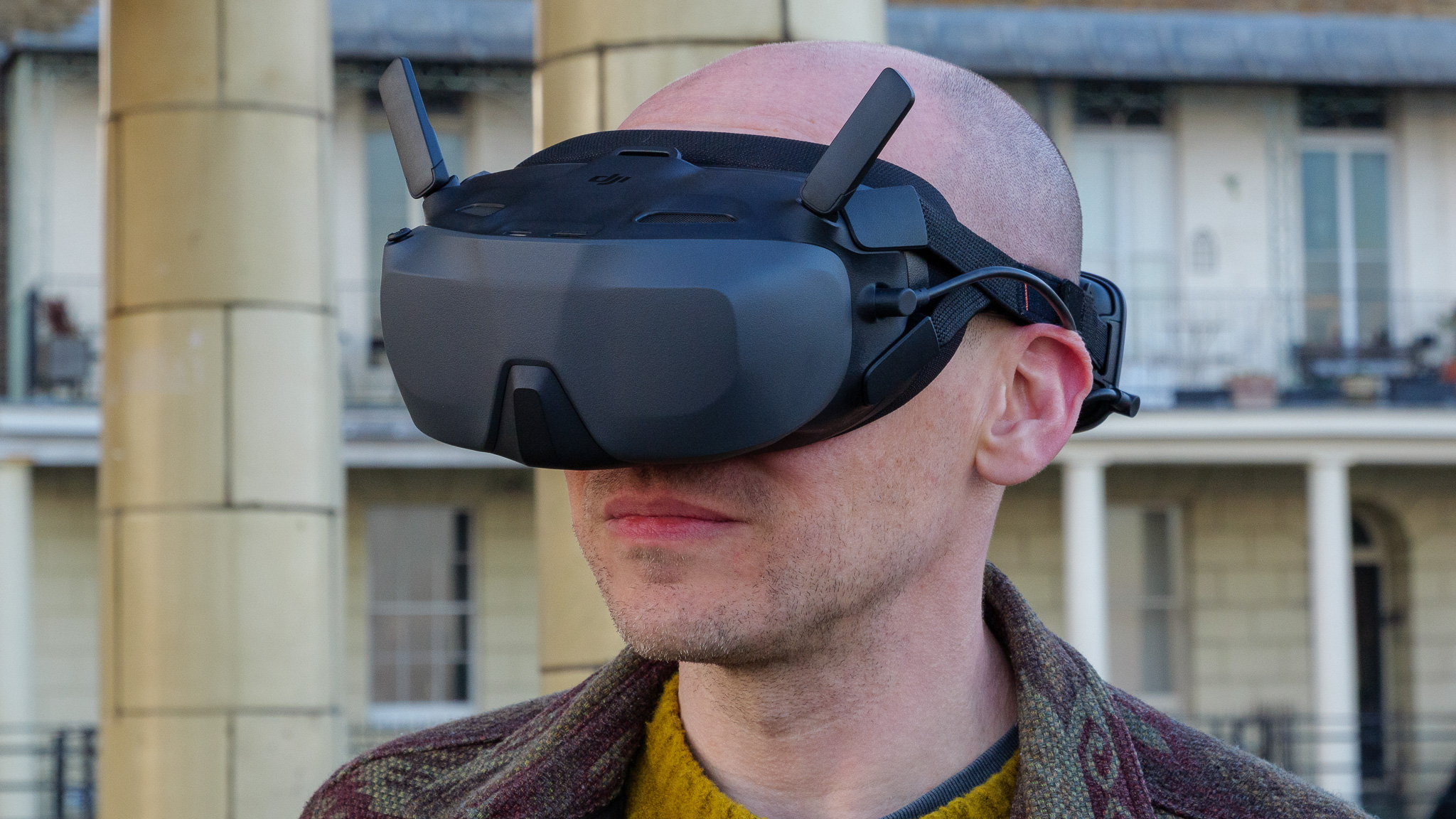
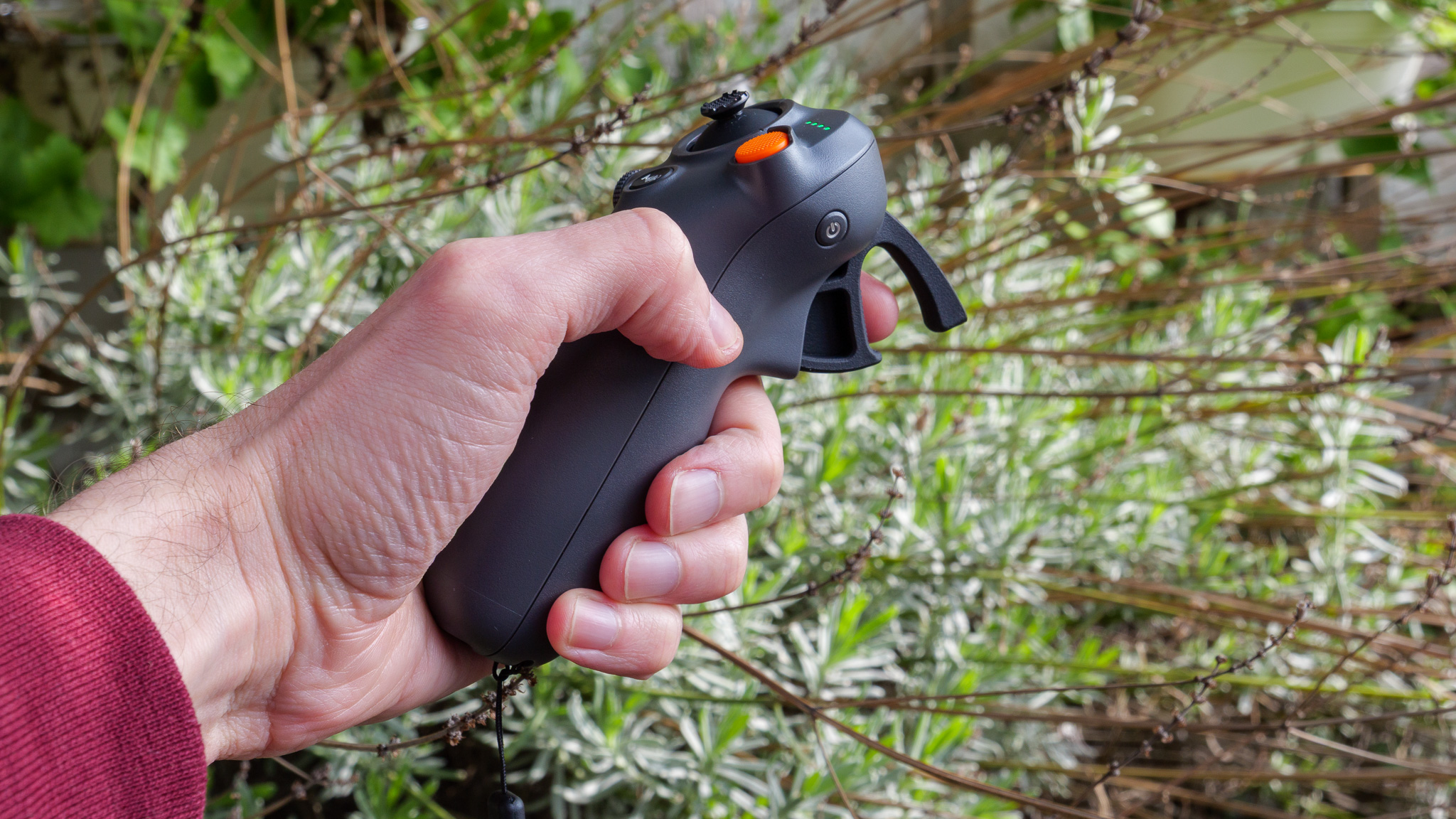
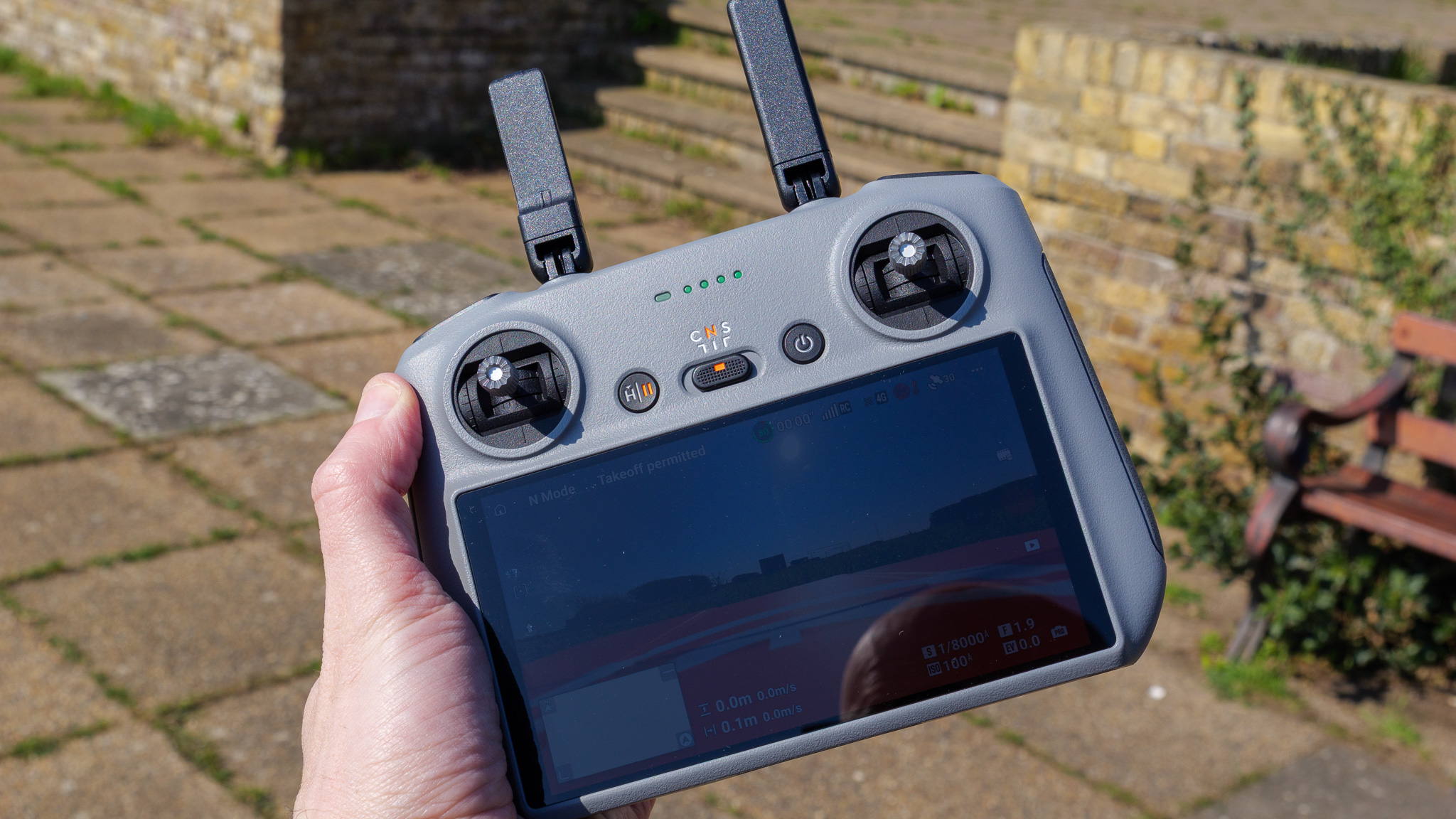
Control-wise, you have the choice between using a standard stick controller or a set of FPV goggles and a motion controller. In testing, I used the DJI RC 2 (it's also compatible with the RC-N2 and RC-N3, according to DJI) as my standard controller, and the DJI Goggles N3 paired with a DJI RC Motion 3 (you could also use the Goggles 3 or FPV Remote Controller 3) as my FPV setup, and found both to be excellent – they're sturdily built and comfortable to use. The Goggles N3 don't have a fancy exterior display like Antigravity's do, but on the plus side I can wear them with my glasses on, which I couldn't do on the Antigravity Goggles.
Finally, DJI has designed the Avata 360's camera lenses to be user-replaceable, should they get scratched, during flight or otherwise. The lenses do protrude a little, which does make them more susceptible to contact than most drone cameras, so this feels like a good move from the company.
- Design score: 5/5
DJI Avata 360: Features and flight performance
- Omnidirectional vision system with front-facing LiDAR and down-facing infrared sensors
- 18m/s maximum speed and Level 5 wind resistance
- Up to 22 minutes of flight time per battery
Like most DJI drones, the Avata 360 is an assured and safety-conscious flyer. It comes with full omnidirectional obstacle avoidance, using a combination of vision, LiDAR and infrared sensors to spot hazards in all directions, plus a reliable return-to-home mode and respectable battery life of up to 22 minutes' flight time (I would put the real-world use closer to 15 minutes, based on my testing, but much will depend on environmental factors – your mileage may vary, as they say).
In the air, it's a nimbler and nippier drone than the Antigravity A1. I found it performed very responsively even in windy conditions, and in Sport Mode (which disables the safety sensors), it's capable of hitting speeds of up to 18m/s (around 40mph). The low-latency O4+ video transmission system is remarkably stable, which helps keep the drone under control at all times. While testing, I never experienced a single loss of signal or even a noticeable reduction in the live-view quality.
As mentioned, at launch there are two ways to fly the Avata 360: using a standard twin-stick controller or with an FPV headset and motion controller. I love the fact that DJI has given buyers a choice — which for me is one of the main advantages this drone has over its competitor the Antigravity A1, which only offers goggles- and motion controller-based flight. With the Avata 360, a twin-stick controller is perfect for solo trips, as it doesn't require a spotter and the controls are identical to those of standard camera drones like the DJI Mini 5 Pro or Air 3S. It's easy to pick up and fly immediately, with no need to master the intricacies of motion controllers or strap on a set of goggles.
- Flight performance score: 5/5
DJI Avata 360: Image and video quality
- Paired 1/1.1-inch sensors offer up to 8K 60fps videos and 120MP photos
- Single-camera mode also available for traditional FPV video capture
- 10-bit video and flat D-log M color profile supported
The Avata 360 is equipped with two 1/1.1-inch sensors paired with ultra-wide lenses, which work in tandem to capture everything around it in up to 8K resolution at 60fps. That beats the Antigravity on specs alone (it captures 8K, but only up to 30fps), but the larger sensor size and higher bitrate also make the general image quality higher.
With support for 10-bit video and the flat D-log M color profile, this means the Avata 360 offers excellent video for a 360 drone. It won't trouble the DJI Air 3S or DJI Mavic 4 Pro when it comes to real pro-quality aerial footage, but the Avata 360 can really hold its own in terms of detail and dynamic range.
Once you've captured your 360 footage, it can be reframed using one of DJI's apps. I edited videos on both the DJI Fly mobile app and the DJI Studio desktop app, and both work well and in much the same way. You can choose your desired viewpoint, then save it as a keyframe, and the app will automatically, and smoothly, transition from one keyframe to the next. You can then export the video, with 8K 360 recording resulting in final videos of up to 4K resolution.
For those who don't want to reframe, there's single-lens mode. This records 4K 60fps footage using only a single forward-facing lens, which is delivered as a standard 'flat' video that can't be reframed after the fact. It's akin to recording a video on any of DJI's other camera drones, really — what you see is what you get.
It's also possible to snap 120MP panoramic 360 photos, which can then be edited into short videos or cropped and reframed much like a 360 video. I personally rarely felt the need to take a still shot while reviewing, as video is where the Avata 360 really shines in my opinion, but the feature is there should you need it.
Overall, I'm highly impressed by the Avata 360's camera performance. The base quality is higher than that of its only true rival, the Antigravity A1, and its 360 editing is just as good.
- Image and video quality score: 5/5
DJI Avata 360: testing scorecard
|
Attributes |
Notes |
Rating |
|---|---|---|
|
Price |
Cheaper than rivals, and excellent value for its specs and features |
5/5 |
|
Design |
A sturdy drone with user-replaceable lenses |
5/5 |
|
Performance |
Packed with safety features and great in the air |
5/5 |
|
Image and video quality |
Superior to the Antigravity A1, and excellent all-round |
5/5 |
Should I buy the DJI Avata 360?
Buy it if...
You want the best 360 drone
The Avata 360 beats the Antigravity A1 in every area barring size – and even that's not a major issue given the Avata's UK1 / C1 rating.
You want a flexible, versatile drone
The Avata 360 is both a 360 drone and an FPV drone, and very capable in both roles. It can also be flown using a standard controller, giving you more options.
Don't buy it if...
You want the simplest drone around
360 footage needs to be edited in post-production, and while this isn't a particularly tricky task to master, it does add an extra layer of complexity.
You'd like the best image quality
While the Avata 360's camera is very capable, I'd say DJI's Mini 5 Pro, Air 3S and Mavic 4 Pro all offer superior image quality.
DJI Avata 360: also consider
Antigravity A1
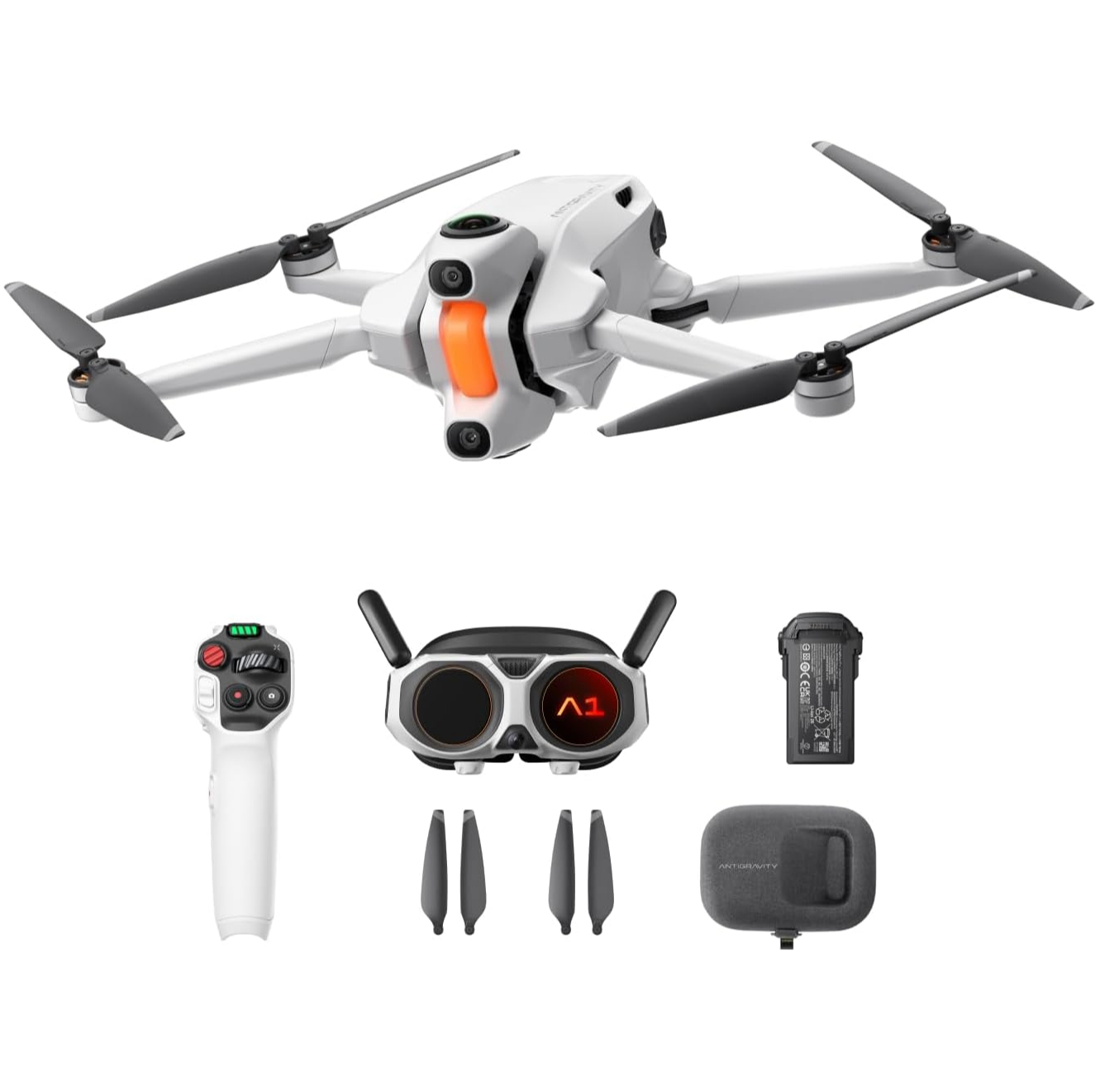
This ground-breaking 360 drone has some issues: it's prohibitively expensive, and can be flown only via a motion controller and goggles which, while undoubtedly immersive, requires you to bring a spotter at all times. It's not as zippy or thrilling as flying an FPV drone, and the Avata 360 has it beat for fun, but its 8K 360 video is impressive and the drone's small folding design makes it slightly more travel-friendly than its DJI rival.
Read our in-depth Antigravity A1 reviewView Deal
DJI Avata 2
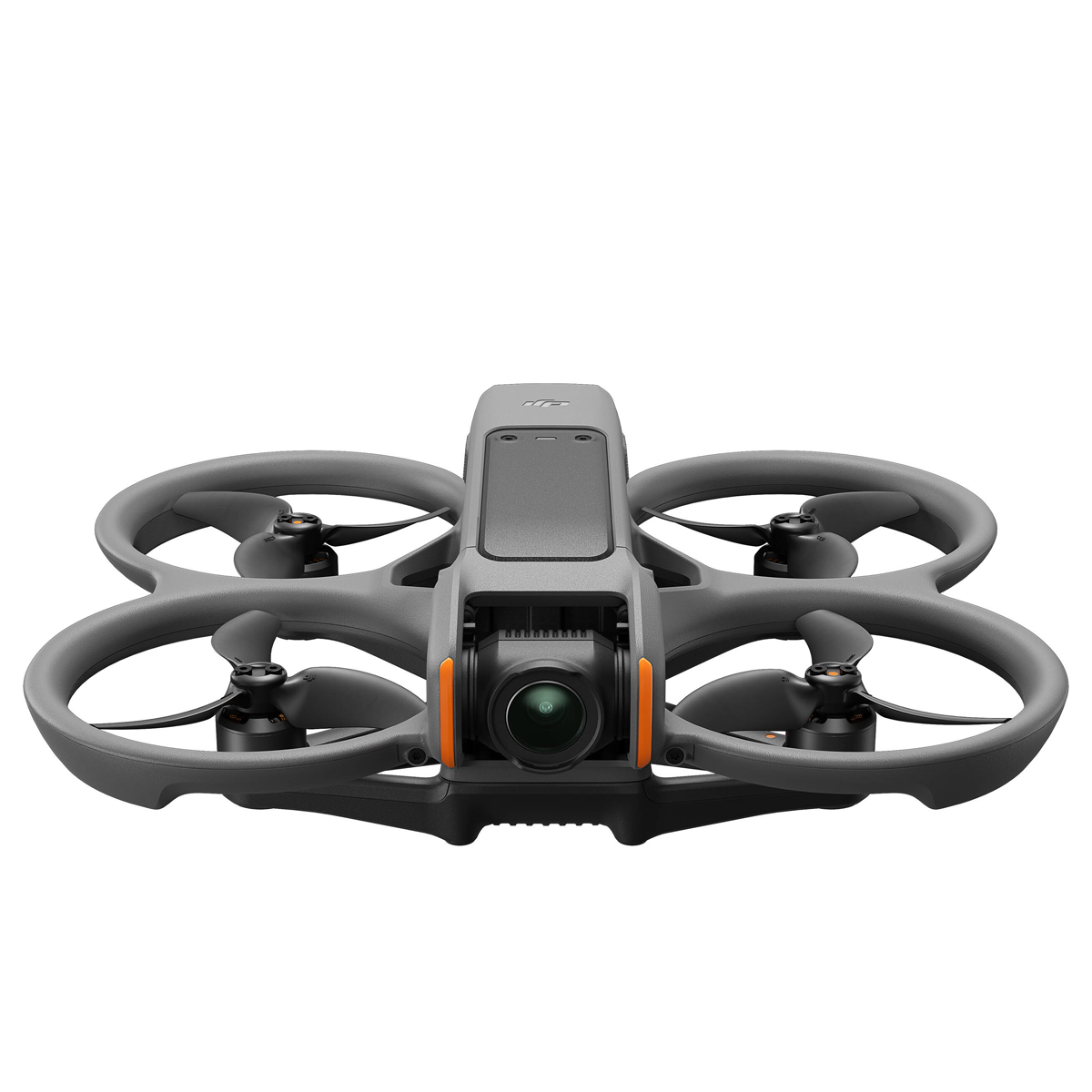
If you're not bothered about 360 footage, the DJI Avata 2 offers a welcome balance between the forgiving, beginner-friendly flight of a regular camera drone and the adrenaline-inducing controls of a traditional FPV drone. It'll zip through gaps and skim across terrain to give you exciting shots, but won't plummet into the ground at the slightest mistake. FPV purists might scoff, but the rest of us will be having a blast.
Read our in-depth DJI Avata 2 reviewView Deal
How I tested the DJI Avata 360
- All flight modes and control methods tested
- Photos and videos captured
- Tracking and safety features tested
DJI sent me an Avata 360 a couple of weeks before its official launch, along with an RC 2 controller, an RC Motion 3 grip controller and a Goggles N3 headset. That meant I had the time to fly it in a range of locations and using both a traditional controller and an FPV setup. I did test the drone in some windy conditions at times, but in general flew it in fine weather and good light — aside from the very foggy day you see in one of the sample videos above.
I flew in every available flight mode for both twin-stick and FPV motion flying, tested the drone's subject-tracking capabilities and how capable it was of detecting and avoiding obstacles.
Once I had recorded footage and captured still photos, I later transferred it from the drone's internal storage to my iPhone and computer for editing and reframing, for which I used the DJI Mimo and DJI Studio apps. I also exported reframed footage from DJI Studio to further tweak in DaVinci Resolve Studio, resulting in the sample videos and photos you see above.
- First reviewed: March 2026
- Read more about how we test


Comments
Post a Comment