I reviewed Philips' affordable Fidelio stereo speakers that look 'too good to be true' on the spec sheet — and they nearly pull it off
Philips Fidelio FA3: Two-minute review
I don’t often think ‘this is too good to be true’ when confronted with the details of an audio product’s make-up, but a glance at the spec sheet accompanying the Philips Fidelio FA3 made me double-take.
The Fidelio FA3 is an active wireless speaker system that can connect its speakers together either wirelessly or via a cable, that has high-end Bluetooth connectivity along with a fistful of physical inputs to handle hi-res content, that is controllable by an extremely extensive app, has Auracast functionality in order to become part of a multi-speaker set-up, and uses a lot of recycled material in its construction, with full-range frequency response. For $399 / £349 / AU$499? Really?
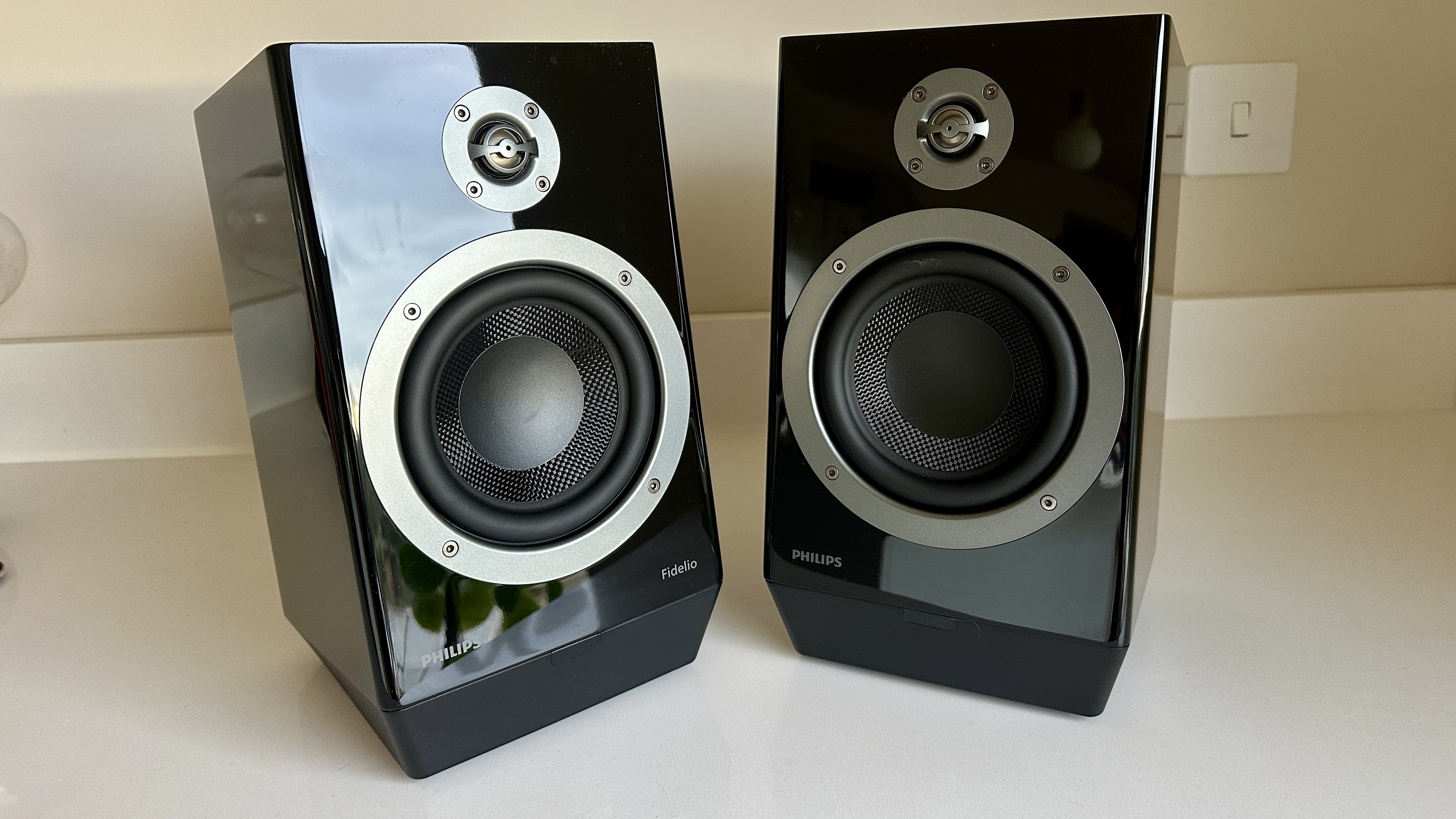
Then the system comes out of its packaging and the price still seems like it might be a misprint compared to most of the best wireless speakers. It’s nicely made and finished, looks and feels good, and arrives with a physical remote control to augment the app functionality – it even has grilles that attach magnetically to its high-gloss cabinets.
No, the slight ‘wedge’ shape that angles the speaker’s drivers upwards rather than straight ahead isn’t as useful in all circumstances as Philips obviously thinks it is – but still, the FA3 seems to have an awful lot going for it.
And that’s the case where sound is concerned, too. The Philips is a positive and quite forthright listen, with plenty of detail available in most areas of the frequency range and a very enjoyable facility with soundstaging and dynamic response. It allows itself to get carried away where low-frequency response is concerned, though, and its over-egged bass presence makes for a rather lop-sided, bottom-heavy presentation.
If that low-end enthusiasm could be dialled back a little, perhaps to be replaced with a more subtle and detailed low-frequency attitude instead, the FA3 could really go places. As it is, the Ruark MR1 Mk3 remains our favorite option in this kind of price range, even it's not quite as impressively specced.
Philips Fidelio FA3 review: Price & release date
- $399 / £349 / AU$499
- Released in January 2026
- Originally announced in September 2025
The Philips Fidelio FA3 wireless active speaker system is on sale now, and in the United Kingdom it costs £349. In the United States it sells for $399 or thereabouts, while in Australia it goes for something like AU$499.
This puts it in line with a lot of single-box wireless speakers, such as the JBL Authentics 200 – and a bit cheaper than the Sonos Era 300. But these are stereo speakers, and when it comes to the best stereo speakers in this price range, they're usually passive or not as quite well-equipped as this when it comes to features and options.
Philips Fidelio FA3 review: Features
- Bluetooth 5.4 LE Audio with LC3 and LDAC codec support
- Auracast-enabled for multi-speaker connectivity
- 24bit/96kHz via HDMI ARC and digital optical inputs
The specification of the Fidelio FA3 would be perfectly acceptable in a product costing a great deal more than this. To understand what Philips has included for the asking price is to be properly impressed.
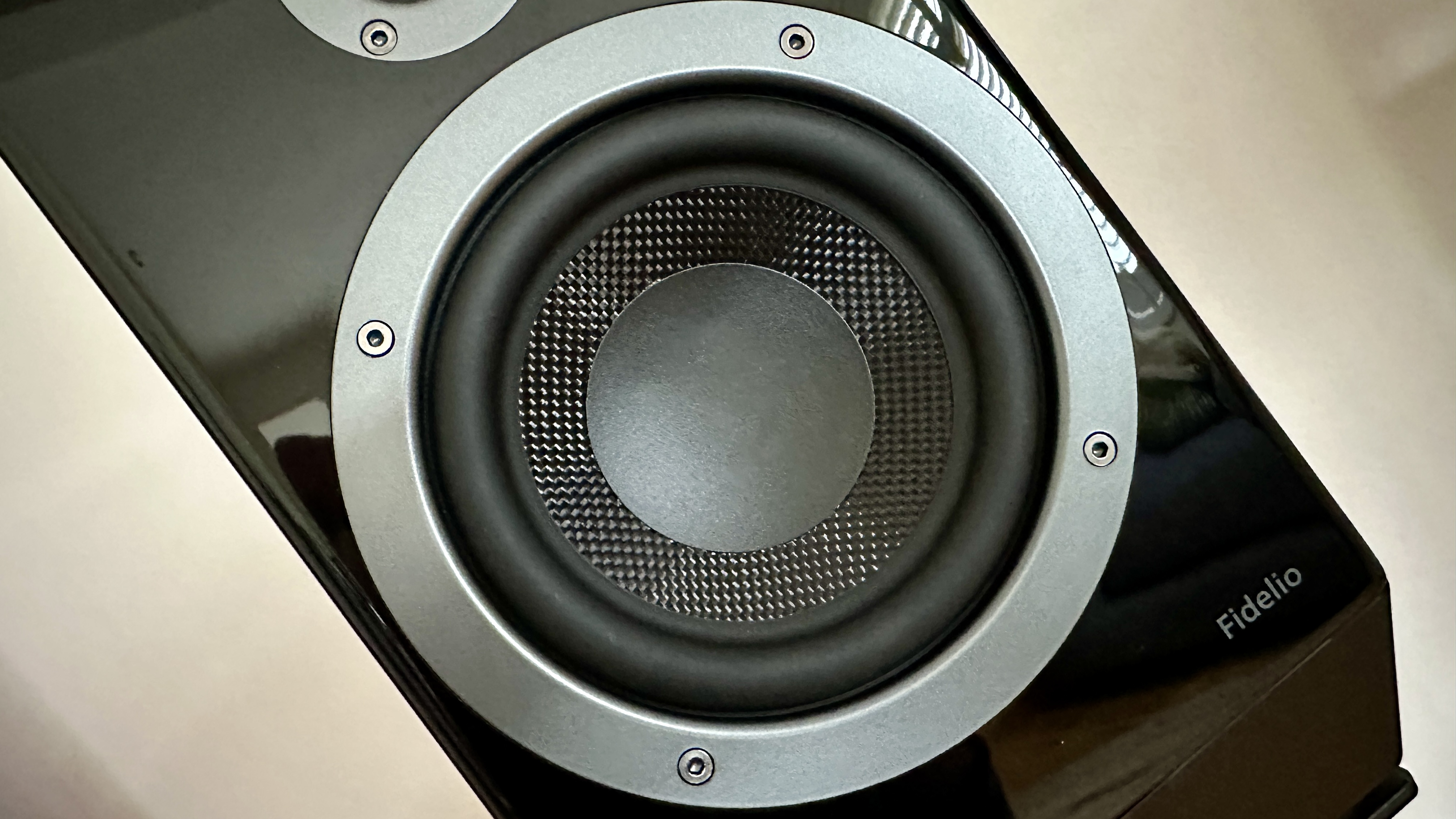
The FA3 speakers are a two-way design, with a 25mm titanium dome tweeter above a 127mm glass-fiber mid/bass driver at the front, and a small reflex port venting towards the top of the rear of the cabinet.
Philips says this arrangement is good for a frequency response of 40Hz - 40 kHz — which, if it’s anything like accurate, is very impressive from such a relatively modest arrangement.
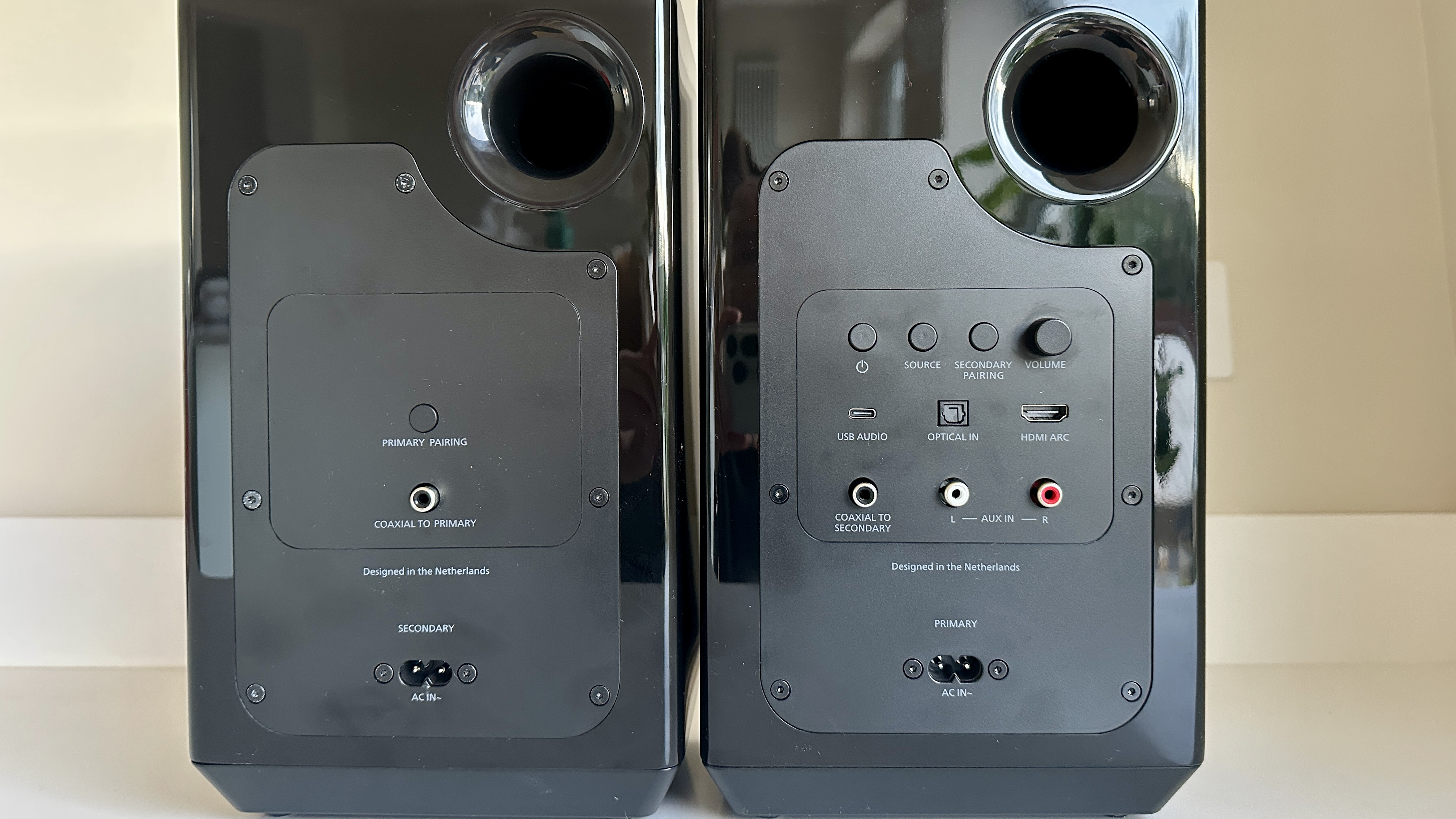
This is an active system, which means both speakers require power. After that, it’s very much a ‘primary’ and ‘secondary’ speaker arrangement — the rear of the secondary speaker features just a coaxial input for a wired connection to its partner in addition to the reflex port and its power socket.
The primary speaker, though, adds a USB-C slot (which can be used for playback and for servicing), a digital optical input, an HDMI ARC connection, and a line-level analog input on stereo RCA sockets.
In addition, the primary speaker is where Bluetooth pairing takes place — the FA3 features Bluetooth 5.4 LE Audio connectivity and is compatible with SBC, AAC, LC3 and LDAC codecs. The system also features Auracast technology, which means it can easily become part of a multi-speaker system if given appropriate partners to work with.
As well as via a coaxial cable, the speakers can also be connected to each other wirelessly using a 2.4GHz wireless connection. Regardless of the method of connection between the speakers, though, the digital-to-analog conversion circuitry operates at a native 24bit/96kHz resolution, and anything that’s coming in via HDMI ARC, digital optical or USB-C that’s of higher resolution will be downsampled to 24bit/96kHz.
The ability to wirelessly connect a pair of speakers and still enjoy authentically high-resolution sound is not all that common, and rarer still in this area of the market. Streams coming in via Bluetooth using the LDAC codec will be served up at its maximum 990kbps resolution.
No matter the resolution of the stuff you’re listening to, it’s given the benefit of 50 watts of Class D amplification per channel. Philips is claiming a THD (total harmonic distortion) figure of less than 1%.
- Features score: 5 / 5
Philips Fidelio FA3 review: Sound quality
- Direct and full-scale presentation
- Low-frequency response is a blunt and oversized instrument
- Somehow able to sound loud even when playing quietly
If you’ve come for an assertive, positive sound that’s delivered at significant scale, stick around. The Philips Fidelio FA3 has you covered in quite some style.
No matter if you’re listening to something that sounds like a glorified demo (Boys Don’t Cry by The Cure, for example) or that’s dressed up to the nines (Nuits Sonores by Floating Points, say), the FA3 take it by the scruff of the neck and serve it up in the most direct and unequivocal manner.
Their fundamental character is confident, and they are capable of generating a large and quite nicely defined soundstage on which the action can occur. The Philips seem to genuinely revel in big dynamic shifts in attack or intensity, and are more than capable of summoning the sort of energy and momentum that makes for a lively and positive presentation.
The tweeter does fine work in delivering bright, crisp and detailed high frequencies that carry enough substance to balance out their undoubted bite. There’s plenty of variation in treble sounds and, even though the FA3 somehow contrive to sound loud even if they’re playing at quite low levels, the brilliance of the top end here is never problematic.
There’s scant suggestion of hardness or glassiness, even if you choose to listen at quite oppressive volume levels (and don’t for a moment doubt the Philips are capable of quite significant volume).
The handover to the bigger mid/bass driver is smooth, and the midrange is served up with a similarly careful attitude towards detail and variation as the top end demonstrates. There’s a stack of information made available regarding the tone and timbre of voices, and the FA3 are just as capable of teasing out the attitude and character in a voice as they are the minutiae of technique or texture.
Those more minor (but no less significant) dynamics of harmonic variation, those over- and undertones that exist either side of the fundamental, are put into quite convincing context, and the Philips are able to preserve a sense of singularity and togetherness from the very top end down towards the bottom of the midrange.
Beneath here, though, the speakers don’t so much ‘overplay their hand’ as seem to be engaged in a different game altogether. Low frequencies are overstated and overbearing, and exhibit less of the dexterity and variation that’s apparent further up the frequency range.
The quest for ‘punch’ seems a preoccupation, and the rather blunt and overstated nature of the bass response here makes for a lop-sided overall frequency response that seemingly prioritizes the low end at the expense of everything else.
This trait is obvious enough when listening to music, but if anything it’s even more apparent when listening to spoken word — especially with male voices. The moment the register of a speaking voice dips towards the bottom of the midrange and below, the bloom in that area of the frequency range becomes all too apparent.
The result is far from naturalistic, and it serves to undermine all the good work the FA3 does elsewhere in the frequency range.
It’s possible to mitigate this by dialing ‘bass’ response right back in the control app, but it doesn’t eradicate the issue — and it’s an issue that’s more apparent at lower volumes than it is at bigger levels.
Despite this rather pear-shaped frequency response, though, the Philips manage to express rhythms in a fairly convincing manner and somehow maintain a degree of momentum despite the drag those oversized bass sounds create.
- Sound quality score: 3.5 / 5
Philips Fidelio FA3 review: Design
- 170 x 303 x 211mm (WxHxD) per speaker
- 3.4kg per speaker
- Each cabinet features 45% RCS-certified recycled material
If you were considering the FA3 as a desktop audio system, I’d urge you to think again. Given the size of each speaker, you’d need a notably large and conspicuously tidy desktop to comfortably accommodate them — much better to consider this system for use on speaker stands or a shelf of appropriate depth.
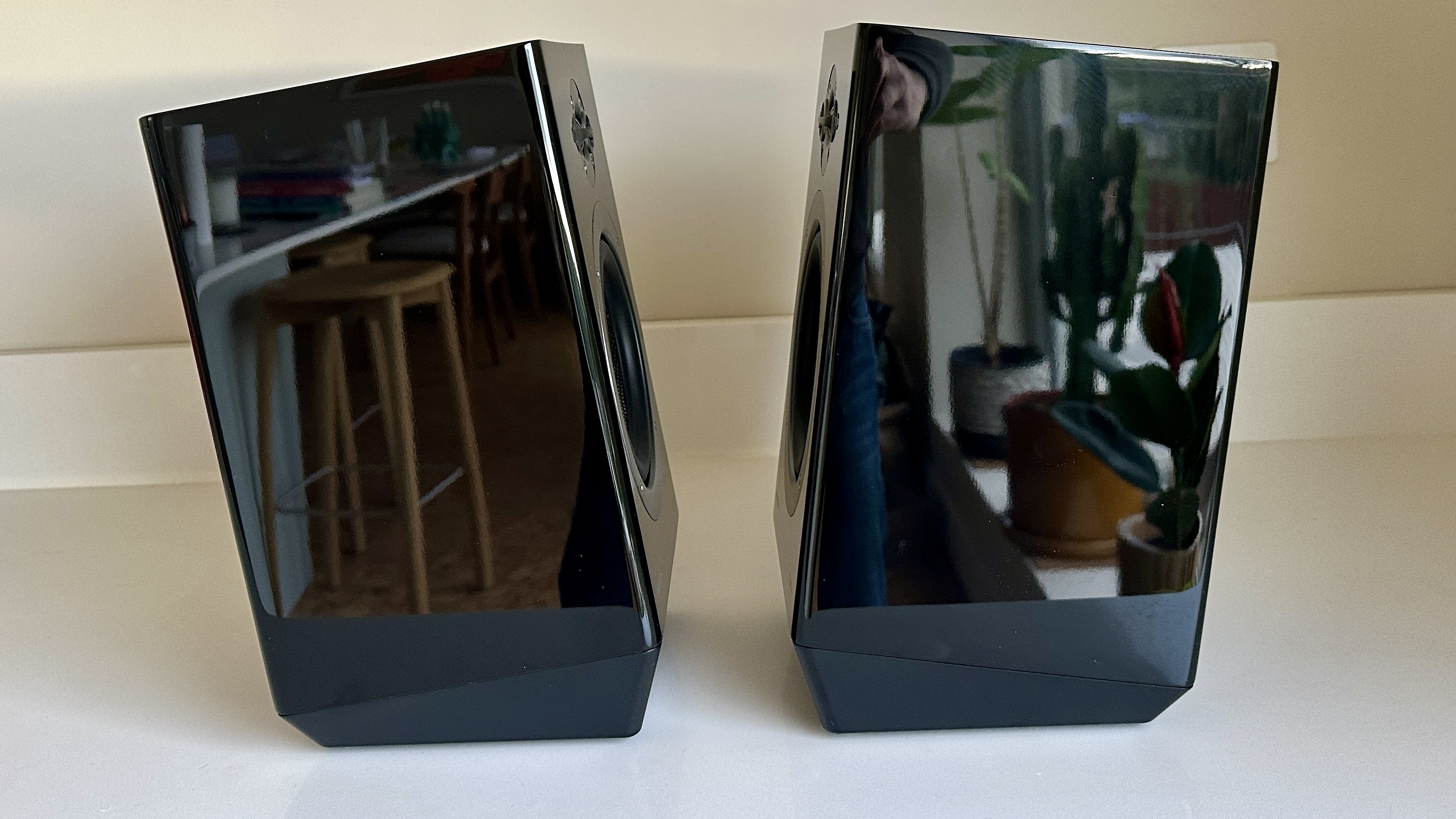
The problem in this scenario, though, is that the cabinets are designed with a kind of ‘wedge’ foot integrated into the base which angles the speaker baffle so the drivers are firing slightly upwards rather than dead ahead. If the surface you’re putting them on is reasonably low, then this is definitely a good thing — it's somewhat common on desktop speakers.
But if you put them on stands or on a shelf that’s at a kind of regular shelf height, then the FA3 will be pointing above, rather than at, your ears. Unless you do all your listening while standing up, anyway.
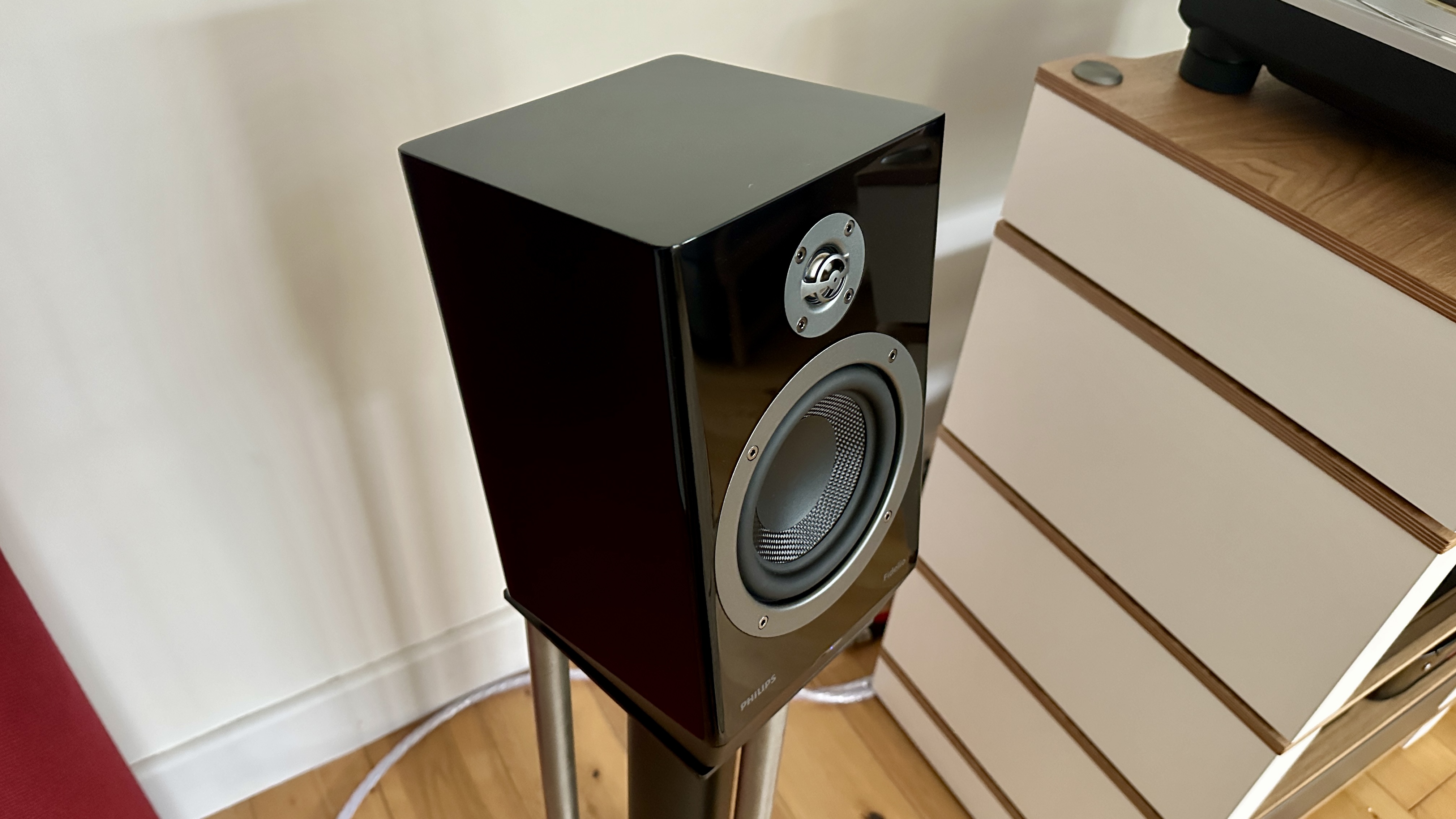
The cabinets are very nicely built and finished, though, with gentle curves at each corner and that special sort of high-gloss black finish that’s very shiny and very keen to collect fingerprints.
They are supplied with magnetic grilles to cover the driver array if that’s your preference, and the plastic shell of each cabinet includes (deep breath) 45% RCS-certified recycled post-consumer acrylonitrile butadiene styrene in its construction.
- Design score: 4
Philips Fidelio FA3 review: Usability & setup
- Remote control handset included
- Philips Entertainment control app
- Physical controls on the primary speaker
To its credit, Philips has provided several options for taking control of the Fidelio FA3 — and each of them is reasonably well-implemented and reliable.
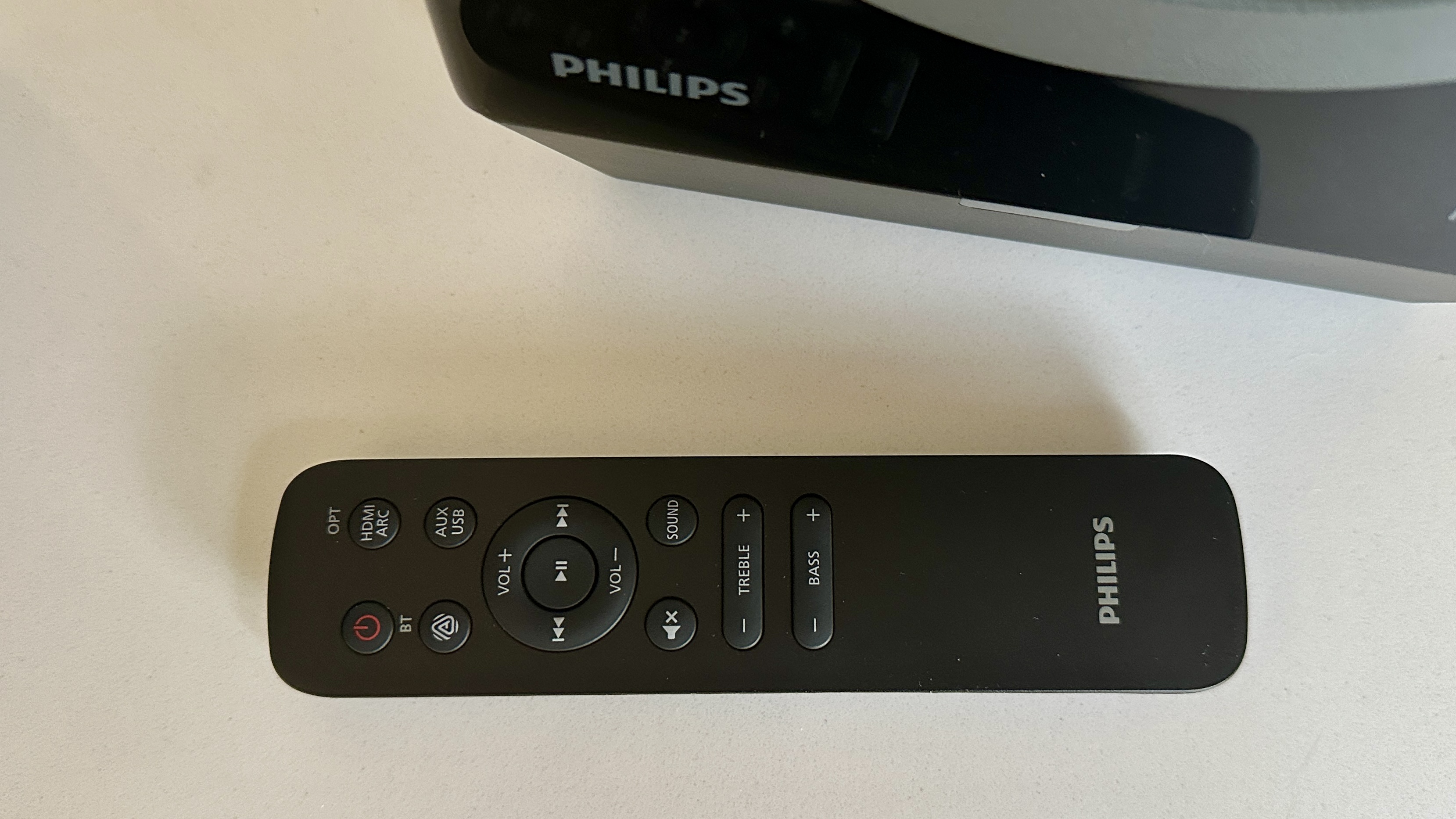
There’s a small and unremarkable remote control handset included in the packaging — it’s of quite hard plastic and has no backlighting. It doesn’t have quite enough buttons, either, since one button takes care of selecting the optical or the HDMI ARC input, another has to deal with selecting between USB-C and analog inputs, and a third chooses between Bluetooth and Auracast.
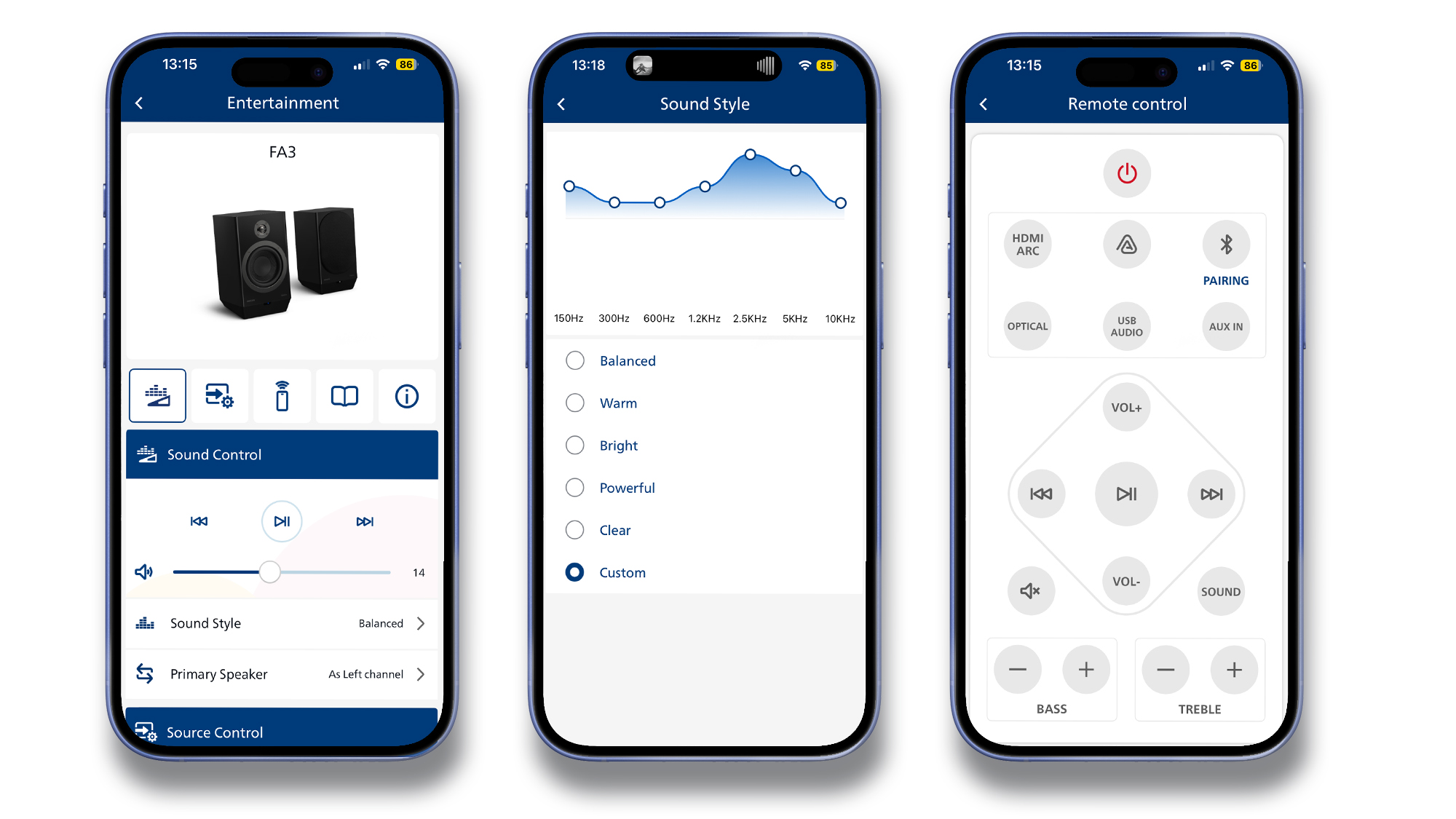
Still, it’s reliable enough, and the ability to raise, lower or mute the volume, play/pause, skip forwards or backwards, cycle through half-a-dozen EQ presets, and trim bass and treble independently of each other, is all very useful.
There are some controls on the rear of the primary speaker, too. These consist of a volume dial (which needs much too much turning to deliver any meaningful effect), a button to initiate wireless pairing between the speakers, a button to cycle through the inputs, and a power on/off switch.
You can exercise the greatest amount of control over the system, though, by using the Philips Entertainment app that’s free for iOS and Android. It offers playback control, those EQ presets (‘balanced’, ‘warm’, ‘bright’, ‘powerful’, ‘clear’ and ‘custom’, the last of which employs user-controllable ‘bass’ and ‘treble’ adjustment dials), enables you tell the primary speaker if it’s the left or right channel, and lets you dial through your input selection options.
It also gives access to a suite of ambient sound settings (everything from ‘ancient wind’ and ‘ocean’ to ‘bubbles’ and ‘sonar’) in case you’ve misplaced your collection of Brian Eno LPs. It can duplicate the layout of the remote control handset (except with a single button for each input, mercifully) and enables you to check for software updates too.
- Usability & setup score: 4.5 / 5
Philips Fidelio FA3 review: Value
- Big and powerful for the price
- Very well equipped and with a great app
- But the iffy bass pulls the down from being a bargain
Judged either by the size of its specification or by the size of the speakers themselves, there’s really no arguing with the value for money the Philips Fidelio FA3 represents — the sheer amount of glossy black finish your money buys is considerable all by itself.
It's reassuring to have a great app, too — it's something that companies often don't manage to achieve. If only the remote control was as neatly laid out.
The bottom-heavy nature of the sonic character you get for your outlay, though, is quite a bit more difficult to make a case for than the above.
- Value score: 3 / 5
Should I buy Philips Fidelio FA3?
|
Attribute |
Notes |
Score |
|
Features |
Basically as well-equipped as stereo wireless speakers come at this price. |
5 / 5 |
|
Sound quality |
Rich and powerful and full of dynamic attack – but the overblown bass is a problem. |
3.5 / 5 |
|
Design |
Very well-built and good-looking, but the wedge shape is an odd decision. |
4 / 5 |
|
Setup & usability |
Very well thought-through, and with multiple control options, including a great app. |
4.5 / 5 |
|
Value |
Not bad value at all, thanks to the features and build quality – but bass issues mean they're not amazing value either. |
3 / 5 |
Buy them if…
You have one or two (or more) sources of hi-res content
The FA3’s ability to serve up the 24bit/96kHz stuff even when joined together wirelessly is not to be sniffed at.View Deal
You have a low-ish surface on which to position it
The laid-back, upward-facing cabinet arrangement is ideal for use on those surfaces that are below head height.View Deal
You love a shiny aesthetic
‘Glossy’ is almost too weak a word to describe the black finish of these speakers.View Deal
Don’t buy them if…
You’re expecting sonic realism
The way the FA3 so gleefully overstates the bass frequencies is almost admirable — but it’s not to be confused with an even frequency response.View Deal
You don’t have a lot of power outlets
The fact this is a wireless stereo system is a big positive — but it also means both speakers must be plugged into power individually.View Deal
Your memory isn’t what it was
Having three buttons on the remote control to cover six different input options is sub-optimal (as is the remote’s lack of backlighting).View Deal
Philips Fidelio FA3 review: Also consider
Ruark MR1 Mk3
This is one of the very best wireless speaker systems around at a similar price to what Philips wants for the Fidelio FA3. Compact enough to fit on a desk, but it sounds considerably larger; wired and wireless connectivity options include a phono stage for use with a turntable; the real wood veneer feels almost as good as it looks. No control app, though. Here's our full Ruark MR1 Mk3 review.View Deal
Edifier MR5
If you want something for the desktop, we described these as "triumphantly multifaceted little boxes of joy" in our full Edifier MR5 review. Lots of connections, a really comprehensive app, and a nice compact size – oh, and superb sound, of course. And they're cheaper than the Philips, though don't expect room-filling power in the same way.View Deal
How I tested the Philips Fidelio FA3
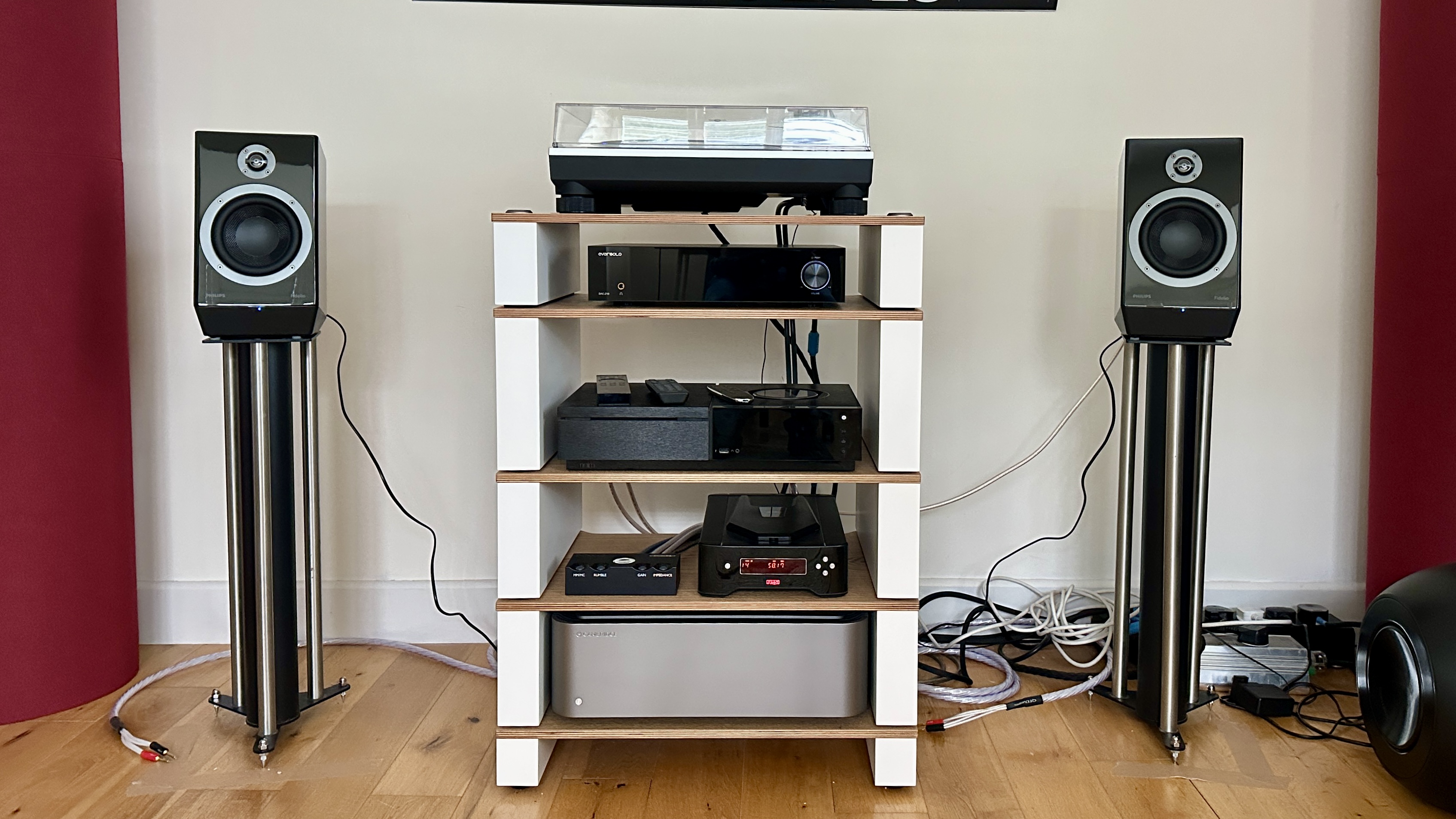
I connected the speakers together using their cable, but also wirelessly. I connected an Apple iPhone 14 Pro and a FiiO M15S digital audio player via Bluetooth, a Rega Apollo CD player via the digital optical input, an Apple MacBook Pro using the USB-C slot, and a Philips OLED806 television via the HDMI ARC socket.
I positioned them on the same equipment rack as the TV — I also used them on my desk (not for long, though; they’re pretty big when you put them on there) and on a pair of Custom Design speaker stands.
I listened to music streamed from Qobuz and Tidal apps, from my collection of compact discs, and to content from a Panasonic 4K Blu-ray player and Sony Playstation 5 connected to the TV.
- Read TechRadar's Reviews Guarantee
- First reviewed: February 2026


Comments
Post a Comment