I tested this budget, subscription-free fitness tracker and it actually offers Whoop some serious competition – especially in terms of value
Amazfit Helio Strap: One minute review
The Amazfit Helio Strap is a good lower-cost alternative to a Whoop band or even some of the best fitness trackers like Fitbit, as long as you enter with the right expectations. The hardware itself is substantially cheaper, and no subscription is required for day-to-day use of a Helio Strap.
In return, you get all-day health and fitness tracking, with more of a focus on active forms of exercise than some lifestyle wearables. Amazfit doesn’t provide quite as explicit training readiness insights as a Whoop band, but with stats that focus on your training load and overall condition, it doesn’t take a degree in sports science to join the dots for yourself and get most of the benefits.
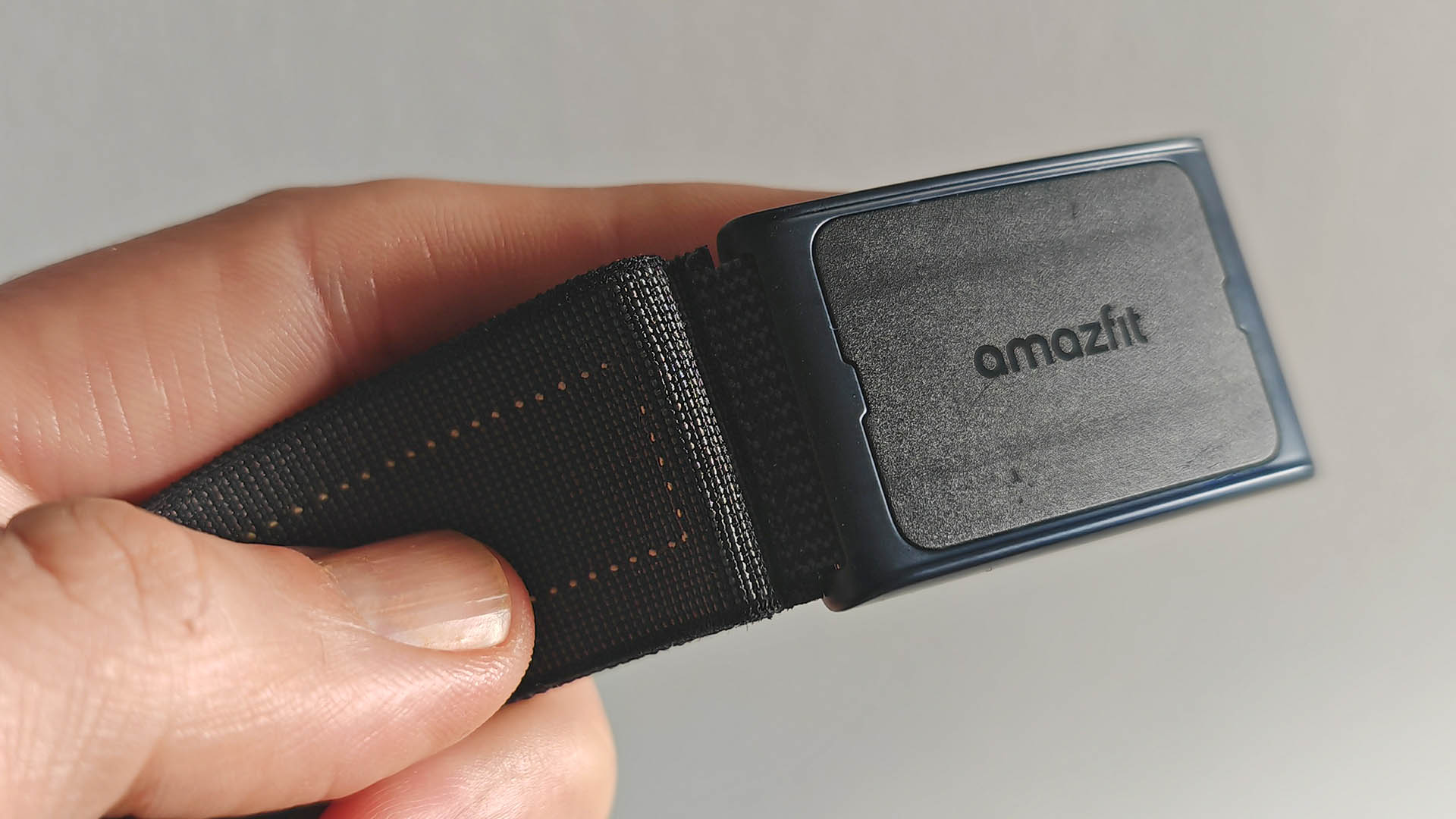
This is a less upmarket band than some of the competition. Its central part is plastic, with no metal parts, but this is a win for comfort as it further lowers weight.
Amazfit Helio Strap: Specifications
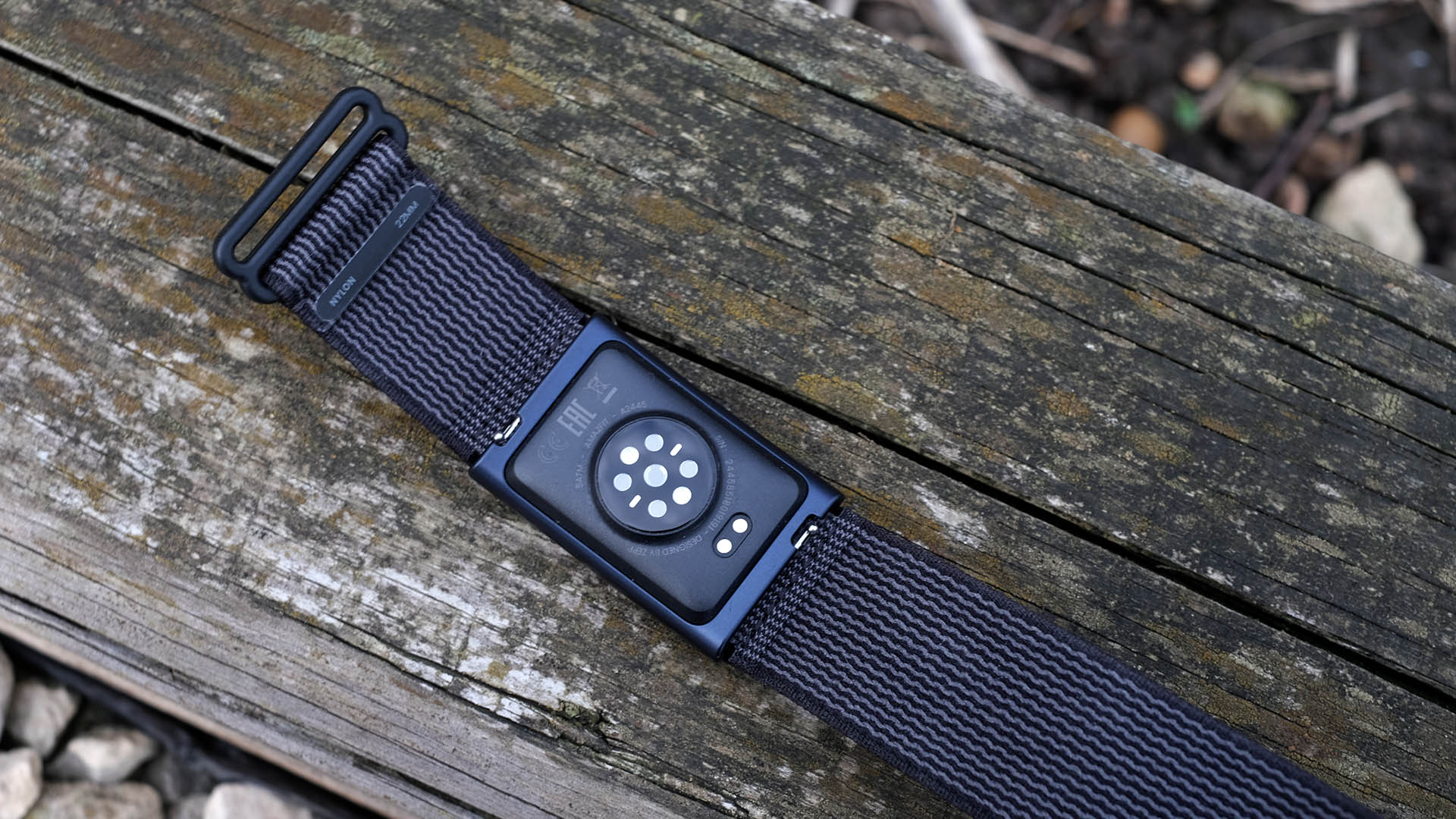
|
Component |
Amazfit Helio Strap |
|
Price |
$99.99 / £99.00 / $179.00AU |
|
Dimensions |
33.97 x 24.3 x 10.59mm |
|
Weight |
20g with band |
|
Case/bezel |
Fiber-reinforced polymer |
|
Display |
N/A |
|
GPS |
N/A |
|
Battery life |
Up to 10 days |
|
Connection |
Bluetooth |
|
Water resistant |
Yes, 5ATM |
Amazfit Helio Strap: Price and availability
- It costs $99.99 / £99.00 / $179.00AU
- Less than the Polar Loop
- Much less than the ongoing Whoop subscription
Despite having less tech inside than a more traditional fitness tracking wearable, the pricing of these screenless wearables (other than the Whoop MG) is less aggressive than some other categories. It’s because they’re a lifestyle buy as much as anything
The Amazfit Helio Strap is one of the better-priced options, though. It costs $99.99 / £99.00 / $179.00AU, far less than a Whoop band or the Polar Loop.
There’s no need for an ongoing subscription here either, although one is of course offered. It’s called Aura (not to be confused with Oura). This adds an AI-based wellness advisor and lots of audio-based relaxation content, costing $69.99 (around £52 / AU$100) a year, although during testing we were offered a year’s worth for £19.99. There’s a 14-day free trial too.
- Value score: 4/5
Amazfit Helio Strap: Design
- Screen-free
- Does not feel premium, no metal
- Extremely light – set and forget
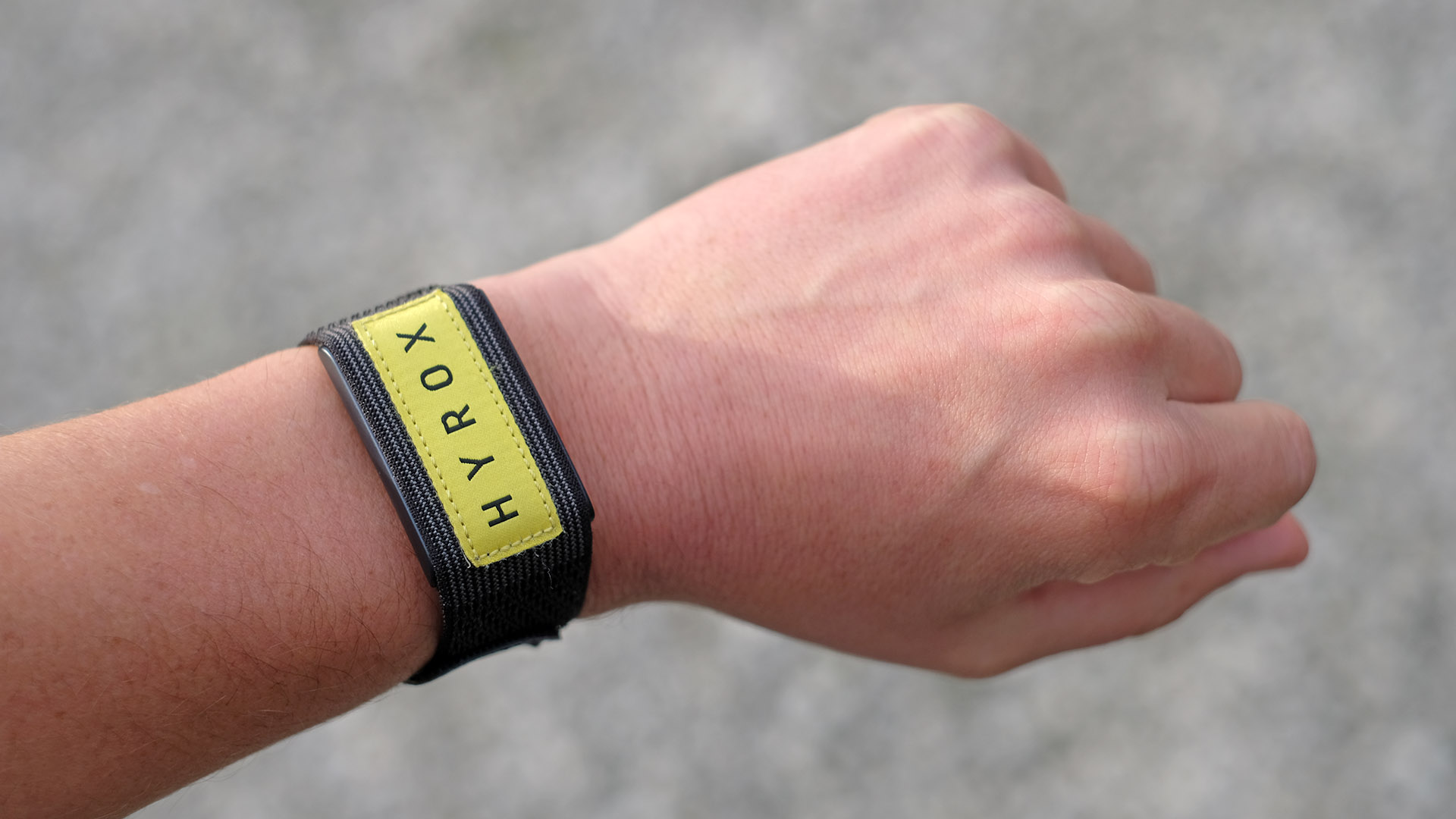
The Amazfit Helio Strap is a screen-free wearable, and an exceptionally light one. It weighs just 20g, strap included. You can thank the relatively low-frills style of the central unit for this, which is just a puck of plastic. All you see when wearing the Hello Strap is the fabric of the strap itself, which hooks up to the tracker’s block using traditional watch fastenings. Amazfit also offers an arm strap, should you prefer to wear it off the wrist.
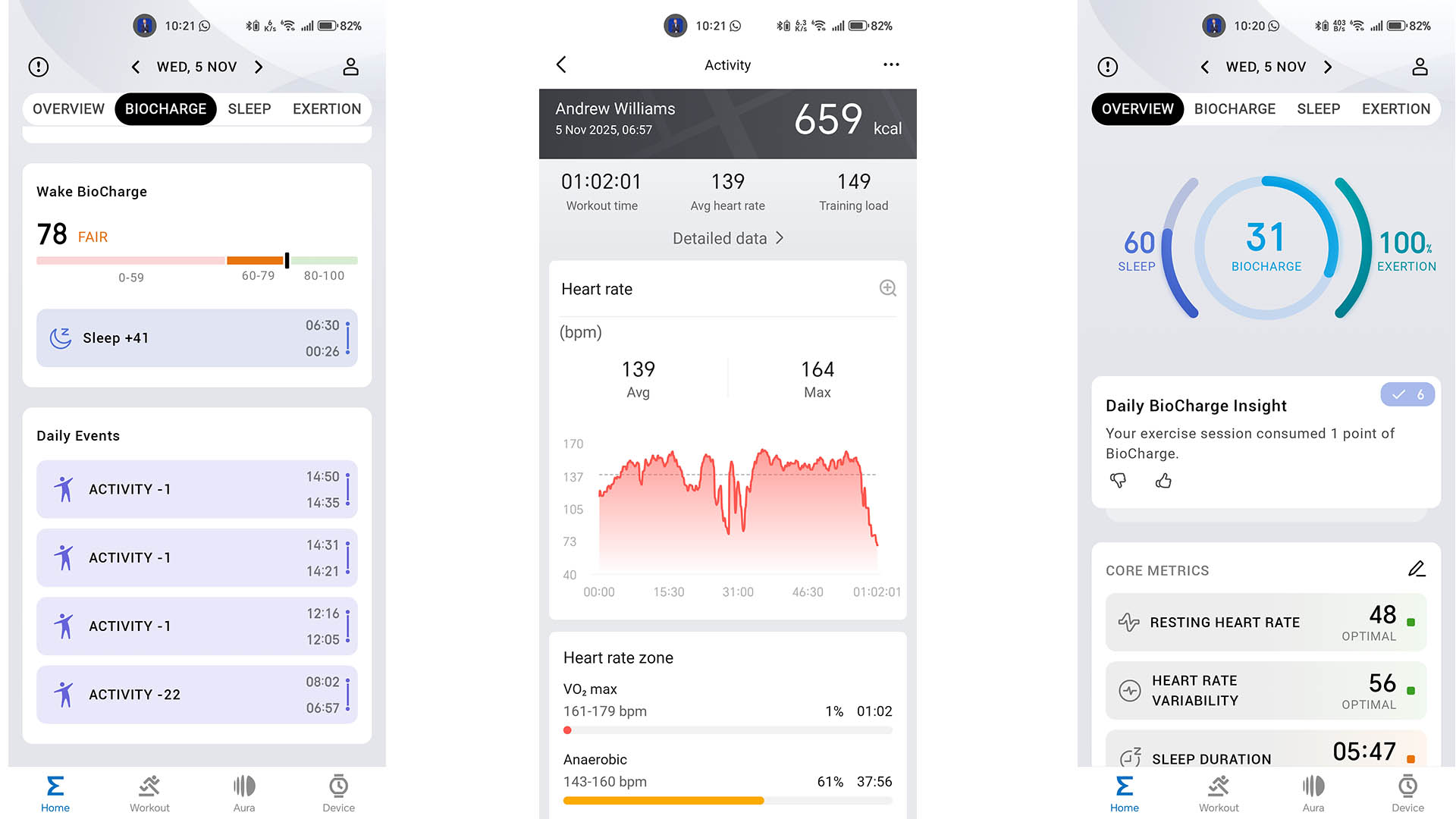
I have at times had to check whether the watch was actually still attached, which is just not something that happens with the GPS running watches I tend to wear daily. There is one important caveat to note on the design, though; the Amazfit Helio Strap is not as slimline as you might guess. It sticks out a way from your wrist and its sides don’t fully hug its surface either. In person it’s thicker than the Coros Pace 4 watch I was using at the same time, which is at odds with the vibe most of these screenless wearables try to give out.
That said, Amazfit doesn’t sell the Helio Strap as a casual step and sleep tracker. It apparently has the keener exerciser in mind, as you can see from the Hyrox-themed strap attached here. Hyrox and Amazfit have entered a partnership (Amazfit is now the official timekeeper for the event), but the standard version of the strap is plain two-tone dark grey.
This watch isn’t a friend to those tight-fit long-sleeved base layers that hug the wrist, but actually wearing the Hello Strap has been an entirely discomfort-free experience. Of course, you will still need to make the strap reasonably tight for the most accurate heart rate results so the little sensor mount on the back will leave an imprint in your wrist. It comes with the territory.
Amazfit rates the watch’s water resistance at 5ATM, so you won’t have to take it off too often. The official guidance is the Helio Strap is “suitable for splashes, snow, showering, swimming” but shouldn’t be worn in the sauna or for a “hot shower” as the steam can damage the internal seals.
- Design score: 4/5
Amazfit Helio Strap: Features
- Relatively slight on features
- Transmit HR data to gym machines and fitness watches
- Set up to 10 haptic alarms
Wearables like the Amazfit Hello Strap are not out to wow us with their expansive feature lists (after all, they’re designed not to be interacted with) but it does do more than you might guess.
It has a temperature sensor, for example, used to check for variations from the norm overnight. Such a change could be an indicator of illness. You can set up to 10 alarms too, which use the Helio Strap’s vibration motor to alert you. It’s not a massively powerful buzz, though, so you might not want to rely on it to wake you up for work each day.
A little unusual for a screenless wearable, Amazfit also stresses its active fitness tracking skills. You can manually start a specific tracked exercise in the app on your phone, and the Helio Strap can also be set to automatically detect workouts and log them as such. When you start a tracked session in the app, the Helio Strap can transmit live heart rate data to another device. Some more advanced gym machines support this, as do cycling computers and some fitness watches. It uses Bluetooth for this, not ANT+, which was the classic technology of heart rate chest straps.
What else is there to note? The Hello Strap uses a tiny little charge puck that connects to a pair of metal contacts on the back. Easy to lose, but also easy to transport in a pocket.
- Features score: 4/5
Amazfit Helio Strap: Performance
- Battery life as described
- Solid heart rate accuracy
- Plenty of metrics provided in-app
Low upkeep is one of the best parts of the Amazfit Hello Strap. Despite weighing next-to-nothing, Amazfit still says it delivers “up to 10 days” of battery life. And that is entirely consistent with our experience. After using it for a week, the Helio Strap had 35% charge left. While two-week battery watches with screens are common enough, they weigh a lot more than the Helio Strap.
A lot of this wearable’s metrics rely on heart rate data. The Hello Strap’s is mostly solid with some small issues that may not dull its appeal too much, especially at this price point. Throughout the day, passive tracking is decent and there are no wild spikes as you walk around your home or office. This can happen when a tracker takes any sign of walking as a suggestion your HR is likely rising fast.
You don’t manually start tracked activities on the watch, but when comparing the results of long runs on the Helio Strap with those of a chest strap, though, the Amazfit Hello Strap occasionally overestimates heart rate by around 10bpm. Not a hugely meaningful difference to most, and certainly good enough for an indication of heart rate zones, but still not quite as accurate as the best Apple Watches. Amazfit does talk about the Helio Strap as a wearable to pair with another fitness watch, to fill in stat gaps throughout the day and night, and during other workouts the results were (relatively) bang-on accurate. But there’s definitely scope for tracking accuracy to improve in a firmware update.
As for tracking steps, the Amazon Helio Strap recorded slightly lower counts over a five day period, apart from one day when they were almost identical just 3000 steps apart. Over the five day period the Helio Strap recorded 94% of the steps of the Garmin Forerunner 970. It’s also worth noting the Garmin was worn on my dominant arm (the Helio Strap was not) so that could have a part to play here.
Sleep tracking performance is solid. A couple of nights during testing I wore the Amazfit Helio Strap alongside three other wearables to see how great the disparities would be: the Garmin Forerunner 970, Polar Loop and Coros Pace 4. All four of these watches failed to pick up on any of the moment you briefly wake up and wonder why the alarm clock reads 4:55am. But those times you actually have to get up to go to the toilet? It picks them up. The Amazfit Helio Strap also did consistently note a change in sleep state and heart rate during those missed moments of wakefulness, though – the next best thing.
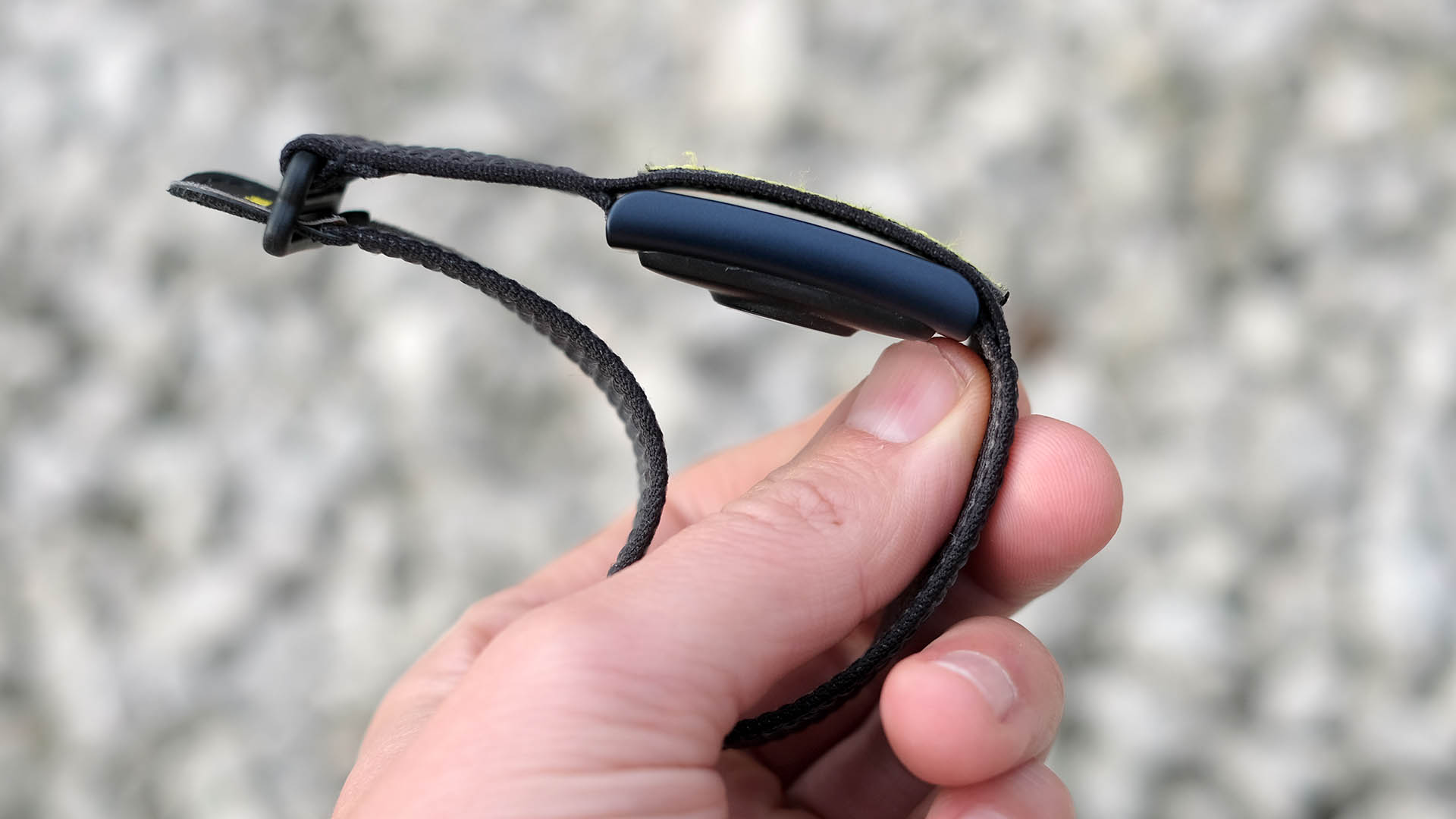
It’s also important not to underrate the quality of the Amazfit Helio Strap app. It’s Zepp, shared with other Amazfit wearables. And its layout is kinda great for the purposes of a wearable like this. On the front page you get a handy summary of stats you likely want to see daily, with a traffic light system too show which (if any) are a bit dodgy. These include resting heart rate, sleep duration, Skin temperature, exertion load and more.
This layout returns in a separate Sleep tab, where we get stats like heart rate variability, Deep Sleep duration and skin temperature, again with the traffic light system.
Amazfit also goes big on a concept called BioCharge, which is an estimation of your overall energy level. The one missing next step is what you get with Whoop, where such data – and other bits – are used to more explicitly tell you whether you should work out on a specific day or not. And the paid-for Aura subscription is more about wellness and relaxation that that kind of athlete-focused experience.
- Performance score: 4/5
Amazfit Helio Strap: Scorecard
|
Category |
Comment |
Score |
|
Value |
Cheaper than most and with a no forced subscription? Typical of Amazfit, the Hello Strap is decent value. |
4/5 |
|
Design |
It may not be a luxury wearable but the super-low weight is fantastic for comfort. |
4/5 |
|
Features |
While screen-free wearables are never feature-packed, this one has a few neat extras including heart rate broadcasting. |
4/5 |
|
Performance |
You get good overall stat accuracy with just some missed wakeful moments during sleep tracking. |
4/5 |
Amazfit Helio Strap: Should I buy?
Buy it if...
You want a good-value screen-free wearable
While not Amazfit’s most aggressively-priced tracker, it beats the big-name competition and then some.
You value comfort highly
At just 20g, you can often forget the Amazfit Helio Strap is even on your wrist.
You want quick daily dose health stats
The Amazfit app does a good job of highlighting unusual health stats, with a colour highlight system.
Don't buy it if...
You want a wearable for run tracking
This band doesn’t have GPS (or a screen, obviously) so is not ideal for more hardcore run training.
If luxury style is a priority
A fabric strap and plastic housing are great for low weight, but there are no luxe touches here.
You want a direct Whoop replacer
The stats the Amazfit Helio Band are much more classic lifestyle fitness tracker fodder instead of Whoop’s hyper-detailed recovery focus.
Also consider
Whoop MG
The most premium version of the original screenless wellness wearable.
Read our full Whoop MG review
Polar Loop
A little more money, but a more premium stainless steel design.
Read our full Polar Loop reviewView Deal
First reviewed: January 2026


Comments
Post a Comment