'None of your decisions from the first game matter' — Life is Strange: Reunion wants you to have your cake and eat it
Before I detail what makes narrative adventure game Life is Strange: Reunion quite so egregious, I think it’s important to clarify that I love this series and my issues with the latest instalment are not the result of pure malice, but rather come from a desire to return to the dizzying heights of Life is Strange and its excellent sequel Life is Strange 2.
Platform reviewed: PC
Available on: PS5, Xbox Series X|S, PC
Release date: March 26, 2026
The franchise may now be helmed by a new studio, Deck Nine, (the studio behind the somewhat underwhelming spinoff Life Is Strange: Before the Storm) rather than original creators Don’t Nod (who have since put out the sublime spiritual successor Lost Records: Bloom & Rage) but the team showed incredible promise with its 2021 entry Life Is Strange: True Colors.
It wasn’t perfect, but it still delivered a well-written, emotional tale with a cast of decently memorable characters and a perfectly realized, beautiful setting.
Given how this standalone story was received, I simply don’t understand why Deck Nine wanted to bring back Max Caulfield (the protagonist of the first game) for 2024’s disastrous Double Exposure, let alone double down by adding her childhood friend (and let’s be honest, practically canon) love interest, Chloe Price, to this new entry as well.
Have your cake
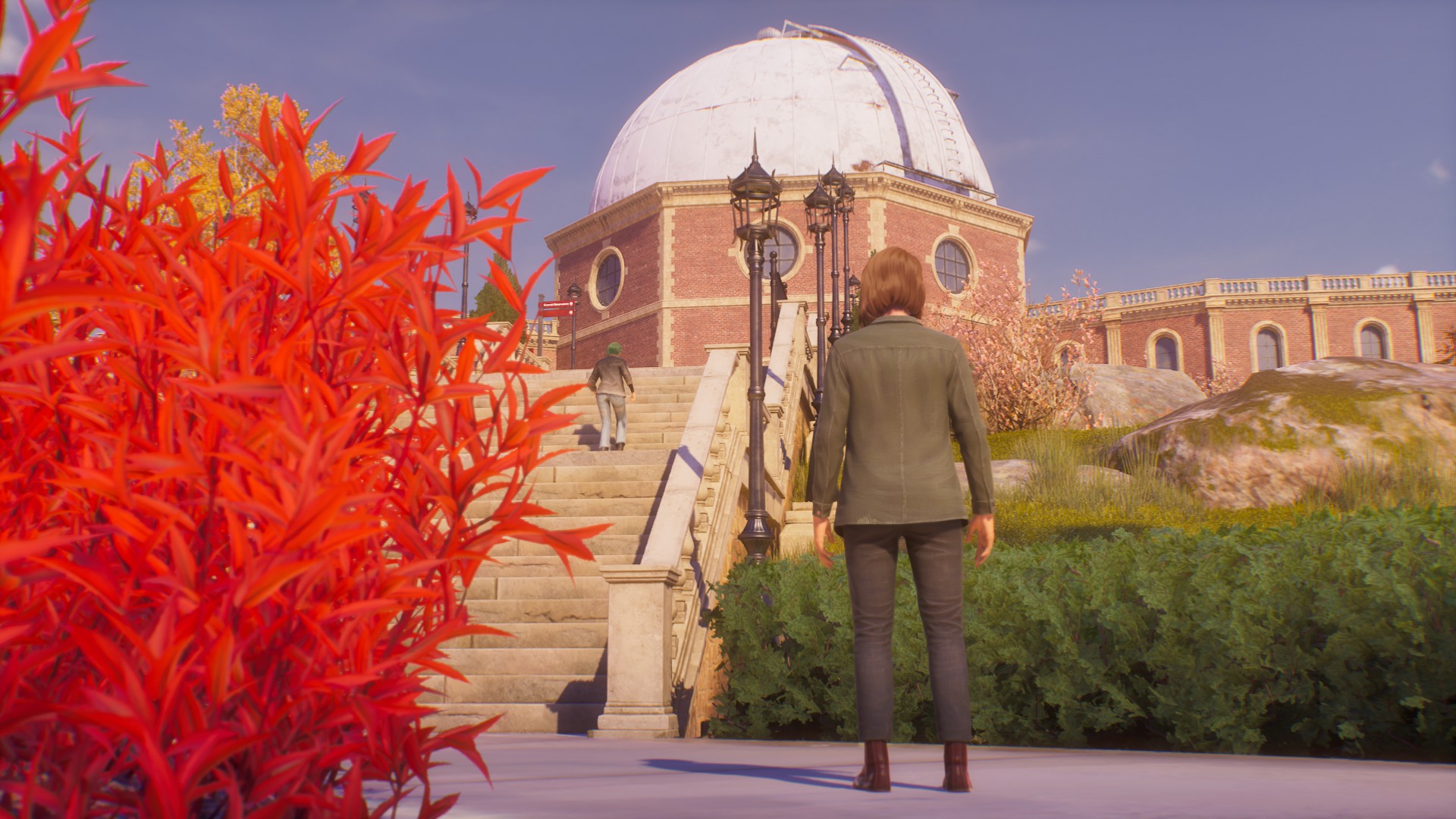
If there’s one word to describe Reunion, it’s ‘cowardly’. This is nothing short of an embarrassing attempt to make amends with fans after Double Exposure, executed so sloppily that it even managed to annoy me as someone who didn’t appreciate the direction that game went in the slightest. The problem is a heavy reliance on retconning, with basically every event in that game’s latter half being completely undone in minutes.
Reunion starts by asking you to recap some of your choices from Double Exposure, who you chose to date, for example, in addition to some key decisions from Life is Strange 1, like whether you saved Arcadia Bay or Chloe. What does any of this change, exactly? Practically nothing, as it’s quickly revealed that you broke up with your chosen love interest off-screen in the handful of months between entries, and the destructive world-altering events of the last game’s finale have all been forgotten thanks to a convenient widespread case of what the characters dub “storm amnesia”.
You may recall that friend-turned-antagonist Safi Llewellyn-Fayyad closed out Double Exposure by vowing to travel the country, creating a team of super-powered individuals like some kind of hipster avengers, but all of this is quickly hand-waved away by the simple explanation that she gave up and came home after a few weeks.
None of your decisions from the first game matter either, as it turns out that both possible timelines have merged into one thanks to the supernatural events of the previous entry. Not only is Chloe alive and well, but the whole town of Arcadia Bay and all of its residents are completely intact.
It completely undermines the gravity of one of the most memorable decisions in not just the series but all of gaming, and the entire reason why many (including me) fell in love with these titles in the first place. I do understand that many fans will likely be pleased by the idea of everyone getting a happy ending — but it’s cheap and, being frank, not the kind of choice a studio should make for a story that it didn’t even originally create.
Tinderbox
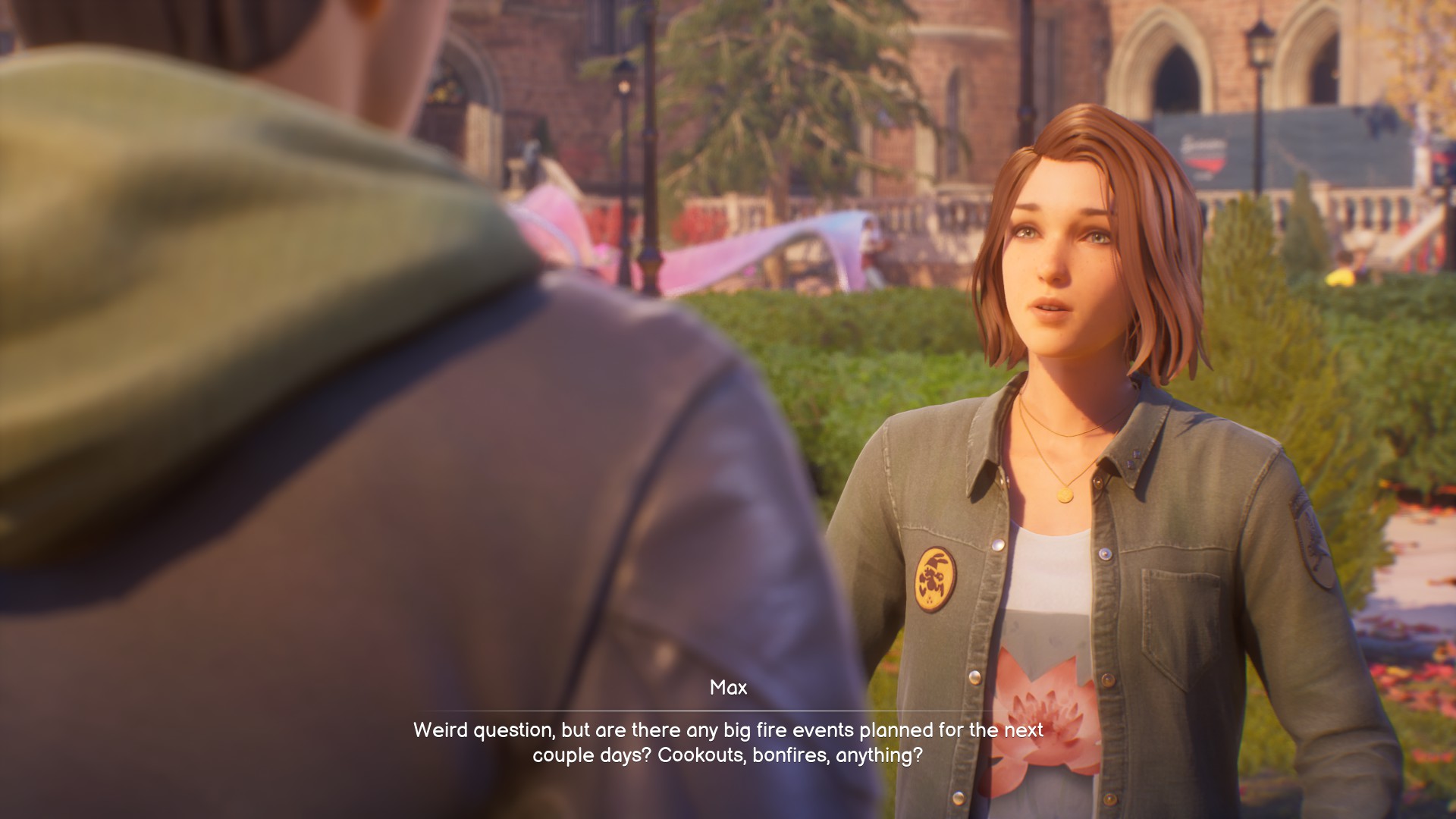
I could forgive much of this if Reunion still had a decent mystery at its core, which sadly isn’t the case. The main thrust is that Max’s beloved Caledon University is about to go up in smoke thanks to some kind of arson attack, and it's up to her to use her timey-wimey powers to travel back in time to fix it.
Of course, her double exposure power from the last game has been completely forgotten, replaced with rewind a la Life is Strange 1. The ability, which lets her rewind time for a short duration, seems like it would be quite useful for sleuthing, but it’s hardly used and ultimately feels like an afterthought.
There are multiple moments where it could come in handy, too, like one agonizing sequence that has you distracting a series of characters in order to sneakily inspect the contents of the folders they’re carrying. There is literally nothing stopping Max from simply grabbing the folders (which are all just lying on tables) and taking a look before rewinding a few minutes. In fact, she literally does what I’m describing later on to get her hands on someone’s bag, so I can only assume that the studio either didn’t consider the possibility in that instance or just wanted to pad the runtime.
I’m leaning towards the latter as padding is a theme elsewhere too; the mystery progresses at a painfully slow pace right up until Max walks into a room and has the story’s most important events literally explained to her (and by extension the player) in a magical sequence of moving images.
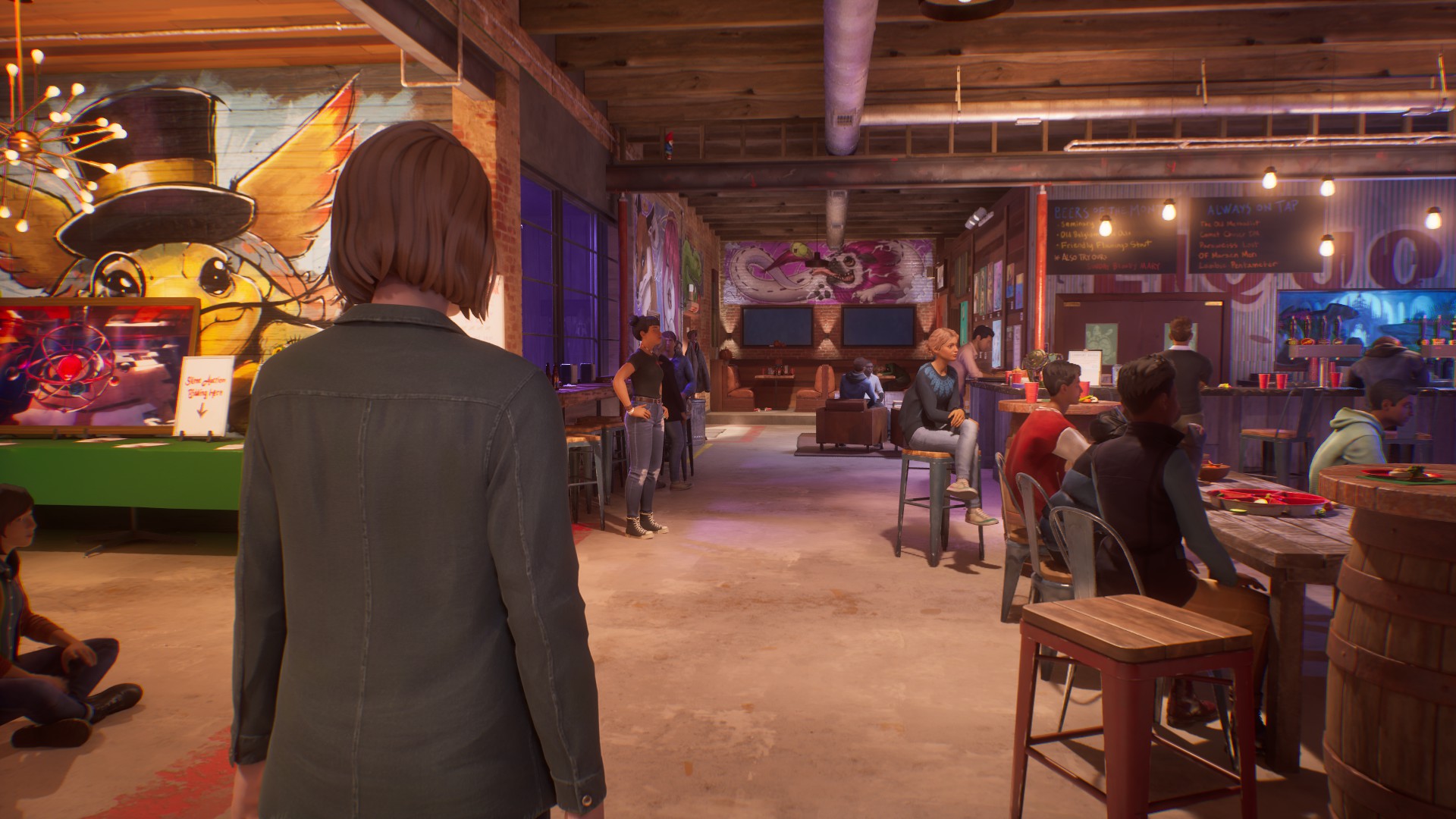
There’s no joy in exploration either, as environments are lifeless and sterile with ugly lighting that conveys no sense of atmosphere at all — a far cry from the lovely, painterly look of the first two games or even the warm, cozy appearance of True Colors.
Most are ported directly from Double Exposure, so they already feel quite stale, and that’s before you even consider that they’ve been massively cut down this time around. The university's quad, for instance, now has no accessible buildings adjacent to it (explained as the result of storm damage, though little is visible as that would require changing the models a lot), which really hampers your ability to explore.
World-building is a major problem in general. Nothing about the story feels genuine, with awkward interactions that verge on almost Lynchian at times. Nobody ever really discusses anything beyond that which is immediately relevant to Max’s understanding of the main mystery which, combined with the dire facial animation and some worryingly unfinished looking moments where the camera fades to black or pans away in order to avoid having to show what would be some rather complex scenes, gives the impression of a world populated by malfunctioning animatronics rather than real people.
Missing persons
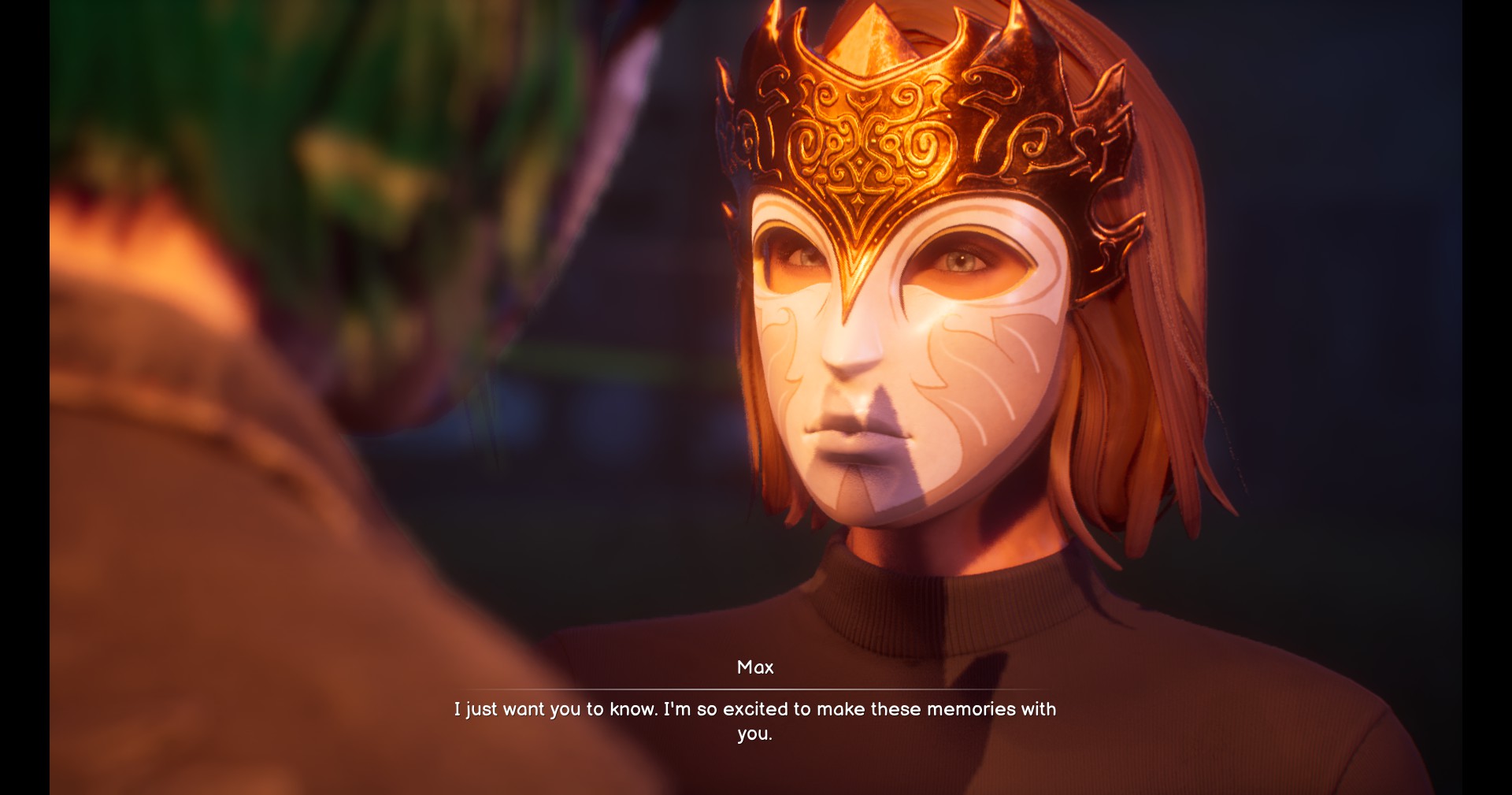
Deck Nine clearly wants to distance itself from Double Exposure, though given how many of that game’s major characters still appear here, the handful of absences are painfully obvious. Noteworthy undergraduate student Diamond Washington is completely missing in action, as is Max’s friend and fellow educator, Gwen Hunter.
Having been hounded out of her university job thanks to a misunderstanding in the previous game, not bringing Hunter back in an entry so slavishly devoted to creating the perfect “happy ending” is a massive missed opportunity, and especially stings given the real-world parallels with transgender women being bullied out of academia.
Then there’s Chloe. I can’t pretend that part of me wasn’t glad when she burst through Max’s door on the hunt for answers about the strange visions she’s been having, quickly sinking into her former (girl)friend’s embrace. It’s like she never left, and therein lies the rub. Still a punk rock rebel with a “stick it to the man” attitude at the age of nearly 30, this doesn’t come across like an authentic adult Chloe but rather an insincere facsimile of her child self.
Are we really expected to believe that her traumatic past and years out on the open road have barely changed her after more than a decade?
Contrast this with the way that Lost Records: Bloom & Rage engages with the idea of aging to great effect, particularly with its presentation of Nora, a similarly cool character as a teenager and many players’ primary love interest in that game. It’s uncomfortable when the adult Nora arrives and turns out to be something of a facile conformist, but this entirely believable evolution forces you to re-evaluate your relationship with her and shines a new light on both your past and future interactions.
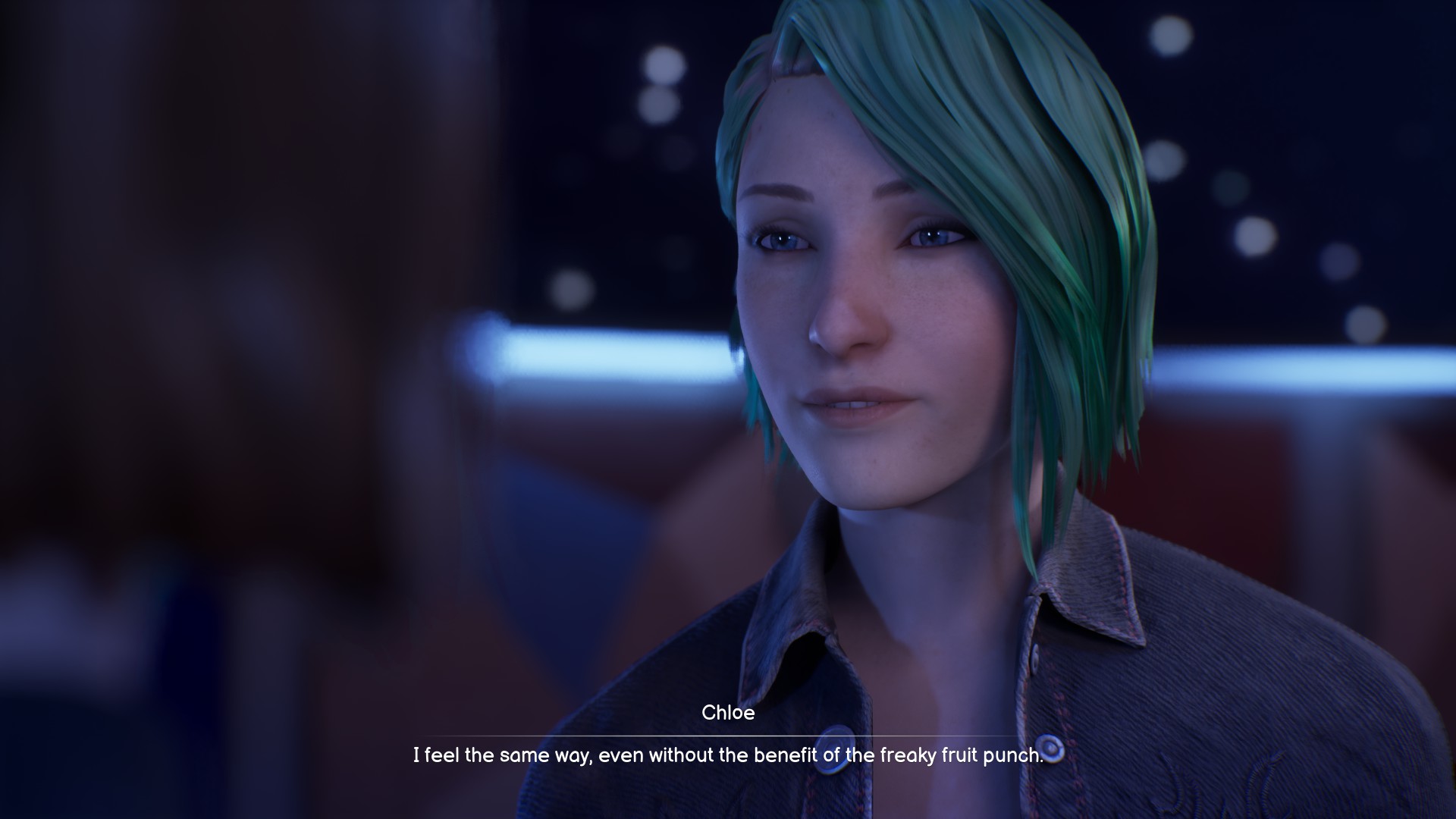
I’m not arguing that Chloe should have come back unrecognizable by any means, but a scrap of development to gesture to an existence outside of this series’ plot would have gone a very long way to make her more believable.
The segments where you actually get to play as Chloe are underwhelming in the grand scheme of things, too. Her ability to backtalk, first introduced in Before the Storm, has been stripped down massively. Originally a way of outsmarting opponents with witty comebacks by carefully considering whatever they had just said, it now involves selecting the right option using information that was invariably shown to you immediately beforehand.
The mechanic’s treatment is honestly emblematic of this entire affair: a shallow imitation of things taken wholesale from much better games. If your entire enjoyment of a new Life is Strange game boils down to seeing your favorite characters unconvincingly thrown around like action figures, then you’re going to be right at home here. For those of us who fell in love with the games for their narratives, I’m hoping that whatever the studio has planned next represents the new beginning this series now so desperately needs.
Should I play Life is Strange: Reunion?
Play it if...
You're simply desperate to see Chloe again
If your one wish is to see Chloe Price show up in a game again, with no regard to how it affects the story of other entries, then Life is Strange: Reunion is probably good enough for you.
Don't play it if...
You're expecting a decent mystery
The mystery at the heart of Life is Strange: Reunion is poorly paced and sloppy. There are many better mysteries to discover in the rest of the series or other narrative adventure games.
You're after a true sequel
This doesn't feel like a true sequel to any of the other Life is Strange games, thanks to a huge amount of awkward retconning. Describing it as more like fan fiction would be an insult to AO3 authors.
You need high production values
This is by far the worst-looking game in the franchise, with many scenes spoiled by cheap animations and awkward dialogue.
Accessibility features
Life is Strange: Reunion has an admirably expansive suite of accessibility options.
This includes a range of pre-sets for low vision, low motor, low audio, or low sensory profiles, plus a huge number of individual settings. Key options include the ability to enable longer decision times for important choices (though there are quite a few of those in the game), highlight key objects and items that can be interacted with in the world, and even skip gameplay sequences if desired.
Subtitles are featured throughout the game and can be altered to your liking in the UI menu. There are multiple font styles, text size options, and the ability to enable a subtitle background to make them easier to read.
The game also offers a range of toggleable trigger warning screens, which can alert you to death, blood, suicide, violence, intense effects, drug use, sex, and high brightness scenes. A separate warning for loud sounds can also be enabled.
How I reviewed Life is Strange: Reunion
I completed Life is Strange: Reunion in roughly 12 hours on my PC, which is a 5070 Ti-powered model from retailer Scan. It has a compact Corsair 2000d RGB Airflow case, Asus ROG Strix B860-I motherboard, Intel Core Ultra 7 265K processor, a 2TB WD Black SN770 SSD, 32GB of DDR5 Corsair Vengeance RAM, and an Asus Nvidia 5070 Ti graphics card.
This allowed me to play the game smoothly on its highest graphics preset at 1080p, though it still didn't look too great. I played using my usual Razer DeathAdder V4 Pro mouse and Cherry XTRFY K5V2 keyboard, plus Logitech desktop speakers for audio.
First reviewed March 2026


Comments
Post a Comment